
 Türkçe
 Français
 Deutsch

Restorative dental treatment in Turkey encompasses comprehensive procedures aimed at repairing damaged teeth, restoring oral function, and improving esthetics through evidence-based clinical protocols. Services include fillings, crowns, bridges, inlays, onlays, and implant-supported restorations performed by qualified dental professionals in accredited facilities.
Cost of restorative dental treatment in Turkey is generally more affordable compared to many Western countries, while maintaining high clinical standards and modern technology. Transparent pricing policies, detailed treatment planning, and individualized care protocols ensure both financial accessibility and predictable therapeutic outcomes for international patients.
Advanced restorative dentistry clinics in Turkey are equipped with digital imaging systems, CAD/CAM technology, and high-quality biocompatible materials to optimize precision and durability. Multidisciplinary teams evaluate occlusion, periodontal health, and structural integrity to establish long-term functional stability and minimize complication risks.
Benefits of choosing restorative dental procedures in Turkey include reduced waiting times, comprehensive treatment packages, and adherence to international sterilization and safety standards. Personalized treatment planning, post-procedure follow-up, and patient-centered care contribute to improved oral health, structural rehabilitation, and enhanced overall quality of life.
| What You Should Know | Information |
| Definition | Restorative dental treatment is a method aimed at restoring the function, structure, and aesthetics of teeth damaged due to decay, trauma, or wear. |
| Purpose | To preserve the natural structure of the tooth, restore chewing function, improve aesthetics, and maintain oral health. |
| Application Areas | Tooth decay, broken teeth, worn teeth, renewal of old restorations, correction of tooth shape irregularities. |
| Materials Used | Composite resins (white fillings), amalgam (silver metal fillings), porcelain or gold inlays/onlays, glass ionomer cement. |
| Procedure Steps | 1) Diagnosis with examination and X-ray, 2) Anesthetizing the tooth, 3) Cleaning decayed or damaged tissue, 4) Application of restoration material, 5) Shaping and polishing. |
| Composite Filling Characteristics | Aesthetic, tooth-colored, light-cured material; usable for both front and back teeth; completed in a single session. |
| Amalgam Filling Characteristics | Durable and long-lasting; generally preferred for back teeth; less aesthetically pleasing. |
| Advanced Restorative Applications | Inlays, onlays, overlays (solutions between fillings and crowns), aesthetic laminates and crowns. |
| Treatment Duration | Depends on the scope of the application; a simple filling may take 20–40 minutes, while advanced restorations may require several sessions. |
| Post-Treatment Care | Oral hygiene must be maintained, hard objects should not be bitten, regular checkups should be conducted; if sensitivity occurs around the filling, consult your dentist. |
What Is Restorative Dental Treatment?
Restorative dental treatment is a branch of dentistry aimed at restoring the function and aesthetics of decayed, broken, or damaged teeth. Treatment methods include fillings, crowns, bridges, inlays-onlays, and implants. Restorative procedures play a significant role in preserving the patient’s oral health and maintaining the balance of oral structures.
What Advantages Do Minimally Invasive Approaches and Adhesive Dentistry Offer?
In the past, filling materials (e.g., silver-colored amalgams) did not chemically adhere to the tooth. To keep these fillings in place, dentists had to create mechanical locks and special cavities in the tooth, which meant sacrificing healthy tissue. Today’s technology has completely changed this concept and introduced us to Adhesive Dentistry.
The principle of adhesive systems is the strong chemical bonding between restorative material and tooth structure. This enables us to work minimally invasively. If there is decay, we remove only the diseased tissue and leave every millimeter of healthy tooth intact. Our bonding agents integrate the filling material at a cellular level, forming a solid union where the filling and the tooth act as one. This prevents the tooth from weakening and inhibits bacterial leakage, significantly prolonging the treatment’s durability.
When Are Composite Fillings Preferred?
Known commonly as “white fillings” or “light-cured fillings,” composite restorations are the most frequently used direct treatment method today. Composites are resin-based materials reinforced with glass particles and are now usable for both aesthetic purposes in front teeth and for strength under pressure in back teeth thanks to evolving technology.
These materials have a wide range of applications. We frequently use them not only to fill cavities but also to change the shape or correct the color of a tooth.
Situations where composite fillings are often preferred include:
- Cavity repairs
- Tooth fractures
- Cracks in enamel
- Diastema closure
- Discolored teeth
- Wear due to erosion
- Replacement of old amalgam fillings
- Shape irregularities
What Are the Clinical Steps in a Composite Filling Application?
Our patients often wonder what is being done during their time in the chair. A good composite filling requires fine craftsmanship and patience. The process is more than a simple “filling”—it is the reconstruction of the tooth layer by layer.
The first step is always shade selection. During treatment, your teeth dry out and appear lighter, almost chalky. Therefore, to get the correct shade, we select the color using special shade guides while the teeth are still moist. Then we numb the area for your comfort and begin cleaning the decay. Staying true to the adhesive philosophy, we remove only the damaged tissue.
A special adhesive agent called “bonding” is applied to the prepared cavity. This step is the heart of the treatment; the bond ensures that the filling does not fall out or leak. When placing the composite, we use the “layering technique.” Instead of placing one large mass of material, we apply it in small layers and cure each layer with a blue light. This prevents shrinkage and helps us mimic the natural dentin and enamel layers of the tooth. In the final stage, we check the bite and proceed with polishing. A well-polished surface ensures the filling is smooth, shines like a natural tooth, and resists staining over time.
What Are Inlays, Onlays, and Overlays as Indirect Restorations?
Sometimes a tooth has lost so much structure that a traditional filling becomes risky. The remaining walls are very thin, and placing a filling might cause the tooth to fracture under chewing pressure. In the past, we would prepare the tooth entirely and place a crown. However, since this required removing healthy structure, today we prefer a more conservative approach with “indirect restorations.”
These restorations can be defined as “porcelain fillings” prepared in a laboratory instead of directly in the mouth. We take impressions from your tooth, and our technician fabricates the missing part using porcelain or reinforced composite. These parts are made like a puzzle piece and bonded to your tooth during the second session.
These restoration types are named according to the area they cover.
Types we apply in the clinic include:
- Inlay
- Onlay
- Overlay
An inlay fits only into the central cavity of the tooth; an onlay also covers one or more of the cusps (tubercles) when these are fractured. An overlay is the most comprehensive type, covering the entire chewing surface like a cap, without the need to cut around the tooth.
What Are the Advantages of Indirect Restorations Compared to Traditional Fillings?
Patients rightly ask, “Why should I choose a two-session method over a filling that’s completed in one visit?” The main difference lies in how they are made. In-mouth fillings cure with light and can shrink slightly, and their mechanical properties are limited. Porcelain restorations made in laboratory furnaces under high heat and pressure have much more advanced features.
Key advantages of these restorations include:
- Maximum durability
- Superior marginal adaptation
- Excellent aesthetics
- Wear resistance
- Color stability
- Prevention of secondary caries
- Biocompatibility
Additionally, in teeth with extensive structural loss, these porcelain pieces act as a “ring” binding the weak walls together, preventing fracture. This way, you gain the strength of a crown without needing to cut the tooth.
How Is a Laminate Veneer Applied in Aesthetic Dentistry?
Restorative treatments aren’t limited to cavities or fractures; they are also at the core of smile design. “Laminate Veneers,” also known as “porcelain veneers,” are ultra-thin porcelain shells applied to the visible front surfaces of teeth. Their greatest feature is that very minimal (0.3 – 0.7 mm) or sometimes no tooth reduction is required (prepless technique).
With this method, we can permanently change the color of teeth, correct mild crowding, lengthen teeth, or close gaps. The translucency of porcelain is very close to natural enamel, so it does not appear artificial.
There is also the “composite veneer” (bonding) option. In this case, aesthetic filling material is used instead of porcelain. The dentist sculpts the material directly onto the tooth. It is completed in one session and is more affordable, but not as long-lasting as porcelain and may discolor over time.
Cases suitable for laminate veneers include:
- Tooth gaps
- Permanent discolorations
- Mild crowding
- Fractured front teeth
- Short teeth
- Smile asymmetry
- Surface irregularities
However, certain biomechanical principles must be considered. For patients who bite their nails or have severe teeth grinding habits, these delicate restorations may be at risk of fracture, and those habits should be treated first.
Are Teeth Whitening (Bleaching) Methods Harmful?
For patients unhappy with the color of their teeth, the most conservative approach is teeth whitening. This procedure lightens the existing color of the teeth without adding or removing any material. The gels used penetrate the pores of the enamel and oxidize the pigmented molecules, resulting in a lighter shade. It is scientifically proven that whitening procedures performed under professional supervision do not damage the tooth structure or thin the enamel.
The main techniques we use in clinical practice include:
- In-office bleaching
- At-home bleaching
- Devital (internal) bleaching
In the office-type application, we achieve quick results in about 40–50 minutes while the patient is seated in the clinic. We apply high-concentration gels to the tooth surface while protecting the gums and sometimes activate them with light. In the home whitening system, we prepare custom transparent trays for you. These trays are filled with lower-dose gels and are typically worn at home, mostly at night, for 1–2 weeks. The ideal result is usually achieved by combining these two methods. For single teeth that have undergone root canal treatment and darkened from the inside, we apply a special technique called “devital bleaching,” where the gel is placed inside the tooth.
What Preventive Treatments Are Applied for Early-Stage Cavities?
The modern face of restorative dentistry is “Cariology”—the science of caries. Our goal is not to immediately place a filling but, if possible, to stop the cavity before it forms or at its initial stage.
If the cavity is still within the enamel and appears as a “white spot lesion,” it can be treated without drilling the tooth. At this stage, minerals in saliva, fluoride supplements, and proper nutrition can reverse the decay. There is also a revolutionary technology called “Resin Infiltration” (ICON). In this technique, a highly flowable resin is infiltrated into the pores created by the initial caries. This resin blocks the pathway of acids and traps the cavity in place. It both halts the progression of the lesion and eliminates the stained appearance in that area. However, if the cavity has reached the dentin layer beyond the enamel, there is no return, and a filling becomes necessary.
Preventive methods recommended to reduce the risk of cavities include:
- Fluoride varnish application
- Resin infiltration
- Fissure sealants
- Proper brushing education
- Use of dental floss
- Sugar intake control
- Use of xylitol-containing gum
- Regular dental check-ups
How Is Restoration Planned for Root Canal Treated Teeth?
Root canal treatment is a procedure in which the nerve-blood bundle inside the tooth is removed. After this procedure, the tooth becomes “non-vital” and dries out over time due to water loss. Also, since teeth requiring root canal treatment usually have large cavities, very little healthy wall remains. These two factors combined make root canal-treated teeth highly susceptible to fracture.
When restoring these teeth, a standard filling is often inadequate. It is necessary to support the tooth from within and create a link between the root and the upper structure. For this, we use “Fiber Post” systems. Glass fiber rods, which have similar flexibility to natural dentin, are bonded inside the root canal. These posts serve as a foundation for the filling to be placed and distribute the stress to the root by transmitting forces.
In posterior teeth, a special type of restoration called “Endocrown” is popular today. These porcelain blocks support the canal opening and restore the entire upper part of the tooth in one piece. Unlike traditional crowns, they do not require cutting around the tooth, thus preserving the weak tissues around the root.
How Is Tooth Wear and Sensitivity Managed?
Our teeth can lose substance not only due to bacteria but also due to physical and chemical factors. These are called “non-carious” losses and are quite common. Improper brushing, acidic beverage consumption, or teeth grinding can thin the enamel and expose the sensitive underlying layer.
The priority in treatment is to eliminate the cause. For example, if the problem is acidic foods, dietary adjustments are made; if it’s due to teeth grinding, a night guard is prepared. The lost tissue is usually restored with aesthetic fillings. For tooth sensitivity, we offer special gels and laser treatments in the clinic. Laser beams seal the exposed dentinal tubules in seconds and block pain transmission.
Common causes of tooth wear include:
- Teeth clenching
- Bruxism (grinding)
- Aggressive brushing
- Consumption of acidic drinks
- Gastroesophageal reflux disease (GERD)
- Nail-biting habit
- Incorrect toothpaste
Before & After Photos


Frequently Asked Questions
In which dental problems is restorative dentistry used?
Restorative dental treatment is applied to restore both function and aesthetics in decayed, cracked, broken, or worn teeth. It repairs the structure of the tooth and restores it to a healthy state.
What materials are used in restorative dental treatment?
Aesthetic and durable materials such as composite resins, porcelain, and glass ionomer are used. The choice depends on the location of the tooth, the degree of damage, and the patient’s aesthetic expectations.
What is the difference between restorative treatment and filling?
A filling is a part of restorative treatment. However, restorative treatment is broader and includes procedures like bonding, inlays, onlays, and veneers. The goal is not only to repair but also to improve aesthetics.
How long does restorative dental treatment take?
The duration depends on the type of procedure applied. Small fillings can be completed in 30 minutes, while aesthetic restorations may require multiple sessions.
Is restorative dental treatment painful?
The procedure is usually performed under local anesthesia and is painless. Mild sensitivity may occur afterward, but it subsides shortly.
How durable are teeth after restorative treatment?
With correct application and good care, teeth treated restoratively are highly durable. However, caution is needed in cases of extensive damage or bad habits (teeth grinding, biting hard objects).
Can restorative dental treatment be applied to children?
Yes, restorative treatments can be applied to both primary and permanent teeth in children with decay or trauma. Special materials and techniques are used for pediatric care.
What should be considered after restorative dental treatment?
Avoid hard or sticky foods for a few hours, maintain regular brushing and flossing, and follow the dentist’s recommendations without skipping check-ups.
Does restorative dental treatment offer aesthetic results?
Modern restorative materials are very similar to the color and structure of natural teeth. Thus, aesthetically and functionally satisfying results are achieved in both anterior and posterior teeth.
Is restorative dental treatment long-lasting?
Restorations made with quality materials and proper technique can last 5–10 years or longer with regular maintenance. Oral hygiene plays a key role in extending this duration.
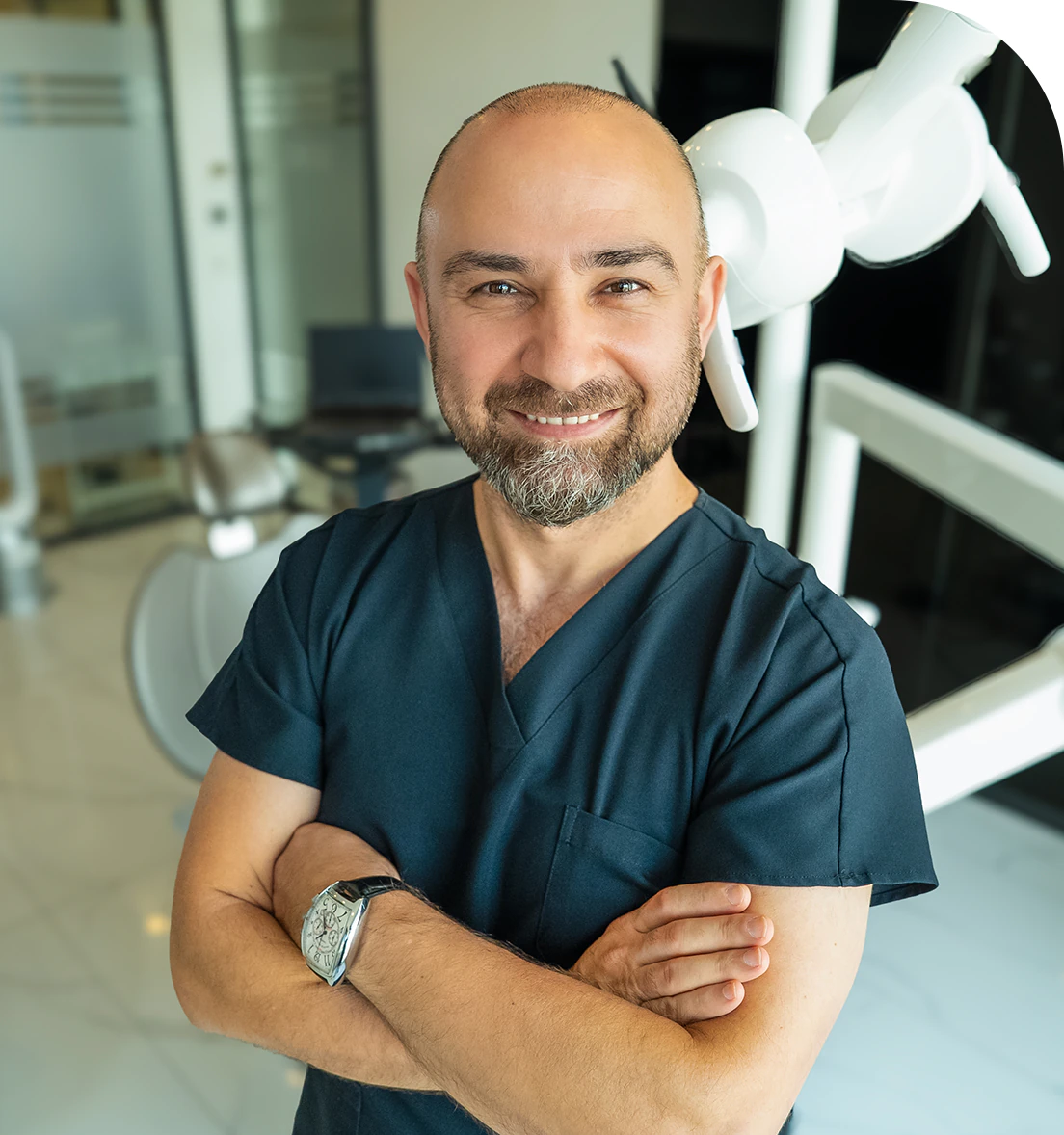
Dr. Dt. Ömer Atar provides care at his private clinic in Istanbul, combining his academic background and many years of clinical experience in dentistry. With a treatment approach that integrates aesthetic and functional solutions, he aims to achieve natural, balanced, and long-lasting results through personalized planning for each patient. Dr. Atar completed his education at the Marmara University Faculty of Dentistry, which he began in 1994, graduating in 2000. He continued his academic work in the Department of Prosthodontics at the same university. In 2007, he earned his PhD degree with his scientific thesis on implants and implant-supported prostheses in patients undergoing distraction osteogenesis. His academic expertise deepened in the fields of metal-free aesthetic systems, implant-supported prostheses, and cosmetic dentistry. Integrating modern technologies and digital dentistry into his practice, Dr. Ömer Atar achieves high success rates in treatments such as smile design, All-on-4/All-on-6 implant treatments, laminate veneers, zirconium crowns, teeth whitening, and gingival aesthetics (gummy smile). As a member of EDAD (Turkish Academy of Aesthetic Dentistry), he embraces a holistic approach focused on modern, functional, and natural outcomes in aesthetic dentistry.


