
 Türkçe
 Français
 Deutsch

Porcelain dental crown in Turkey is a restorative dental treatment that covers and protects damaged teeth while providing a natural, aesthetic appearance. These crowns are fabricated from high-quality ceramic materials to restore function, durability, and color harmony with surrounding teeth under clinical standards.
Cost of porcelain dental crown in Turkey varies depending on the clinic’s expertise, laboratory quality, and materials used, yet remains significantly more affordable than in many European countries. Treatment fees generally include examination, tooth preparation, digital measurements, laboratory fabrication, and final placement.
Procedure for porcelain dental crown treatment in Turkey involves comprehensive oral examination, radiographic assessment, tooth preparation, and precise digital or conventional impressions. Temporary crowns are placed while the permanent restoration is manufactured, followed by careful bonding and occlusion control.
Advantages of getting a porcelain dental crown in Turkey include advanced dental technology, internationally accredited clinics, and experienced prosthodontists. Patients benefit from short treatment timelines, high sterilization standards, and aesthetically superior restorations designed to ensure long-term oral health and functional stability.
| Things You Should Know | Information |
| Definition | Porcelain dental crown is a type of ceramic-based fixed prosthesis applied for aesthetic and functional purposes, covering the front or entire surface of the natural tooth. It is a long-lasting restoration that mimics the natural structure of the tooth and provides an aesthetic appearance. |
| Purpose of Use | – Aesthetic correction of discolored, deformed, or worn teeth – Protection of broken or heavily filled teeth – Correction of tooth form, size, or alignment irregularities – Use in implant-supported prostheses |
| Types | – Metal-supported porcelain crown: Contains metal infrastructure and porcelain on top; durable but limited in aesthetics. – Full ceramic (all-porcelain): Contains no metal, more successful in aesthetics. – Laminate (porcelain veneer): Applied only to the front surface, provides high aesthetics with minimal substance loss. |
| Application Process | 1. Teeth are minimally reduced by the dentist. 2. Impression is taken digitally or traditionally. 3. Custom porcelain crown is prepared in the laboratory. 4. After trial fitting, the crown is permanently bonded to the tooth with special adhesives. |
| Treatment Duration | Usually completed in 2–3 sessions. Duration may vary depending on the number of crowns and techniques used. |
| Advantages | – Offers natural tooth-like color and shape – Resistant to discoloration – Biocompatible with oral tissues – Supports chewing function – Long-lasting with proper care |
| Disadvantages | – Metal-supported ones may cause gray reflection at the gum line over time – Risk of fracture under excessive force (especially full ceramic ones) – Requires tooth reduction (an irreversible procedure) |
| Care and Cleaning | Brushing at least twice a day, using floss and interdental brushes is recommended. Lifespan can be extended with regular dental check-ups. Very hard foods should be avoided. |
| Usage Duration | Can be used for an average of 10–15 years. This period may vary depending on the patient’s oral care, teeth grinding habits, and diet. |
| Who Is It Suitable For | – Individuals with aesthetic concerns – Those with discolored or misshapen front teeth – Patients with worn or heavily filled teeth – People with healthy gum condition |
| Alternatives | – Zirconium crowns – Composite laminate applications – Full ceramic systems instead of metal-supported porcelain |
What Is a Porcelain Dental Crown?
Porcelain dental crown refers to thin layers made of porcelain placed over natural teeth for aesthetic and functional purposes. They are used to correct the shape, color, and alignment of teeth. Thanks to their durable structure, they are long-lasting and highly resemble natural teeth. They are generally preferred for broken, worn, discolored, or misshapen teeth. Impressions are taken by the dentist and the crown is prepared in the laboratory.
What Is the Difference Between Porcelain Dental Crowns and Porcelain Laminate?
When our patients come to the clinic, they generally use the term “crown” as a generic expression. However, in our world, there are two main approaches to this procedure, and understanding this distinction is the first step for us to choose the right treatment for you. These two methods are called Porcelain Crowns (Full Coverage) and Porcelain Laminate Veneers (Porcelain Veneers).
You can think of porcelain crowns as a protective cap or helmet placed over the tooth. This method does not only cover the front surface but surrounds the entire tooth 360 degrees. If you have a very large cavity, if the tooth has undergone root canal treatment and become fragile, or if the natural tooth tissue can no longer bear load due to old and incompatible fillings, crowns come into play. The main goal here is not just aesthetics but also to restore the “structural integrity” of the tooth. By encasing the tooth, we make it resistant to chewing forces. Especially for posterior teeth or anterior teeth with excessive substance loss, crowns are indispensable to prevent fracture.
Porcelain laminate veneers, on the other hand, are a much more conservative approach focused on preserving tooth tissue. They can be likened to press-on nails or very thin contact lenses for the eyes. In this system, the entire tooth is not cut; instead, a thin porcelain sheet is bonded to the front surface only. If the structural integrity of your tooth is intact, but you’re unhappy with its color, shape, slight misalignment, or small chips on the edges, veneers are an excellent solution.
Situations where laminate veneers are preferred include:
- Discolored teeth
- Shape irregularities
- Slightly crooked teeth
- Chipped tooth edges
- Spaced teeth
In this method, we perform very minimal reduction—usually less than a millimeter. Sometimes they can even be applied without any reduction. The aim is to perform aesthetic masking while preserving as much natural enamel as possible. As a result, if your tooth “needs to be strengthened,” we prefer crowns; if it only “needs to be beautified,” we opt for laminate veneers.
What Are the Porcelain Crown Materials Used in Treatment?
The reason porcelain restorations are considered the “gold standard” today is not just their beautiful appearance. The main reason lies in the biological and chemical relationship these materials establish with oral tissues. In the past, options were limited, but today technology offers us incredible alternatives. There is no single “best” material; instead, there is the material that is “most appropriate for your tooth.”
Metal-supported porcelains are the oldest and most well-known method. In these systems, a gray metal substructure under the porcelain provides strength. Its mechanical resistance is very high and it is economical. In long bridges or posterior teeth exposed to heavy chewing forces, the risk of fracture is low. However, it lacks translucency. Since the metal blocks light, it can create a gray reflection or a dark line at the gum margin in cases of thin gums. Therefore, it is not our first choice in anterior teeth where high aesthetic expectations exist.
Zirconium-supported ceramics are the most popular material in recent years. Zirconium, also known as “white steel,” is both highly durable and aesthetic. It contains no metal, and its infrastructure is entirely white. It transmits light, offering a look very close to natural teeth while being as strong as metal. Its compatibility with the gums is excellent and it does not create gray reflections. It can be safely used in both anterior and posterior teeth. It is an ideal option especially for implant-supported crowns and long bridges due to its high fracture resistance.
E-Max, or lithium disilicate systems, represent the cutting edge of glass-ceramic technology. They are made from reinforced glass. Their light transmittance is the closest to natural enamel. They look so natural that it is nearly impossible to tell they are artificial. They are usually preferred in anterior aesthetic restorations and laminate veneers. While E-Max is very aesthetic, it does not have the flexural strength of zirconium. Therefore, its use should be carefully evaluated in patients with teeth grinding habits or in long bridges in the posterior region.
Factors influencing the choice of these materials include:
- Position of the tooth
- Chewing force
- Aesthetic expectation
- Gum structure
- Presence of bruxism
In summary, if you have multiple missing teeth in the posterior region and strength is a priority, zirconium or metal-supported is recommended; if we are designing a single crown in the anterior region or planning an aesthetic smile makeover where natural appearance is key, glass-ceramic systems are preferred.
How Does the Porcelain Crown Treatment Process Proceed?
The porcelain restoration process is a protocol that must be meticulously managed like a construction project. The time from when you sit in the chair to when you achieve your new smile typically takes a few sessions, and each stage complements the other. Knowing this process step-by-step will increase your confidence in the treatment.
The first stage is always detailed planning and diagnosis. First, we analyze the current situation. Are your gums healthy? Are there cavities? Most importantly, how is your occlusion—meaning how do your upper and lower teeth come together? If the bite is off, even the most expensive porcelain may break. At this stage, photos are taken, X-rays are reviewed, and your expectations are listened to. We decide whether to use zirconium or E-Max during this phase.
The second stage is tooth preparation. This is the most critical part that determines the technical success of the treatment. Under local anesthesia—meaning you feel no pain—we create space on the tooth surface for the porcelain to fit. For veneers, only a thin layer from the front of the tooth is removed; for crowns, the tooth is reduced circumferentially. The angle of the tooth reduction determines the crown’s retention. Improper reduction may cause the crown to fall off or not fit perfectly.
Once the teeth are prepared, precise impressions are taken. We take an impression so the lab can replicate your teeth exactly. This can be done using traditional impression materials or with digital intraoral scanners in modern clinics. The accuracy of the impression is essential for the crown to fit your mouth perfectly. As soon as the preparation and impression are complete, we fabricate temporary crowns in the same session to protect your teeth and maintain your appearance. You never leave the clinic without teeth. These temporaries ensure your comfort until the final restorations are ready.
After you leave the clinic, the laboratory process begins. Our technicians work with micron-level precision according to the impression taken. If it is metal-supported, the metal is cast, sandblasted, and baked. If it’s zirconium or E-Max, it is milled from blocks using computer-aided design systems, and ceramic powders are layered to give the natural tooth form and color.
The next stage is the try-in. Before the porcelains are finished, we do a try-in while the teeth are still in your mouth. Do you like the color? Does the shape suit your face? How is its harmony with the gums? Most importantly, is there a high point when you bite? At this stage, we can make all kinds of changes. We never proceed to the cementation phase without your approval.
Finally, the permanent cementation process is carried out. If everything is perfect, we permanently bond the crowns. This is not a simple gluing process; it is a special chemical procedure. The tooth surface and porcelain surface are roughened with special acids. The adhesive applied is hardened with a special light device. This process essentially fuses the porcelain and the tooth into one unit.
The main stages of the treatment process are:
- Examination
- Tooth preparation
- Impression taking
- Temporary teeth
- Laboratory
- Try-in
- Cementation
Is There Pain or Sensitivity After Porcelain Crowns?
One of the most common concerns of our patients is post-procedure pain. Since local anesthesia is applied during the procedure, you do not feel any pain. However, after the anesthesia wears off and in the following few days, it is completely normal to experience mild ache or sensitivity. Because the tooth is a living tissue and the enamel layer has been treated.
Especially a sensitivity to hot and cold beverages may develop. This condition is usually temporary and diminishes as the tooth heals. In the first few days after cementation, as your teeth adjust to the new bite, you may feel a strange sensation or slight pressure when chewing. This is part of the adaptation process.
If the pain is severe, wakes you up at night, or becomes throbbing spontaneously, this is not normal. In such a case, there may be a problem in the tooth’s nerve or a height issue with the crown.
Conditions that may trigger sensitivity include:
- Very cold water
- Hot teas
- Ice cream
- Sour foods
- Hard chewing
How Long Do Porcelain Dental Crowns Last?
Porcelain dental restorations are very long-lasting when done correctly and well-maintained. However, the term “lifelong” can sometimes be misunderstood. No man-made material lasts forever. Literature and our clinical experience show that these restorations have an average lifespan of 10 to 15 years, and with proper care, this can extend up to 20 years.
The most important factors affecting this duration are the quality of the material used and the craftsmanship of the dentist. Correct indication and precise workmanship extend longevity. For example, if the wrong porcelain is chosen for a patient who grinds their teeth, the lifespan will be short. The second factor is patient care. The mindset of “It’s a crown, it won’t decay” is completely wrong. Yes, the porcelain itself does not decay, but the margin where the crown ends and your natural tooth begins can decay. Bacteria accumulating at this margin can rot the underlying tooth and cause the crown to fail.
The third factor is biological compatibility. Gums may recede over time due to aging. This is a physiological process. When the gum recedes, the margin of the crown may become exposed and the aesthetic appearance may deteriorate. In such cases, the crown may need to be replaced.
Key factors affecting longevity include:
- Oral hygiene
- Teeth grinding
- Dietary habits
- Gum health
- Frequency of dental check-ups
How Should Porcelain Crowns Be Maintained?
You should show your porcelain teeth the same care, if not more, than your natural teeth. Porcelain surfaces do not stain and are smooth, which makes cleaning easier, but the gum margins are always at risk. Brushing twice daily is essential. But more importantly, the use of dental floss or interdental brushes is critical. The biggest enemy of crown longevity is gum disease caused by bacteria accumulating between the teeth.
Be careful with hard foods. Porcelains are very durable, but just as biting pistachio shells or opening bottle caps can break natural teeth, they can also crack porcelain. Instead of biting into a hard apple with your front teeth, it is better to eat it sliced—this reduces leverage force on the crown and extends its lifespan.
If you suffer from bruxism (teeth grinding), we highly recommend using a transparent night guard while sleeping to protect your restorations. These guards absorb the uncontrolled forces exerted on your teeth throughout the night and prevent the porcelain from breaking or cracking.
Habits to avoid include:
- Nail biting
- Chewing pens
- Chewing ice
- Shelling hard foods
- Opening packages with teeth
Is the Porcelain Crown Procedure Reversible?
We must always be very transparent with our patients on this matter. Porcelain crown and veneer applications are irreversible treatments. At the beginning of the treatment, we mentioned that we remove a certain amount of natural tooth structure to make room for the restoration. This enamel tissue that is removed cannot regenerate. Enamel is one of the few tissues in the human body that cannot repair itself.
Therefore, once a tooth has been crowned, it must remain covered for the rest of its life. In other words, you unfortunately do not have the option to say, “I’m bored, I want to remove the crowns and use my own teeth again.” Once your current crowns reach the end of their lifespan, they must be removed and replaced with new ones. Porcelain materials cannot be reused after removal.
For this reason, it’s important to understand that choosing this treatment is a lifelong commitment to care and renewal. Patients who undergo this procedure at a young age should calculate that they may need to replace these crowns several times over the years. This is a cycle, and once you enter it, you must take better care of your teeth than ever before. However, the aesthetic results achieved and the increase in quality of life make this responsibility worthwhile.
In conclusion, porcelain dental restorations are not merely an aesthetic makeover but a serious medical procedure that rebuilds your chewing function, speech, and smile. Every step of the protocols we apply in our clinic is aimed at providing you not just with white teeth but with a healthy restoration that is harmonious with your gums, integrated with your oral structure, and usable for years without issues. Balancing the strength of zirconium with the aesthetics of glass ceramics according to your needs is the foundation of our dental artistry.
Criteria for correct material selection:
- Bite type
- Tooth color
- Face shape
- Lip structure
- Age factor
If you aim for a permanent change in your smile and a functional improvement, this process is the most reliable path for you. Remember, a well-made porcelain restoration is one that no one can tell is porcelain. Naturalness, function, and biological compatibility are our three indispensable rules. Every procedure carried out within these rules is an investment that will serve you for years. When you entrust yourself and your smile to skilled hands, the result will always be satisfying.
Before & After Photos


Frequently Asked Questions
Is There a Risk of Gum Recession After Porcelain Crowns?
Yes, improperly made porcelain crowns can cause gum irritation and recession over time. Therefore, crowns must fit precisely at the gumline and regular oral hygiene is important.
Are Porcelain Crowns Safe During Pregnancy?
Porcelain crown procedures during pregnancy are usually postponed unless for aesthetic concerns. Since local anesthesia may be required, the procedure is preferably done in the second trimester.
Do Porcelain Crowns Harm the Underlying Tooth?
A portion of the tooth is trimmed before crowning; this is an irreversible step. However, when done correctly, it does not harm the tooth and can protect it long term.
What Is the Difference Between Porcelain and Zirconium Crowns?
Porcelain crowns can be metal-supported, whereas zirconium crowns are completely metal-free. Zirconium offers a more natural appearance and generally better gum compatibility.
Who Is Not Suitable for Porcelain Crowns?
Porcelain crowns may not be suitable for individuals with severe teeth grinding (bruxism), serious gum disease, or insufficient tooth support.
How Long Does Sensitivity Last After Porcelain Crowns?
Mild sensitivity for a few days after the procedure is normal. However, if it lasts more than two weeks, there may be an issue with the crown, and a dentist should be consulted.
Do Porcelain Crowns Change Color Over Time?
High-quality porcelain crowns do not change color over time. However, if margin leakage occurs or surrounding natural teeth discolor, aesthetic mismatches may appear.
How Durable Are Porcelain Crowns?
With regular maintenance and protection from trauma such as teeth grinding, porcelain crowns can last between 10–15 years.
What Should Be Considered When Eating After Porcelain Crowns?
Avoid very hard foods, especially in the first few weeks. Also, habits like nail biting can damage the crown.
Can Bad Breath Occur After Porcelain Crowns?
If gaps are left at the crown margins or if gum inflammation develops, bad breath can occur. That’s why regular brushing and flossing are important.
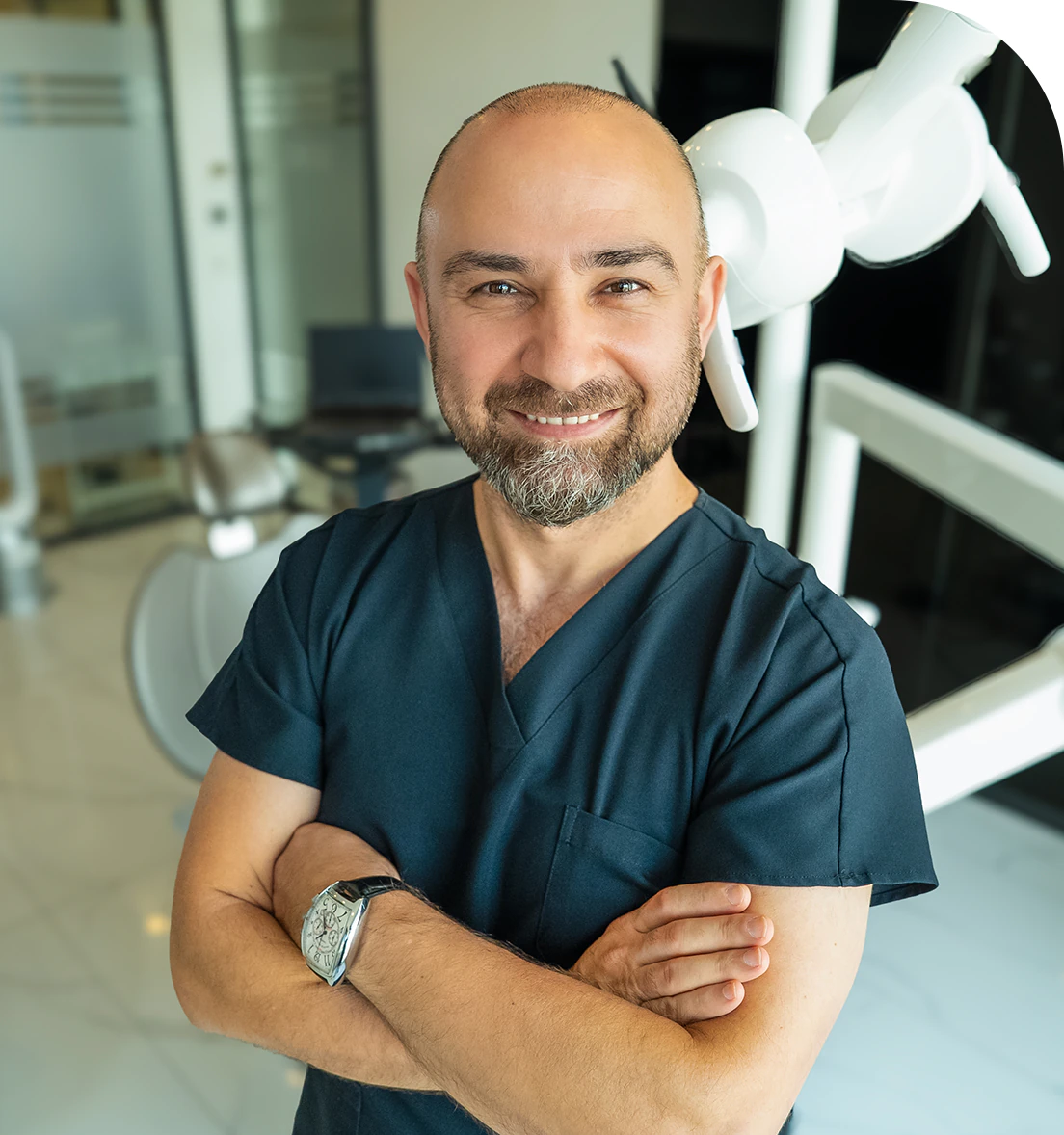
Dr. Dt. Ömer Atar provides care at his private clinic in Istanbul, combining his academic background and many years of clinical experience in dentistry. With a treatment approach that integrates aesthetic and functional solutions, he aims to achieve natural, balanced, and long-lasting results through personalized planning for each patient. Dr. Atar completed his education at the Marmara University Faculty of Dentistry, which he began in 1994, graduating in 2000. He continued his academic work in the Department of Prosthodontics at the same university. In 2007, he earned his PhD degree with his scientific thesis on implants and implant-supported prostheses in patients undergoing distraction osteogenesis. His academic expertise deepened in the fields of metal-free aesthetic systems, implant-supported prostheses, and cosmetic dentistry. Integrating modern technologies and digital dentistry into his practice, Dr. Ömer Atar achieves high success rates in treatments such as smile design, All-on-4/All-on-6 implant treatments, laminate veneers, zirconium crowns, teeth whitening, and gingival aesthetics (gummy smile). As a member of EDAD (Turkish Academy of Aesthetic Dentistry), he embraces a holistic approach focused on modern, functional, and natural outcomes in aesthetic dentistry.


