
 Türkçe
 Français
 Deutsch

Laminate veneer are thin porcelain laminate coverings used in aesthetic dentistry. These veneers, which are bonded only to the front surface of the tooth, offer a natural-looking and minimally invasive solution. Aesthetic enhancement is achieved while preserving the general structure of the tooth.
Laminate veneer treatment is preferred to lighten tooth color, correct shape irregularities, and close gaps. Thanks to their thin structure, very little material is removed from the tooth surface. This method is ideal especially for high aesthetic expectations in the front teeth.
Laminate veneer coverings are durable and long-lasting. With proper care, they can be used for 10–15 years. They are resistant to discoloration and are not affected by staining foods like coffee or tea. They have high biological compatibility with the gums and a low risk of allergic reaction.
The application process is completed in a few sessions. In the first stage, the front surface of the tooth is minimally abraded, impressions are taken, and custom veneers are produced in the laboratory. Once ready, they are bonded to the teeth with special adhesives. The procedure is painless and quick.
| Things You Should Know | Information |
| Definition | Laminate veneer are thin porcelain or composite coverings bonded to the front surface of teeth. They are applied for aesthetic purposes and mimic the appearance of natural teeth. |
| Purpose | To improve the color, shape, size, or length of teeth; to close gaps between teeth; to correct minor misalignments. |
| Application Area | Generally applied to front teeth (those in the smile line). |
| Types of Material | Porcelain veneers and composite veneers. Porcelain is more durable and aesthetic; composites are more economical and can be applied in a single session. |
| Procedure Process | 1) Examination and planning, 2) Minor shaping of teeth, 3) Taking impressions, 4) Temporary veneers (if necessary), 5) Permanent veneer bonding. |
| Advantages | Highly similar to natural teeth appearance, stain-resistant, long-lasting, minimal substance removal from tooth tissue. |
| Disadvantages | Irreversible abrasion of tooth enamel is required, risk of breakage, costly, repair is difficult (especially in porcelain). |
| Suitable Candidates | Individuals with generally healthy teeth, no gum disease, and aesthetic concerns. |
| Maintenance Requirements | Daily oral hygiene should be observed, very hard foods avoided, regular dental check-ups should be made. |
| Alternative Treatments | Composite bonding, full ceramic crowns, orthodontic treatment (if aesthetic issue is due to misalignment). |
What is a Laminate Veneer?
Laminate veneers are thin porcelain coverings bonded to the front surfaces of teeth. These coverings, used for aesthetic purposes, are preferred to correct tooth color, shape, size, and alignment. It is a minimally invasive method, usually involving minimal abrasion of natural tooth tissue. Laminate veneer is a long-lasting and natural-looking solution for patients wanting to improve smile aesthetics.
Why Are Laminate Veneers the Gold Standard in Aesthetic Dentistry?
In the world of dentistry, the term “gold standard” is used to denote treatments that deliver the best possible results in the most reliable way. Laminate veneers earn this title primarily due to their “conservative” approach. In the past, achieving an aesthetic smile required full reduction of teeth—crowns—which meant losing significant tooth structure. Laminate veneers eliminated this necessity.
Changing the smile without aggressive tooth reduction or compromising the biological integrity of the tooth is a revolutionary approach. Laminate veneers are also unmatched in terms of gum compatibility. Porcelain surfaces are extremely smooth and polished, so they accumulate much less bacterial plaque than natural teeth. This feature keeps the gums looking pink, healthy, and firm. Discoloration at the gum line, gray reflections, or inflamed appearances are rarely seen in properly applied laminate veneers.
Moreover, thanks to advances in material technology, these thin porcelains exhibit remarkable resistance to intraoral forces. Their ability to meet high aesthetic expectations without harming the tooth makes them indispensable for both doctors and patients.
Are Teeth Severely Trimmed During Laminate Veneer Application?
The most common concern we hear from our patients is: “I don’t want my teeth to be shaved down like mouse teeth.” This fear is a trauma leftover from older porcelain crown procedures and is unnecessary with laminate veneer treatment. Here lies the biggest advantage of this treatment: minimal intervention.
The amount of tissue removed for laminate veneers usually ranges between 0.3 mm and 0.5 mm—about the thickness of a fingernail. In fact, if tooth position is suitable (e.g., recessed or spaced teeth), it can even be done with the “Non-Prep” technique, which involves no cutting at all. Or it can be completed with microscopic-level roughening only.
This minimal preparation often eliminates the need for anesthesia (injection), as the process does not approach the tooth’s nerve and remains limited to the outer enamel layer. Preserving enamel is critical not only for tooth health but also for porcelain retention. Adhesives bond to enamel several times stronger than to the dentin layer (the inner tooth layer). In short, the less the tooth is cut, the stronger the veneer will be.
When Is Laminate Veneer Treatment Used?
Laminate veneer treatment offers a saving solution in many different cases that impair smile aesthetics. It is effective not only for whitening but also in form and shape correction. The most common cases include:
- Drug-induced discolorations
- Darkened teeth post-root canal
- Congenital shape deformities
- Broken tooth edges
- Cracked tooth surfaces
- Spaced teeth
- Shortened, worn teeth
- Old and discolored large fillings
- Mild misalignments
Especially tetracycline stains from childhood antibiotic use or discoloration due to excessive fluoride intake may not be resolved by traditional whitening (bleaching). In these deep and stubborn stains, laminate veneer is the most effective way to permanently change tooth color. Also, for closing gaps (diastema), veneers can fill the space without cutting the teeth—a quick and aesthetic option for those who don’t want orthodontic treatment.
Who Is Not Suitable for Laminate Veneers?
While laminate veneers produce miraculous results, they may not be suitable for every patient or tooth structure. For a successful and long-lasting outcome, proper patient selection is just as important as the quality of application. In some cases, risks may outweigh benefits.
Situations where laminate veneers are risky or not recommended:
- Severe teeth grinding habits
- Advanced bruxism
- Insufficient enamel tissue
- Very large and deep tooth fractures
- Serious jaw disorders
- Advanced gum recession
- Active gum diseases
- High risk of cavities
- Severe misalignments
Especially bruxism (teeth grinding and clenching), is the biggest threat to porcelain laminates. These habits create uncontrolled and excessive forces, which can lead to veneer cracking or dislodging. However, this is not an absolute contraindication—after controlling bruxism with night guards or botox, veneers can be safely applied with careful planning. Still, if there’s not enough enamel to bond to, full crowns should be preferred.
How Is Smile Design Carried Out in Laminate Veneer Treatment?
Laminate veneer treatment is as much a technical process as it is an artistic one. The process begins with designing the most suitable smile in accordance with the patient’s facial features, lip structure, skin tone, and even personality. This is called “Smile Design.”
Before starting treatment, detailed photographs and videos are taken. The ideal tooth length and shape are determined digitally according to the patient’s facial proportions. However, the image on the screen may not always reflect reality. This is where the trial phase called “Mock-up” comes in. The design prepared in the lab is applied onto the patient’s teeth using temporary material. Without any tooth intervention yet, the patient can see in the mirror what their final smile will look like in real life.
This step is critical to align patient and doctor expectations. Tooth length can be extended, corners rounded, or color changed. The design can be modified until the patient says, “Yes, this is my smile.” Thanks to this “test drive,” there are no surprises, and the final restorations match the envisioned result.
What Materials Are Used in Laminate Veneer Treatment?
Ceramics used in aesthetic dentistry are continuously evolving. Materials used for laminate veneers must be both aesthetically flawless and durable against intraoral forces. Some porcelains used in the past were very aesthetic but fragile; others were strong but lacked beauty.
Today, the most commonly used and successful material for laminate veneers is Lithium Disilicate, known commercially as “Emax” ceramics. This material is produced using pressed glass ceramic technology. Emax’s biggest feature is its light transmission, which closely mimics that of natural teeth. It also has multiple times the flexural and fracture resistance of traditional porcelains.
In some special cases, Feldspathic porcelains may also be used. These are typically hand-layered on a refractory model and offer very high aesthetic depth. However, feldspathic porcelains are mechanically more fragile and require very careful usage. Your dentist will choose the most appropriate material based on your chewing forces and aesthetic expectations. Generally, reinforced glass ceramics are preferred in most modern cases.
How Do Laminate Veneers Bond to Teeth, and Can They Fall Off?
One of the biggest questions patients have is how such a thin structure bonds to the tooth and whether it will fall off while eating. Bonding laminate veneers is not a simple gluing process—it is a chemical fusion known as “adhesive cementation,” where the porcelain and the tooth become a single body.
This bonding process involves very delicate steps:
- Etching the porcelain surface
- Rinsing the porcelain
- Applying silane agent
- Cleaning the tooth surface
- Etching the tooth enamel
- Applying bonding agent to tooth
- Applying resin cement
- High-intensity light curing
When done correctly and meticulously, an unbreakable bond forms between the porcelain and the tooth. A porcelain shell is fragile on its own (it can break if squeezed in the hand), but once bonded to a tooth, it gains incredible strength from the support of the underlying tooth. With the right indication and bonding protocol, laminate veneers are almost impossible to dislodge during eating or speaking. Typically, it takes major trauma that also damages the tooth itself for a veneer to fall off.
How Long Do Laminate Veneers Last?
Since laminate veneer treatment is costly and labor-intensive, patients naturally want to know how long their investment will last. Scientific studies and long-term clinical follow-ups confirm that laminate veneers are long-lasting restorations.
With good oral care and regular check-ups, their longevity is typically:
- Very high survival rate at 5 years
- Over 90% success rate at 10 years
- 15–20 years of usage is frequently observed
Of course, the concept of “lifelong” cannot be guaranteed in dentistry. Gum recession with age, bone changes, or accidents can occur. However, laminate veneers retain their shine, color, and tissue compatibility for many years. Failures or the need for renewal are usually not due to the porcelain itself but external factors like bruxism or poor oral hygiene.
How Should Laminate Veneers Be Maintained?
After achieving your new smile, maintaining its beauty and prolonging the life of the restorations is largely in your hands. Laminate veneers do not stain—meaning their color will not change due to tea, coffee, wine, or smoking. This is a major advantage, but maintaining gum health still requires proper hygiene.
Habits laminate veneer users should avoid:
- Nail biting
- Chewing on pens
- Cracking ice
- Opening packages with teeth
- Cracking hard nuts with teeth
- Tearing with front teeth
- Chewing on seeds
- Biting into very hard fruits
Avoiding these mechanical traumas is essential to preserve the porcelain’s edge integrity and prevent cracks.
Daily care routine should include:
- Brushing twice a day
- Using dental floss
- Using interdental brushes
- Choosing fluoride-free toothpaste
- Using a soft-bristled toothbrush
- Regular dental check-ups
- Wearing a night guard
Especially for veneer patients, a night guard is not optional but a form of insurance. The jaw forces we apply during sleep unconsciously are many times greater than when awake. A night guard absorbs these forces and protects the porcelain from fractures. Routine 6-month dental check-ups allow early detection of minor issues before they become major problems. A well-maintained laminate veneer will provide a confident, radiant smile for years.
Frequently Asked Questions
For which dental problems is laminate veneer application preferred?
Laminate veneer is preferred to correct aesthetic issues such as discoloration, mild crowding, gaps, or chips in the teeth. It is generally applied to the front teeth.
How much of the tooth is removed during the laminate veneer procedure?
Only about 0.3–0.7 mm of the front tooth surface is minimally abraded in this procedure, preserving the natural structure of the tooth to a great extent.
Can laminate veneer treatment be applied to children or adolescents?
It is generally applied to individuals whose dental development is complete. Therefore, it is not suitable for children; the appropriate age in adolescents is determined by the dentist.
Can someone with laminate veneers undergo tooth whitening?
No, laminate veneers are not affected by whitening procedures. If whitening is desired, it should be planned before veneer treatment.
What should be done if a laminate veneer falls off?
If a veneer falls off, the piece should be preserved if possible, and a dentist should be consulted immediately. It may be rebonded or replaced under suitable conditions.
Is the laminate veneer procedure painful?
Local anesthesia can be applied beforehand. It is generally a painless procedure. Though mild sensitivity may occur afterward, it typically resolves quickly.
How natural do laminate veneers look?
With high-quality porcelain and excellent lab work, a highly aesthetic result can be achieved that is indistinguishable from natural teeth.
How long do laminate veneers last?
With proper maintenance, good oral hygiene, and protection from trauma, laminate veneers typically last 10–15 years. However, this duration may vary depending on individual habits.
Do laminate veneers stain from tea, coffee, or smoking?
High-quality porcelain materials do not stain. However, if there is leakage at the veneer margin or poor oral hygiene, surrounding teeth may discolor.
Why are regular dental check-ups important after getting laminate veneers?
Check-ups are vital for evaluating the fit of the veneers, detecting potential leakage early, and preserving gum health.
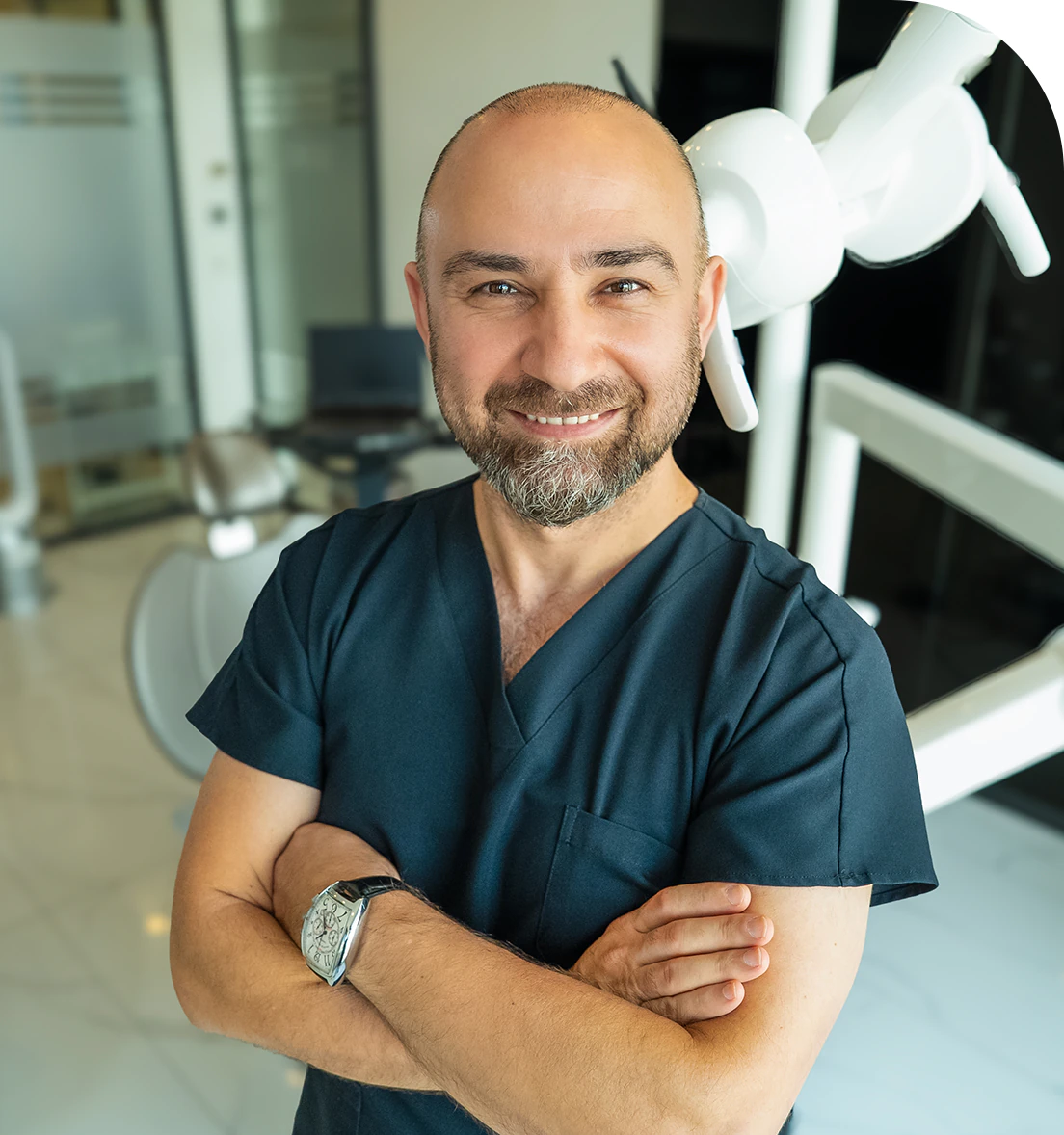
Dr. Dt. Ömer Atar provides care at his private clinic in Istanbul, combining his academic background and many years of clinical experience in dentistry. With a treatment approach that integrates aesthetic and functional solutions, he aims to achieve natural, balanced, and long-lasting results through personalized planning for each patient. Dr. Atar completed his education at the Marmara University Faculty of Dentistry, which he began in 1994, graduating in 2000. He continued his academic work in the Department of Prosthodontics at the same university. In 2007, he earned his PhD degree with his scientific thesis on implants and implant-supported prostheses in patients undergoing distraction osteogenesis. His academic expertise deepened in the fields of metal-free aesthetic systems, implant-supported prostheses, and cosmetic dentistry. Integrating modern technologies and digital dentistry into his practice, Dr. Ömer Atar achieves high success rates in treatments such as smile design, All-on-4/All-on-6 implant treatments, laminate veneers, zirconium crowns, teeth whitening, and gingival aesthetics (gummy smile). As a member of EDAD (Turkish Academy of Aesthetic Dentistry), he embraces a holistic approach focused on modern, functional, and natural outcomes in aesthetic dentistry.


