
 Türkçe
 Français
 Deutsch

Zirconium dental crown in Turkey is a durable and highly aesthetic restorative treatment used to repair damaged or discolored teeth with natural-looking results. High biocompatibility, metal-free composition, and advanced CAD/CAM production techniques ensure long-term function, strength, and precise marginal adaptation.
Cost of zirconium dental crown in Turkey is significantly more affordable compared to many European countries while maintaining international clinical standards. Treatment fees generally include consultation, digital imaging, tooth preparation, laboratory fabrication, and crown placement within a structured treatment plan.
Advantages of zirconium crowns for aesthetic dentistry include superior translucency, resistance to fracture, and minimal risk of allergic reaction. The material preserves gingival health, prevents dark gum margins, and provides color stability, making it suitable for both anterior and posterior restorations.
Dental crown procedure process in Turkey involves comprehensive oral examination, radiographic assessment, precise tooth reduction, digital impression, and custom crown fabrication. Final cementation is performed after occlusal evaluation to ensure functional harmony, long-term durability, and patient comfort.
| Things You Should Know | Information |
| Definition | Zirconium dental crown is a type of fixed prosthesis placed over the tooth, made from zirconia (zirconium dioxide), a durable and aesthetic ceramic material. It can be used on both front and back teeth. It contains no metal and offers translucency close to natural teeth. |
| Purpose of Use | – Aesthetic dental corrections – Restoration of discolored or structurally damaged teeth – Strengthening of broken, worn, or substance-lost teeth – Use as an implant-supported crown |
| Material Properties | – High durability – Close resemblance to natural teeth – Tissue-friendly and biocompatible – Low thermal conductivity (less hot-cold sensitivity) – Metal-free, does not cause gray reflection |
| Application Process | 1. Teeth are minimally shaped. 2. Impressions are taken using digital or conventional methods. 3. A custom zirconium crown is produced in the laboratory. 4. After try-in and fit checks, it is permanently bonded to the tooth. |
| Treatment Duration | Usually completed in 2–3 sessions. Duration may vary depending on the number of crowns and personalized planning. |
| Advantages | – Offers an aesthetic appearance very close to natural teeth – High compatibility with gums, does not cause allergic reactions – Does not change color – Long-lasting – More natural light transmittance than metal-supported crowns |
| Disadvantages | – If not applied correctly, color differences or sensitivity may occur at the gum line – Risk of fracture under excessive force (teeth grinding/clenching) – May not allow as fine shaping as porcelain |
| Care and Cleaning | Daily brushing and flossing, along with regular dental check-ups, are necessary. With good oral hygiene, they can be used trouble-free for many years. |
| Usage Duration | Typically shows durability of 10–15 years or more. However, this period depends on oral hygiene, gum health, and personal habits. |
| Who Is It Suitable For | – Individuals with high aesthetic expectations – Patients who prefer metal-free materials due to allergy risks – People with healthy gums – Those needing restorations in both front and back areas |
| Alternatives | – Metal-supported porcelain crowns – Full ceramic (empress) crowns – Laminate (porcelain veneer) applications |
What Is a Zirconium Dental Crown?
Zirconium dental crown is a dental crown method made using zirconia, a durable and aesthetic material. Thanks to its metal-free structure, it is compatible with gums and very close in appearance to natural teeth. It is generally preferred for aesthetic and durability purposes on both front and back teeth. Its low allergy risk and long-lasting structure make zirconium crowns a popular option.
In What Cases Are Zirconium Dental Crowns Preferred?
This treatment method is not only effective for aesthetic concerns but also for correcting functional disorders. Sometimes our patients complain about the color, sometimes the shape, and sometimes the alignment of their teeth. Zirconium has a very wide range of indications. From cases with excessive substance loss to demands for aesthetic smile design, it is a lifesaver in many scenarios.
Situations where zirconium dental crown treatment is frequently preferred include:
- Severely discolored teeth
- Broken teeth
- Cracked tooth surfaces
- Teeth with shape deformities
- Spaced teeth
- Old and mismatched fillings
- Weakened teeth after root canal treatment
- Old crowns with compromised aesthetics
- Mild misalignments
Especially in teeth that are yellow or gray due to antibiotic use or genetics, whitening treatments may not yield the desired result. In such cases, zirconium provides permanent whiteness thanks to its masking ability. It is also a quick and effective alternative for adult patients with mild misalignments who do not wish to undergo orthodontic wire treatment.
Is Pain Felt During the Zirconium Dental Crown Procedure?
The greatest concern with the dental chair is always pain. But I can confidently say that the zirconium crown procedure is a completely painless experience. All procedures are performed under local anesthesia. During the tooth preparation phase—when the teeth are shaved—you won’t feel the slightest discomfort, as the area is completely numbed.
After the anesthesia wears off, it is biologically normal to experience mild sensitivity in the teeth. However, this is not an unbearable pain and can be easily controlled with basic painkillers. Immediately after tooth preparation, temporary crowns are placed in the same session to prevent sensitivity and allow you to continue your social life. These temporary teeth both protect the living tissue of the tooth from external factors and prevent you from being without teeth until treatment is complete. Your comfort is prioritized from the moment you leave the clinic.
How Long Does Zirconium Dental Crown Treatment Take?
Thanks to modern technologies, treatment durations have significantly shortened compared to the past. Zirconium crown treatment is typically completed in as little as one week. During this time, patients usually visit our clinic 2 or 3 times. In the first appointment, the teeth are prepared, impressions are taken, and temporary teeth are placed. The next phase is the laboratory process. In the final appointment, try-ins are conducted and, if everything is perfect, permanent cementation is done.
The general flow of the treatment process is as follows:
- Examination and planning
- Application of anesthesia
- Tooth preparation
- Digital impression
- Placement of temporary crowns
- Laboratory fabrication
- Framework try-in
- Aesthetic try-in
- Cementation
If there are no gum issues or additional treatments required, it is possible to achieve a brand-new smile within 5 to 7 days. In urgent cases or for patients coming from abroad, we can speed up the lab process to further reduce this time.
How Is Aesthetic Design Determined for Zirconium Dental Crowns?
The most exciting part is undoubtedly the design. Because here, we are not just making teeth—we are finding the expression that best suits the patient’s face. In this process, which we call “Smile Design,” factors like facial contours, lip structure, distance between pupils, nose width, and even skin tone are all taken into account.
We now use digital technologies that eliminate the concern of “Will it suit me?”. Thanks to CAD/CAM systems, we can see the result digitally before starting the treatment. Through analyses conducted on your photos, we choose the length, form, and color of the teeth together. Some patients prefer rounder, softer-looking teeth, while others prefer more angular, dominant appearances.
Zirconium offers a wide range of color options. There is everything from the most natural white to extra bright tones called “Hollywood White.” The important thing is to find the most ideal shade that suits the individual’s age and social status without straying from naturalness. In the lab, our technicians apply transparency to the tips and color saturation to the body of the tooth, making it appear as if the tooth has always been there naturally.
Does Zirconium Dental Crown Cause Gum Discoloration?
This is the biggest trauma for patients who have used metal-supported porcelain crowns. Metal-based crowns can cause dark gray or purple discoloration at the gum margin over time due to oxidation. When the gums recede, the dark shadow of the metal underneath may become visible, which is aesthetically undesirable.
Zirconium dental crowns are completely free of metal. The material itself is white and does not corrode. Therefore, it never causes purpling, graying, or discoloration in the gums. In fact, in terms of gum health, it is so advantageous that the risk of gum recession is much lower than with metal-supported crowns. Zirconium’s surface is extremely smooth, making it difficult for plaque and bacteria to accumulate. This ensures that the gums always appear pink, healthy, and vibrant. If you already have gum issues, zirconium crowns are the most appropriate material choice to support the healing process.
Are Zirconium Dental Crowns Durable and Can They Break?
For us, durability is just as important as aesthetics. Zirconium is a material with extremely high pressure resistance. Its resistance to chewing forces allows us to use it safely even on back teeth. Particularly, the type called “Monolithic Zirconium,” which is milled from a single block, is nearly unbreakable.
However, saying “it never breaks” would not be scientifically accurate. Just as a natural tooth can break when biting a hard object, zirconium also has a breaking threshold. But this threshold is so high that breakage under normal chewing function is extremely unlikely.
Factors affecting durability include:
- Material quality
- Production technology
- Clinician precision
- Laboratory craftsmanship
- Patient usage habits
- Bite balance
Even in patients with a habit of teeth grinding or clenching (bruxism), zirconium can be used safely. Although night guard use is recommended as an extra precaution for such patients, the material itself performs quite well against frictional forces.
Are Teeth Reduced Significantly for Zirconium Crowns?
One of the most common concerns among our patients is the loss of healthy tooth tissue. We often hear the question, “Will my teeth look like toothpicks?” One of the biggest advantages of zirconium crowns is that they allow for “minimally invasive” work.
In metal-supported porcelains, more substance must be removed from the tooth to accommodate the thickness of the metal and the porcelain on top. However, zirconium is a material that shows high strength even at very thin thicknesses. Therefore, the amount of enamel removed can be kept to a minimum. With a special cutting technique called a “chamfer finish line,” it is sufficient to create just enough space for the crown to fit. This ensures that the core of the tooth (pulp) remains undamaged and its structural integrity is preserved.
What Should Patients Be Aware of After Getting Zirconium Crowns?
How you care for your teeth after treatment is the most fundamental factor determining the lifespan of your crowns. In fact, the care of zirconium teeth is not much different from your natural teeth. You don’t need any extra devices or expensive care products. However, regular and proper cleaning is essential.
Yes, crowns don’t decay — that’s true. But the junction where the crown ends and the tooth root begins is bacteria’s favorite spot. If not cleaned properly, your natural tooth beneath the crown can decay, or gum disease may develop. Therefore, it’s essential to stick to a consistent oral care routine.
Your daily care routine should include:
- Soft-bristled toothbrush
- Dental floss
- Interdental brush
- Fluoride toothpaste
- Mouthwash
- Night guard
In particular, the use of dental floss and interdental brushes is vital for cleaning under bridge units and between teeth. These hard-to-reach areas are usually the first places where problems begin.
How Long Do Zirconium Crowns Last?
This depends on the patient’s oral hygiene and usage habits. However, zirconium crowns made under ideal conditions and properly cared for can be used problem-free for 10 to 15 years, or even much longer.
The longevity of the crown usually doesn’t depend on the zirconium material itself. Zirconium does not dissolve, rust, or wear down over time. Problems typically arise when the supporting tooth or gum health deteriorates. For example, if gum recession occurs, the marginal fit of the crown may be compromised and the restoration may need to be replaced for aesthetic reasons. Or, due to poor oral hygiene, the underlying tooth may decay.
Visiting the dentist every six months for regular checkups is the most reliable way to extend the life of your crowns. During these checkups, the marginal fit, gum health, and occlusal balance of the crowns are examined. Since minor issues can be addressed early, you’ll be able to use your crowns safely for many more years.
What Affects the Price of Zirconium Dental Crowns?
The cost of zirconium crown treatment depends on many factors, from the quality of the material used to the detail of the craftsmanship. Zirconium blocks are produced in different qualities across the world. Using certified, high-purity, and reputable brand blocks directly affects both the aesthetic result and durability.
Additionally, there is an artistic dimension to this work. The technician’s craftsmanship, the shape they give the tooth, color gradation, and the sense of naturalness all influence the price. There is, of course, a difference in value between mass-produced, single-tone, matte teeth and personalized restorations crafted with fine detail. But it’s important to remember that this is a health investment. In a treatment where you entrust your smile and confidence, focusing on quality and the experience of the dentist rather than just the cost is always the best approach.
Do Zirconium Crowns Change Color or Become Yellow?
The surface of natural teeth has a microscopic porous structure. Over time, these pores absorb staining substances from tea, coffee, cigarettes, and food, causing discoloration. However, zirconium porcelains are fired at extremely high temperatures in the lab and then glazed, making the surface as smooth as glass.
This smooth and slick surface is highly resistant to staining. Colorants cannot adhere to it and are easily washed away. Therefore, zirconium dental crowns do not yellow or change color over time. The whiteness you choose on the first day of treatment remains the same even after ten years. Of course, some superficial staining may occur due to coffee or smoking, but these can be immediately removed with simple polishing by your dentist or regular brushing—there is no deep discoloration within the material.
Is There Hot or Cold Sensitivity With Zirconium Crowns?
Metal is a material that conducts heat very rapidly. In old-style metal-supported crowns, eating or drinking very hot or cold items would quickly transmit that heat to the underlying tooth, causing sensitivity. Zirconium, on the other hand, is a material with extremely high thermal insulation. It does not conduct heat—instead, it insulates the tooth against temperature changes.
Thanks to this feature, the living tissue under the zirconium crown is protected from thermal shock. One of the main reasons our patients do not experience sensitivity when drinking hot soup or cold water after treatment is this insulating property. This thermal protection also helps preserve the long-term health of the tooth’s pulp (nerve).
Can Zirconium Crowns Be Used in Implant-Supported Prostheses?
Zirconium is also becoming the gold standard for implant-supported prostheses. Especially in anterior implants, aesthetic expectations are very high. Since the implant itself is made of titanium, it is gray. If metal-supported porcelain is used in the upper structure, gray reflections may appear in cases where the gums are thin. But when zirconium abutments and zirconium crowns are used, the reflection from beneath the gums appears completely white.
The health of the gum tissue around the implant is critical for implant success. Zirconium’s biocompatible structure accelerates the healing of soft tissue around the implant and makes it difficult for bacteria to colonize this area. This both extends the life of the implant and creates prosthetics that look indistinguishable from natural teeth, emerging from the gum line as if they were your own.
Who Is Not Suitable for Zirconium Crowns?
Although zirconium is a fantastic material, it may not be suitable for every patient. First, the patient must have completed their developmental period. Permanent crowns are not recommended for individuals under the age of 18, whose jawbone development is still ongoing. As the jaw grows, the position of the teeth changes, and the crowns may become mismatched in a short time.
In patients with active gum disease, treatment is not started immediately. First, issues such as gum bleeding, swelling, or recession must be addressed. No matter how high the quality of the crown, restorations performed without establishing a healthy foundation are doomed to fail.
Situations where zirconium dental crowns are not recommended:
- Patients under 18 years of age
- Those with advanced gum recession
- Those with active gum infections
- Teeth with failed root canal treatments
- Teeth with such excessive tissue loss that they can no longer retain a crown
In such cases, resolving the existing problems first and then proceeding to the prosthetic stage is the healthiest approach.
Can Zirconium Crowns Fall Off?
Another nightmare for patients is the fear of a crown falling off while eating or speaking in a social setting. In older technologies, adhesives used could degrade over time, leading to such accidents. However, today, zirconium crowns are bonded using a very special protocol known as “cementation.”
The inner surface of the zirconium and the surface of the tooth are roughened using special chemicals, and the crown is bonded using resin cements. This process is not just simple gluing; it ensures a chemical interlocking between the crown and the tooth. This bond is so strong that even when we want to remove a crown, we can only do so by cutting it with special diamond burs. Therefore, a properly bonded zirconium crown is nearly impossible to dislodge on its own.
Zirconium dental crowns are the meeting point of science and art, offering both aesthetics and functionality. With this treatment that is as natural and strong as your real teeth, achieving the smile of your dreams and carrying it confidently for years is no longer a dream. What matters is starting this journey with an experienced dentist and giving proper attention to oral care. Remember, your smile is your signature—and that signature deserves the best.
Before & After Photos


Frequently Asked Questions
What are the aesthetic advantages of zirconium dental crowns?
Thanks to its light transmittance, zirconium closely resembles natural teeth. Since it contains no metal and is compatible with the gums, it is an ideal solution for patients with high aesthetic expectations.
How do zirconium crowns adapt to the gums in the long term?
Zirconium is a biocompatible material and does not irritate the gums. It does not cause discoloration at the gum margin and helps maintain a healthy appearance for a long time.
In what cases are zirconium dental crowns not preferred?
In cases of severe jaw misalignment, habitual teeth grinding, or when very long bridges are needed, alternative materials may be recommended due to a higher risk of fracture.
What are the main differences between zirconium and porcelain crowns?
Zirconium is metal-free and does not require a metal substructure, making it more aesthetic and natural. Porcelain crowns may be metal-supported, which can lead to dark discoloration at the gumline.
How are zirconium crowns affected in patients with bruxism (teeth grinding)?
Excessive teeth grinding may lead to microcracks and edge chipping in zirconium. In such cases, a night guard is recommended or alternative materials may be considered.
How is color selected for zirconium crowns, and can it be changed later?
Color is chosen according to the patient’s natural tooth shade using special guides. Once the crown is manufactured, its color cannot be changed, so careful planning is essential.
Do zirconium crowns discolor over time?
The surface of zirconium does not stain and is highly resistant to substances like coffee and tea. With proper oral hygiene, the color remains stable for many years.
How long do zirconium crowns last, and what factors affect their lifespan?
With regular care and checkups, zirconium crowns can last 10–15 years or even longer without issues. Gum health and habits such as teeth grinding affect their longevity.
Is sensitivity experienced after zirconium crowns?
Mild hot-cold sensitivity may occur in the first few days, but this is usually temporary. If the tooth nerve is healthy and the application is correct, sensitivity will not be permanent.
What advantages do zirconium crowns offer in terms of gum aesthetics?
They provide a natural transition with the gumline, making the gum contour look smooth. Since they contain no metal, even if the gums recede, dark lines do not appear.
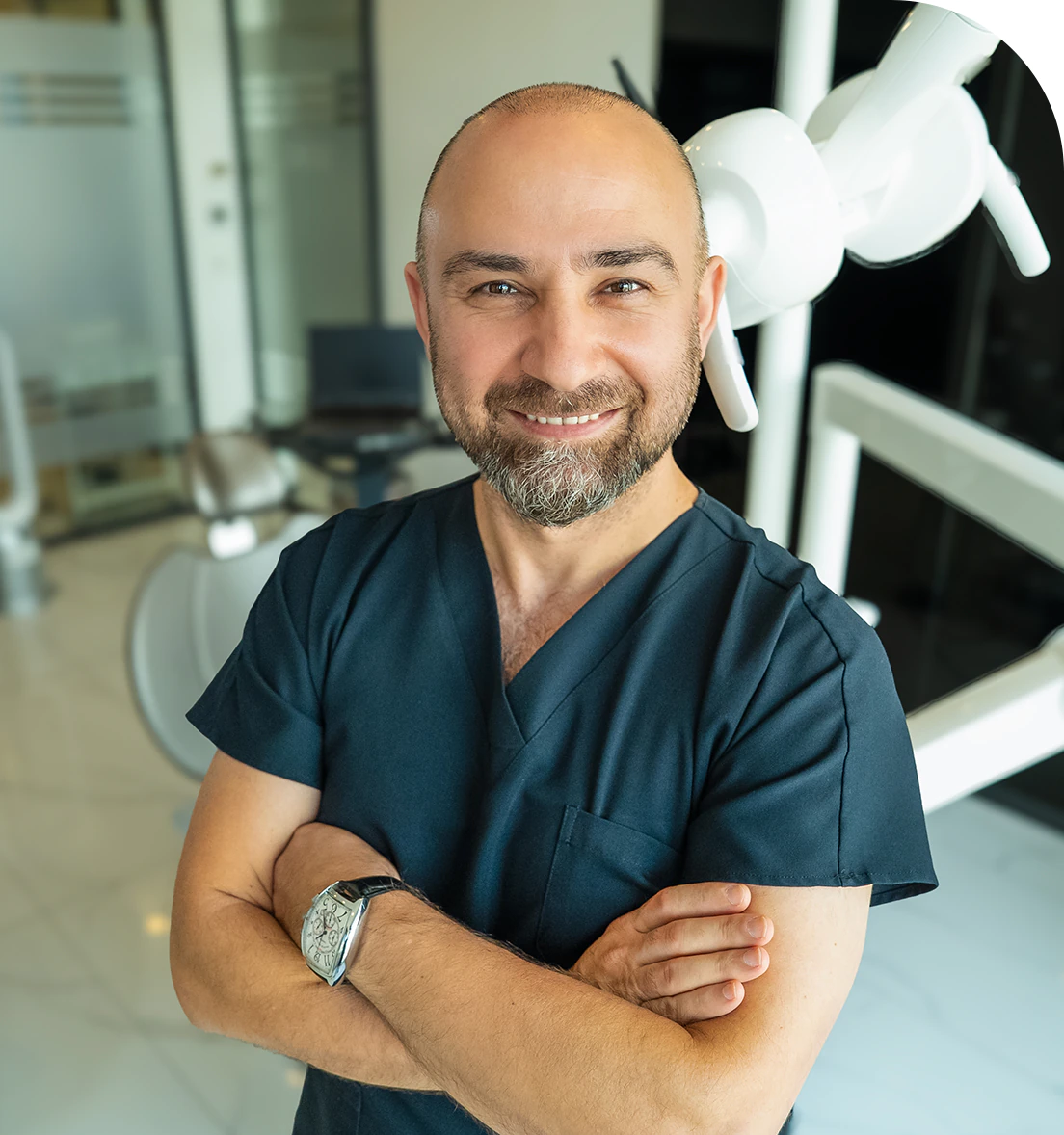
Dr. Dt. Ömer Atar provides care at his private clinic in Istanbul, combining his academic background and many years of clinical experience in dentistry. With a treatment approach that integrates aesthetic and functional solutions, he aims to achieve natural, balanced, and long-lasting results through personalized planning for each patient. Dr. Atar completed his education at the Marmara University Faculty of Dentistry, which he began in 1994, graduating in 2000. He continued his academic work in the Department of Prosthodontics at the same university. In 2007, he earned his PhD degree with his scientific thesis on implants and implant-supported prostheses in patients undergoing distraction osteogenesis. His academic expertise deepened in the fields of metal-free aesthetic systems, implant-supported prostheses, and cosmetic dentistry. Integrating modern technologies and digital dentistry into his practice, Dr. Ömer Atar achieves high success rates in treatments such as smile design, All-on-4/All-on-6 implant treatments, laminate veneers, zirconium crowns, teeth whitening, and gingival aesthetics (gummy smile). As a member of EDAD (Turkish Academy of Aesthetic Dentistry), he embraces a holistic approach focused on modern, functional, and natural outcomes in aesthetic dentistry.


