
 Türkçe
 Français
 Deutsch

Full (complete) denture in Turkey is a removable prosthetic solution designed to replace all missing teeth in the upper and/or lower jaw, restoring oral function and facial aesthetics. It is custom-fabricated to fit the patient’s oral anatomy and provides improved chewing efficiency, speech support, and facial contour.
Cost of full denture in Turkey is generally more affordable compared to many European countries, while maintaining high clinical standards and modern laboratory techniques. Pricing depends on materials used, clinic infrastructure, prosthodontist experience, and whether additional procedures such as extractions are required.
Procedure for complete denture treatment in Turkey involves comprehensive oral examination, impression taking, jaw relation records, and trial fittings to ensure optimal adaptation. The final prosthesis is fabricated after precise laboratory stages, aiming for balanced occlusion, retention, stability, and patient comfort.
Advantages of getting full dentures in Turkey include access to experienced dental professionals, advanced prosthetic technologies, and structured follow-up protocols. Treatment planning prioritizes oral tissue health, functional rehabilitation, and long-term maintenance to enhance overall quality of life.
| Things You Should Know | Information |
| Definition | A complete denture is a full dental prosthesis specially prepared according to the patient’s oral measurements, used when all natural teeth in the upper and/or lower jaw are lost. |
| Purpose of Use | To restore chewing function, speech ability, and aesthetic appearance lost due to edentulism. |
| Condition for Fabrication | Applied when there are no natural teeth left in the mouth or when the remaining teeth must be extracted. |
| Fabrication Steps | 1) Intraoral examination and impression taking 2) Preparation of a custom tray 3) Taking detailed impressions 4) Determination of vertical dimension and jaw relation 5) Tooth setup trial 6) Final denture fabrication and delivery |
| Production Duration | Usually completed in 4–5 sessions. The denture preparation takes an average of 1–3 weeks. |
| Materials Used | Generally made of acrylic-based materials. The teeth are made from acrylic or composite materials. |
| Retention Feature | Adheres to the palate and gums through vacuum effect. Can be supported with denture adhesives if needed. |
| Adaptation Period | There may be difficulties in speaking and chewing in the early days. Full adaptation is usually achieved within a few weeks. |
| Cleaning and Maintenance | Should be removed and brushed daily, and stored in water at night. Special denture cleaning products can be used. |
| Who Is It Suitable For? | Suitable for individuals with no teeth in the upper or lower jaw, who cannot undergo implant treatment, or who prefer a fixed treatment alternative due to economic or surgical reasons. |
What Is a Total (Complete) Denture?
A complete denture is a removable artificial set of teeth used in cases where all natural teeth in the mouth are missing. It is typically applied separately to the upper and lower jaws.
These dentures restore both aesthetic appearance and chewing and speaking functions. They are made of acrylic material and specially prepared to fit the patient’s oral structure. With proper care and regular check-ups, they can be used for an extended period.
Who Is a Candidate for Total Denture Treatment?
For patients whose tooth loss has been completed and who no longer have any natural teeth in their mouth, total dentures are the most fundamental solution. Sometimes, patients arrive after all teeth have already been extracted, and sometimes this process begins with the extraction of the last loose, unsalvageable teeth. A complete denture should not be seen merely as a “tool for eating.” When teeth are lost, the jawbone resorbs, the lips collapse inward, and the distance between the nose and chin shortens. This can make a person appear significantly older than they are.
Our goal in this treatment is to restore the hard tissues (teeth and bone) and the soft tissue support that you’ve lost. For patients with high aesthetic concerns, complaints of swallowing letters while speaking, and reluctance to smile in social settings, this treatment can be a turning point. Also, since the mouth is the beginning of the digestive system, being unable to properly chew food can lead to stomach problems. Therefore, complete dentures are essential for general bodily health as well.
This treatment is suitable for the following patient profiles:
- Completely edentulous patients
- Those with extraction indications
- Those who cannot undergo implant treatment
- Patients experiencing aesthetic loss
- Patients with speech disorders
Why Are Impressions and Try-Ins Important in Denture Fabrication?
Many of our patients ask, “Doctor, can’t we just take one impression and be done?” However, the total denture process is an engineering task that requires millimetric calculations. In order for your denture not to move in your mouth, not to cause sore spots, and most importantly, to look natural, we perform multiple try-ins. The first impression we take only gives us a rough sketch of your jaw. What truly matters is the positioning of the teeth—the structure we will build on this sketch.
In our clinical protocols, the most critical stage is the “jaw relationship determination” where we establish the positional relationship between the upper and lower jaws. Here, we record both the vertical (face height) and horizontal relationship. The vertical dimension refers to the distance between the tip of your nose and your chin. If we don’t set this correctly, even the most beautiful denture won’t look natural on your face. If the vertical dimension is too low, you will look older, and sores may form at the corners of your mouth. If it’s too high, your teeth will clash while speaking (creating a clicking sound), and your jaw muscles will fatigue.
Some of the reference points we use at this stage are:
- Swallowing function
- Phonetic tests
- Facial aesthetics
- Lip support
- Smile line
How Are Speech Try-Ins and Phonetic Tests Performed?
There is a very specific reason we ask you to speak during denture fabrication. Using a method called the “Silverman Technique,” we have you pronounce words containing letters like “S,” “F,” and “V” during the try-in stage. For example, we might ask you to count numbers like sixty and seventy. While you pronounce these words, we observe the distance between your teeth.
Normally, during speech, the teeth do not touch but come very close. This is called the “closest speaking space.” If your teeth collide while speaking, it means we have made the denture too tall, and we correct this immediately. Conversely, if you’re leaking air or producing a whistling sound while saying the “S” sound, it indicates an error in tooth positioning. These try-ins are vital to ensure you can speak comfortably and the denture stays in place once it’s completed.
How Is Retention Achieved in Total Dentures?
In an edentulous mouth, how the denture stays in place is one of the most common patient concerns. The upper jaw is usually more advantageous. The upper palate covers a wider area, and the denture adheres to it through a vacuum effect (called adhesion and cohesion). A well-made upper denture is hard to remove even when pulled by hand.
However, the lower jaw poses the biggest challenge for total denture wearers. The area available for the denture to sit is much narrower and horseshoe-shaped. Moreover, the lower jaw has the additional challenge of a constantly moving, talking, and chewing “tongue.” Every tongue movement, cheek muscle tension, and lip motion works against the lower denture. Therefore, lower denture retention is always weaker compared to upper dentures. In addition to the dentist’s expertise, the patient must train their tongue and cheeks to support the denture (neuromuscular adaptation).
Factors affecting retention include:
- Amount of bone
- Saliva quality
- Tongue size
- Muscle structure
- Mucosal thickness
Do Denture Materials Affect Durability?
The pink part of the denture, which mimics the gums, is usually made of acrylic resins. This material is biocompatible and aesthetically simulates gum tissue very well. However, every material has a fatigue threshold. Especially when consuming hard foods or if the denture is dropped, there is a risk of fracture.
To prevent this, we sometimes place reinforcements inside the dentures. If the patient has a habit of clenching teeth or if the structure of the jawbone requires the denture to be thin, we take precautions to increase fracture resistance. Metal bases are one of these; they are very strong and allow you to feel the temperature of food as they conduct heat, but they are heavy. Nowadays, the method we prefer more often is fiber reinforcements. Glass fiber or carbon fiber meshes are embedded into the acrylic, which doesn’t compromise aesthetics and makes the denture “shock-absorbent.”
The reinforcing materials used are:
- Glass fibers
- Carbon fibers
- Metal meshes
- Cast metals
- Polyethylene fibers
Is the Denture Inserted Immediately After Tooth Extraction?
We know your biggest fear when teeth need to be extracted is “being toothless.” That’s exactly when we apply the “Immediate Denture” protocol. In this method, we take impressions before the teeth are even extracted and prepare your denture. On the same session as the tooth extraction, we place the prepared denture directly into your mouth.
The biggest advantage of this method is that you leave the clinic with teeth. Your aesthetic appearance is preserved, your ability to speak remains intact, and the denture applies pressure on the wound, serving as a sort of dressing. However, there’s a very important biological fact patients need to be aware of: After tooth extraction, the bone and gum tissue heal and shrink rapidly. As a result, the denture that fits perfectly on day one starts to loosen in a few weeks. This is not the denture’s fault—it’s your body’s natural healing process. Therefore, immediate dentures are usually temporary and may require frequent relining to maintain their fit.
Features of immediate dentures:
- Instant aesthetics
- Wound protection
- Rapid loss of fit
- Temporary nature
- Frequent follow-up
When Should Conventional Dentures Be Made?
If the patient has no urgent aesthetic needs or can use their existing old denture, we usually prefer the “conventional” method, i.e., waiting. After extractions, the final shaping of the bone can take between 1.5 to 3 months on average, depending on the person. If we wait for this period and take impressions after complete healing, the denture we make will be much more durable and well-fitting. That’s because the denture is then built on a stable, non-changing foundation. As a result, issues like rapid loosening seen with immediate dentures do not occur.
Why Do Dentures Become Loose and What Is a Reline?
Patients who have used dentures for a long time often come in with complaints like “My denture used to fit great, why is it falling out now?” In this case, the culprit is usually not the denture, but your changing bone structure. The jawbone, once it’s toothless, continues to atrophy physiologically due to loss of load. Dentures are rigid and do not change shape; as the tissue underneath shrinks, gaps form.
These gaps lead to reduced retention, air leakage, and movement during eating. Instead of making a new denture, we apply a procedure called “relining.” We remove a thin layer from the inside surface of your denture and fill the gap with fresh acrylic based on your mouth’s new shape. If the denture’s teeth are still in good condition but the pink base is too worn, we can renew the entire base with a “rebasing” procedure.
Situations requiring relining include:
- Bone resorption
- Weight loss
- Tissue changes
- Denture movement
- Food getting underneath
What Are the Advantages of Implant-Supported Dentures (Overdentures)?
The movement and reduced chewing force of traditional dentures—especially in the lower jaw—have led us to more modern solutions. Systems called “Implant-Supported Overdentures” offer peak comfort in cases of total edentulism.
In this system, implants (usually 2 in the lower jaw, 4 in the upper jaw) are placed into the jawbone. “Snap” attachments or “bars” are placed in the denture to connect to the implant heads. When you insert the denture, you hear a “click,” and the denture locks onto the implants.
Thanks to this locking, the denture never moves while speaking or eating. With conventional dentures, patients unconsciously use their tongue and cheeks to hold the denture in place. In the implant system, this is no longer necessary, and all muscles are free. Most importantly, your chewing force increases—you can easily perform actions that were impossible with traditional dentures, like biting an apple or eating tough meat. Additionally, implants transmit force to the bone, which slows down bone resorption.
Benefits of implant-supported dentures:
- High retention
- Strong chewing
- Bone preservation
- Increased self-confidence
- Comfortable use
Why Do Dentures Break and Can It Be Prevented?
Unfortunately, denture fractures are common mishaps. The most frequent cause is dropping the denture into the sink while cleaning it. However, sometimes they break inside the mouth while eating. The cause is often something akin to “metal fatigue.” If your denture doesn’t fit properly, it flexes with each bite. These micro-flexes eventually break the material’s resistance, and the denture can split in half.
How Should Denture Hygiene and Maintenance Be Done?
A good care routine is essential to prolong the life of your dentures and protect your oral health. Denture surfaces are porous, and if not cleaned, they become a breeding ground for bacteria, plaque, and fungi. After each meal, remove your denture and rinse it under water.
Absolutely do not use toothpaste. Toothpaste contains abrasive particles that scratch the denture’s polish. While these scratches are not visible to the eye, they are perfect hiding spots for bacteria. Instead, use liquid soap or special denture cleaning gels. Also, soaking the denture in dissolvable cleaning tablets 2-3 times a week helps achieve deep disinfection.
The most important rule is to “remove them at night.” Your gums, under pressure all day, need to air out and restore blood circulation at night. Sleeping with dentures invites fungal infections and accelerates bone resorption.
Recommended cleaning tools:
- Liquid soap
- Denture brush
- Cleansing tablets
- Lukewarm water
- Storage container
How to Develop Eating and Speaking Habits?
If you’re using dentures for the first time, you must be prepared for an adaptation period. It’s completely normal in the first days to feel a large foreign object in your mouth, increased saliva, and some tongue twisting while speaking. It may take a few weeks for your brain to adjust to this new situation.
Be patient when developing eating habits. Start with soft foods, cut food into small pieces. Most importantly, don’t chew on one side only—chew bilaterally. If you chew only on the right side, the left side of the denture lifts (a seesaw effect). Putting food on both sides and chewing simultaneously keeps the denture balanced. Avoid biting with the front teeth (like tearing a sandwich); this can cause the back of the denture to lift.
For speech exercises, I recommend reading newspapers or books aloud. Repeating words that you find difficult to pronounce will help your tongue adjust to the new tooth positions more quickly.
Recommended exercises:
- Reading aloud
- Bilateral chewing
- Small bites
- Speaking in front of a mirror
- Soft diet
Before & After Photos


Frequently Asked Questions
When is a full denture preferred?
A full denture is preferred when a patient has lost all natural teeth. It is typically used when all teeth need to be extracted due to advanced age, gum disease, or severe decay.
Which age group commonly uses full dentures?
It is most common among individuals aged 60 and above, as tooth loss increases with age. However, trauma or illness may also require young individuals to use dentures.
How does wearing a full denture affect oral structure?
Because it rests on the supporting tissues in the mouth, bone resorption may occur over time. This affects the fit and comfort of the denture and may require periodic adjustments.
Is eating with a full denture difficult?
Eating can be difficult initially, especially with hard or sticky foods. But as the adaptation period progresses, chewing improves and eating becomes easier.
How do full dentures affect speech?
At first, pronouncing some sounds may be difficult. However, the tongue and oral muscles adapt over time, and speech returns to normal.
What is the lifespan of full dentures?
With good care, they can last between 5 and 10 years. However, due to tissue changes over time, replacement may eventually be necessary.
What should full denture users pay attention to?
Daily cleaning must not be neglected. They should be removed at night and stored properly. Regular dental checkups are essential for maintaining fit and oral health.
How do full dentures affect facial aesthetics?
They support the lips and facial contours, providing a younger and healthier appearance. They eliminate the sunken look caused by missing teeth and improve facial symmetry.
Can full dentures be fixed with implants?
Yes, implant-supported full dentures offer better retention and comfort. They are ideal for those who experience instability with lower dentures.
How long is the adaptation period after receiving a full denture?
It varies per person but generally takes 2 to 4 weeks. During this period, soft foods should be preferred, and denture polish may help improve comfort.
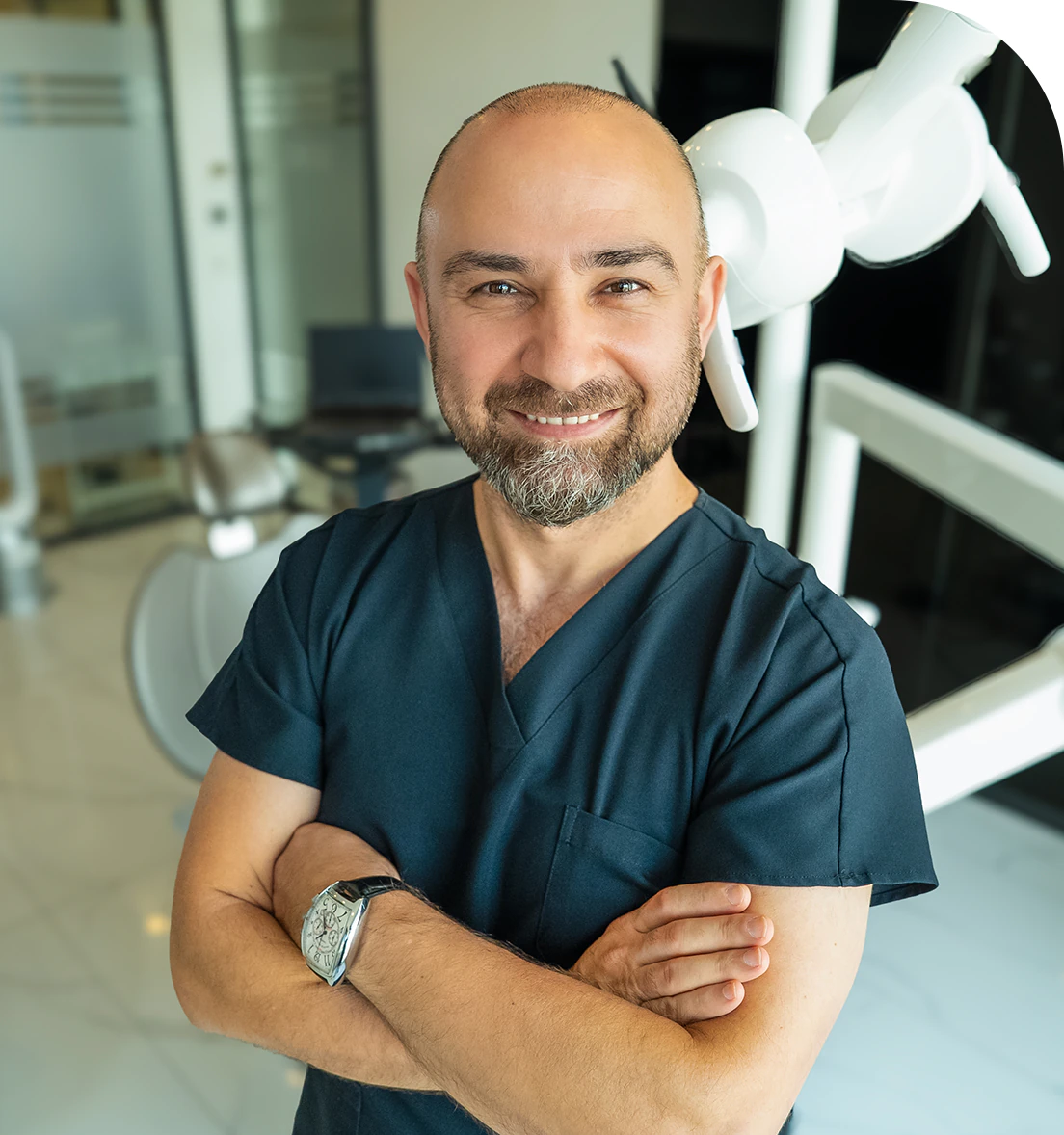
Dr. Dt. Ömer Atar provides care at his private clinic in Istanbul, combining his academic background and many years of clinical experience in dentistry. With a treatment approach that integrates aesthetic and functional solutions, he aims to achieve natural, balanced, and long-lasting results through personalized planning for each patient. Dr. Atar completed his education at the Marmara University Faculty of Dentistry, which he began in 1994, graduating in 2000. He continued his academic work in the Department of Prosthodontics at the same university. In 2007, he earned his PhD degree with his scientific thesis on implants and implant-supported prostheses in patients undergoing distraction osteogenesis. His academic expertise deepened in the fields of metal-free aesthetic systems, implant-supported prostheses, and cosmetic dentistry. Integrating modern technologies and digital dentistry into his practice, Dr. Ömer Atar achieves high success rates in treatments such as smile design, All-on-4/All-on-6 implant treatments, laminate veneers, zirconium crowns, teeth whitening, and gingival aesthetics (gummy smile). As a member of EDAD (Turkish Academy of Aesthetic Dentistry), he embraces a holistic approach focused on modern, functional, and natural outcomes in aesthetic dentistry.


