
 Türkçe
 Français
 Deutsch

Dental fillings in Turkey are restorative dental procedures performed to repair teeth affected by caries, fractures, or structural loss, using biocompatible materials to restore function and anatomy. Treatment is conducted under clinical sterilization standards and planned according to the extent of enamel and dentin damage.
Cost of dental fillings in Turkey is determined by the type of material used, the number of treated surfaces, and the clinical complexity of the cavity. Composite, amalgam, and ceramic options present different pricing scales, while overall expenses remain comparatively affordable within internationally accredited clinics.
Types of dental filling materials used in Turkey include composite resin, amalgam, glass ionomer, and porcelain-based restorations. Each material demonstrates specific advantages in durability, esthetics, and wear resistance, and selection is based on tooth location, occlusal load, and patient-specific clinical indications.
Advantages of getting dental fillings in Turkey include access to experienced dentists, modern diagnostic imaging, and adherence to international infection control protocols. Comprehensive treatment planning, short appointment durations, and integration with broader dental care services support long-term oral health outcomes.
| Things You Should Know | Information |
| Definition | Tooth filing is the process of correcting the shape and size of the teeth by abrading a very small amount from the enamel surface. It is applied for aesthetic purposes or in some orthodontic cases. |
| Other Names | Enameloplasty, odontoplasty, tooth contouring, tooth reshaping. |
| Purpose | To correct minor shape deformities in teeth, ensure symmetry, eliminate notches, correct mild misalignments, and improve smile aesthetics. |
| Application Areas | In correcting small length differences, sharp corners, protrusions, or minor misalignments in the front teeth. |
| Eligibility Criteria | The tooth enamel must be of sufficient thickness, there should be no decay or cracks in the tooth, and gum health must be good. |
| Application Steps | 1) Examination and planning by the dentist. 2) Determination of the area to be abraded. 3) Controlled filing of the tooth surface with special burs or sanding discs. 4) Polishing of the tooth after the procedure. |
| Anesthesia Requirement | Generally not required; because only the enamel layer is intervened and there are no nerves in this region. |
| Procedure Duration | It takes an average of 10–30 minutes; varies depending on the scope of the procedure. Usually completed in a single session. |
| Advantages | Fast and painless, provides an aesthetic smile, yields permanent results, can be applied without damaging the enamel. |
| Limitations | Suitable only for minor corrections. Deep abrasion may weaken the enamel and cause sensitivity. |
| Post-Procedure Considerations | Oral hygiene should be maintained, very hard foods should be avoided, and enamel integrity should be monitored with regular check-ups. |
What is Tooth Filing?
Tooth filing is the process of slightly abrading the enamel tissue from the surface of the teeth. This procedure is usually done to regulate the spaces between teeth, improve alignment, or enhance aesthetic appearance. It can be preferred before or after orthodontic treatment. When applied in a controlled manner that does not harm the tooth, it is a safe procedure.
For Which Aesthetic Problems is Tooth Filing Performed?
The complaints our patients present to the clinic with are usually very specific aesthetic concerns. Although this method alone is not sufficient for major misalignments or serious jaw disorders, it yields excellent results in cases that require “touch-ups.” The aesthetic problems we usually address are:
- Irregular tooth lengths
- Small tooth fractures
- Pointed canine teeth
- Serrated tooth edges
- Buck teeth appearance
- Mild misalignments
For example, if your two front incisors are significantly longer than the adjacent teeth, this length difference can create a “rabbit” effect in your smile or cause an aggressive expression. With a very slight filing just on the tips, this expression can be softened. Similarly, tiny fractures or cracks that occur on the tooth edges due to teeth grinding habits may irritate your tongue and appear rough. Eliminating these roughnesses provides both an aesthetic appearance and prevents your tongue from becoming irritated.
Is Pain or Discomfort Felt During Tooth Filing?
When patients sit in the chair, the first question they ask without exception is: “Doctor, will it hurt?” I have a clear answer that will put your mind at ease on this matter: No, you will not feel pain during the tooth filing procedure.
Let me explain the biological reason for this; our teeth are composed of layers. On the outside is the “enamel,” beneath it is the “dentin,” and at the innermost part is the “pulp” layer where the nerves are located. The tooth filing procedure is performed solely and exclusively on the outermost non-living enamel layer. There are no nerve endings in the enamel layer. It’s just like cutting your hair or filing your nails; tissue is intervened, but since there is no neural transmission, you do not feel pain.
The only thing you will feel during the procedure is the slight vibration of the tool used. Therefore, in the vast majority of cases, we do not need to give injections, that is, to apply local anesthesia. The absence of a need for anesthesia means you can leave the clinic and return to your social life immediately after the procedure without numbness in your lips or any effect on your speech. However, of course, exceptions prove the rule; if your tooth sensitivity threshold is very low or if the work needs to be done very close to the gum line, a simple spray anesthetic or very mild local anesthesia may be applied for your comfort.
Why Is Pre-Procedural Examination Important in Tooth Filing?
You might think, “We’ll just take a little off the tip, why is an examination necessary?” However, tooth filing is an irreversible procedure. The enamel tissue that is removed cannot be replaced. That’s why the planning phase is much more critical than picking up the tool and performing the procedure.
In a comprehensive examination, we first check the patient’s enamel thickness. Each individual’s enamel thickness is genetically different. Some people have thick enamel, which provides us a comfortable working area, while others are born with thin enamel. Even the slightest filing on patients with thin enamel can lead to the exposure of the underlying yellowish dentin layer or sensitivity. To avoid this risk, we sometimes want to see the enamel boundaries with an X-ray.
Additionally, understanding the patient’s expectations is very important. What you mean by “a slight adjustment” may not be the same as what the dentist understands. Therefore, before the procedure, we sometimes take photographs of the teeth and perform a simulation in digital format, or we make a mock-up of the final result using temporary filling materials inside the mouth. The patient should see and approve the result in advance. Aesthetic perception is subjective; what looks good to you may appear short to someone else. Achieving this harmony is the key to the success of the procedure.
How Is the Tooth Filing Procedure Performed Step by Step?
In the clinical chair, the process progresses quickly, systematically, and comfortably. The steps of the procedure are generally as follows:
- Planning and Marking
- Contouring (Shaping)
- Bite Check
- Polishing
In the first stage, we determine where corrections will be made. If necessary, we mark the teeth with special pens. These boundaries are our “red lines” and should never be exceeded.
In the second stage, we use high-speed precision instruments such as “diamond burs,” which have microscopic diamond particles on their tips, or sanding discs. This is where the dentist showcases their artistry; they round corners of the teeth, shorten their length, or smoothen surface bulges. This stage is never rushed, and progress is made by frequently pausing to show the patient in the mirror.
In the third stage, the patient is asked to close their teeth and move them side to side. Function is just as important as aesthetics. The correction made should not impair the patient’s chewing or speaking ability.
The final and most important stage is polishing. The filed surface remains microscopically rough. If these rough areas are not smoothed out, that area may irritate your tongue, stain more quickly, and cause plaque accumulation. With special rubbers and polishing agents, the tooth surface is made as smooth and shiny as glass. A well-executed polishing is the most important factor in preserving the health of the tooth.
Is Tooth Filing Harmful and What Are the Safe Limits?
This is the most justified concern of patients. And the answer lies in the “dosage.” Just as the difference between a medicine and a poison is dosage, the difference between successful enamel contouring and harming the tooth lies in the amount of tissue removed.
Scientific studies and clinical protocols draw clear boundaries for us. The amount of tissue that can be safely removed from a tooth’s enamel varies depending on the region of the tooth but is generally limited to 0.3 millimeters. In some cases, it can go up to a maximum of 0.5 millimeters. As long as these limits are respected, the procedure does not harm the tooth at all. The enamel layer continues to maintain its protective function.
But what happens if these limits are exceeded—if excessive material is removed by inexperienced hands? The enamel becomes thinner, and the underlying dentin layer approaches the surface. This can lead to permanent sensitivity in the tooth and yellowing of the tooth color (because dentin is yellow). Therefore, it is crucial not to insist when your dentist says, “We cannot shorten it any further.” Your dentist stops because they know there is a biological limit.
Can the Rabbit Teeth Appearance Be Corrected with Tooth Filing Alone?
Having prominent and long front teeth—known as the “rabbit teeth” appearance—may sometimes be found charming, but most adult patients consider it undesirable. Tooth filing is a very effective tool in correcting this problem, but it is not always sufficient on its own.
If the difference in tooth length is reasonable, we can correct this appearance within seconds by filing just the tips and rounding the corners. The length of the teeth is harmonized, and the smile line is balanced.
However, if the teeth are excessively long or protrude significantly, filing alone can be risky. This is because bringing the teeth to an ideal length may require removing too much enamel, which means exceeding the safety limits mentioned earlier. In such cases, it is more appropriate to combine filing with orthodontic treatment (braces or clear aligners) or opt for methods like porcelain veneers (laminate).
Can Tooth Filing and Bonding Be Done Together?
In aesthetic dentistry, sometimes 1+1 equals 3. Tooth filing and bonding (composite filling) are two procedures that perfectly complement each other. While filing is the art of “reduction,” bonding is the art of “addition.”
We frequently apply the following combination:
- Long teeth are shortened through filing.
- Short or broken teeth are lengthened using bonding.
This way, we can achieve beautiful smile designs without the need to cut and crown all the teeth, preserving the completely natural tissue. For example, if your lateral incisors are very small and your front teeth are very large, we achieve balance by slightly filing the fronts and adding to the sides. The best part of these procedures is that they are usually completed in a single session and do not require a lab process.
Why Is Tooth Filing Done in Orthodontic Treatments?
Patients undergoing braces or clear aligner treatment may be surprised when they see their dentist sanding between the teeth. In orthodontics, this procedure is called “IPR” (Interproximal Reduction) or “Interproximal Stripping.” The aim here is not aesthetics but “gaining space.”
In cases where the teeth do not fit within the jawbone and are crowded, we need space to align them. In the past, we had to extract healthy teeth to create this space. Now, thanks to the IPR technique, we create millimetric spaces by filing only 0.1 to 0.3 mm (thickness of a hair strand) from the contact surfaces of adjacent teeth.
This procedure does not jeopardize tooth health because the enamel on the contact surfaces of teeth is quite thick. When these tiny gaps are added together, they provide sufficient space to align the teeth, allowing the treatment to be completed without extractions. Moreover, smoothing the contact surfaces of the teeth also plays a key role in preventing post-treatment relapse.
Does the Risk of Cavities Increase After Tooth Filing?
There is a common misconception among the public: “The enamel is gone, the tooth is now unprotected, it will decay immediately.” If the procedure is done correctly, this is absolutely a myth.
In enamel contouring, the enamel is not completely removed, only thinned. The tooth’s protective shield is still in place. The main cause of cavity formation is bacteria accumulating on rough surfaces. That’s why we emphasize the importance of the polishing stage.
A tooth surface that has been filed by a specialist and then polished perfectly becomes slippery like glass. Food debris won’t stick to a slippery surface, and bacterial plaque cannot adhere. In fact, while it is often difficult to clean crowded and irregular teeth, it is much easier to brush smoothed and aligned teeth. Therefore, as long as you maintain proper hygiene, a filed tooth does not have a higher risk of decay than an untouched one. On the contrary, it can even contribute to better gum health due to increased cleanability.
Who Is Not a Candidate for Tooth Filing?
Although it is a simple and safe procedure, it is not suitable for everyone in every case. As dentists, we sometimes have to say “no” to protect the patient. Situations in which the procedure is not appropriate include:
- Excessively sensitive teeth
- Thin enamel structure
- Children who have not completed development
- Deep cavities
- Large fractures
- Active gum disease
Especially in young individuals under the age of 15–16, the pulp (nerve chamber) is very wide and very close to the enamel. Performing filing at this age increases the risk of nerve damage. Therefore, it is best to wait until growth and development are complete. Also, performing cosmetic filing on a patient who already experiences sensitivity when drinking cold water may intensify the existing sensitivity to unbearable levels. Sensitivity should be treated first, and then cosmetic considerations can follow.
What Should Be Considered After Tooth Filing?
You can return to your normal life immediately after the procedure. You can eat and drink. There is no recovery period. However, some points should be considered to ensure the permanence and comfort of the procedure.
For the first few days, you may feel a very slight, momentary sensitivity to cold drinks or ice cream. This is a temporary reaction of the tooth to the thinning of the enamel and is normal. It usually resolves on its own within 2–3 days.
The most important long-term issue to pay attention to is the habit of “teeth grinding.” If you grind your teeth (bruxism), those aesthetically improved tooth edges may wear down again and become irregular over time. This is not a failure of the procedure but a mechanical wearing of the tooth. If your dentist recommends a night guard to protect the smile we’ve worked hard to perfect, you must use it. Additionally, habits like biting hard-shelled foods with the front teeth or nail-biting can also damage the filed and refined tooth edges.
What Affects the Cost of Tooth Filing?
Among aesthetic dentistry procedures, tooth filing is generally one of the most economical and budget-friendly options. Compared to procedures with lab costs such as porcelain veneers or zirconium crowns, the cost is much lower.
However, prices are not fixed and vary from patient to patient. Factors affecting the price include:
- The number of teeth to be treated
- The difficulty level of the procedure
- The necessity of additional procedures
- The experience of the dentist
- The equipment of the clinic
Naturally, there will be a difference between correcting the tip of a single tooth and contouring the entire front area based on smile design. Also, sometimes the filing procedure is not performed alone; it can be part of a package with additional procedures like whitening or bonding. The most accurate price information can be given after your dentist examines you and determines your needs. Remember, the cost you pay is not just for “filing,” but for the dentist’s aesthetic vision, experience, and manual precision.
Before & After Photos


Frequently Asked Questions
What is tooth filing and what is it used for?
Tooth filing is the process of shaping the teeth by removing a small amount of enamel from the tips or surfaces. It is performed to improve aesthetic appearance and correct minor alignment issues.
In which cases is tooth filing preferred?
Filing is done for small size differences in teeth, sharp corners, minor cracks, or irregular surfaces for aesthetic purposes. It may also be necessary before some orthodontic treatments.
Is tooth filing a painful procedure?
No, since the procedure is limited only to the enamel, it does not reach the nerves and is generally painless. Therefore, no anesthesia is required and the patient does not feel discomfort during the procedure.
How is the tooth filing procedure done?
The dentist gently shapes the tooth surface using special sanding discs or hand tools. After the procedure, polishing is done to smooth the surface, and it is usually completed in a single session.
Does tooth filing damage the enamel?
When done properly and in limited amounts, it does not harm the enamel. However, if done frequently or excessively, it may thin the enamel and cause sensitivity. Therefore, it must be performed under expert supervision.
Is tooth sensitivity common after filing?
Although rare, temporary sensitivity may occur after the procedure. This is usually short-lived and can be managed with desensitizing toothpastes.
Is tooth filing permanent?
Yes, the tissue removed through filing is permanently gone. The new shape of the tooth is generally preserved and will not grow back over time.
How is tooth filing used in aesthetic dentistry?
It is often used before smile design, tooth contour correction, and veneer procedures for surface leveling. It plays a significant role in achieving symmetry between the teeth.
Can tooth filing be performed on children?
It is generally not needed for baby teeth, but if there is trauma or an aesthetic issue in permanent teeth, it can be done carefully. In children, the decision must always be made under dental supervision.
What should be considered in post-filing care?
No special care is needed, but it is recommended to avoid acidic drinks and maintain regular oral hygiene. It is also important not to miss follow-up appointments.
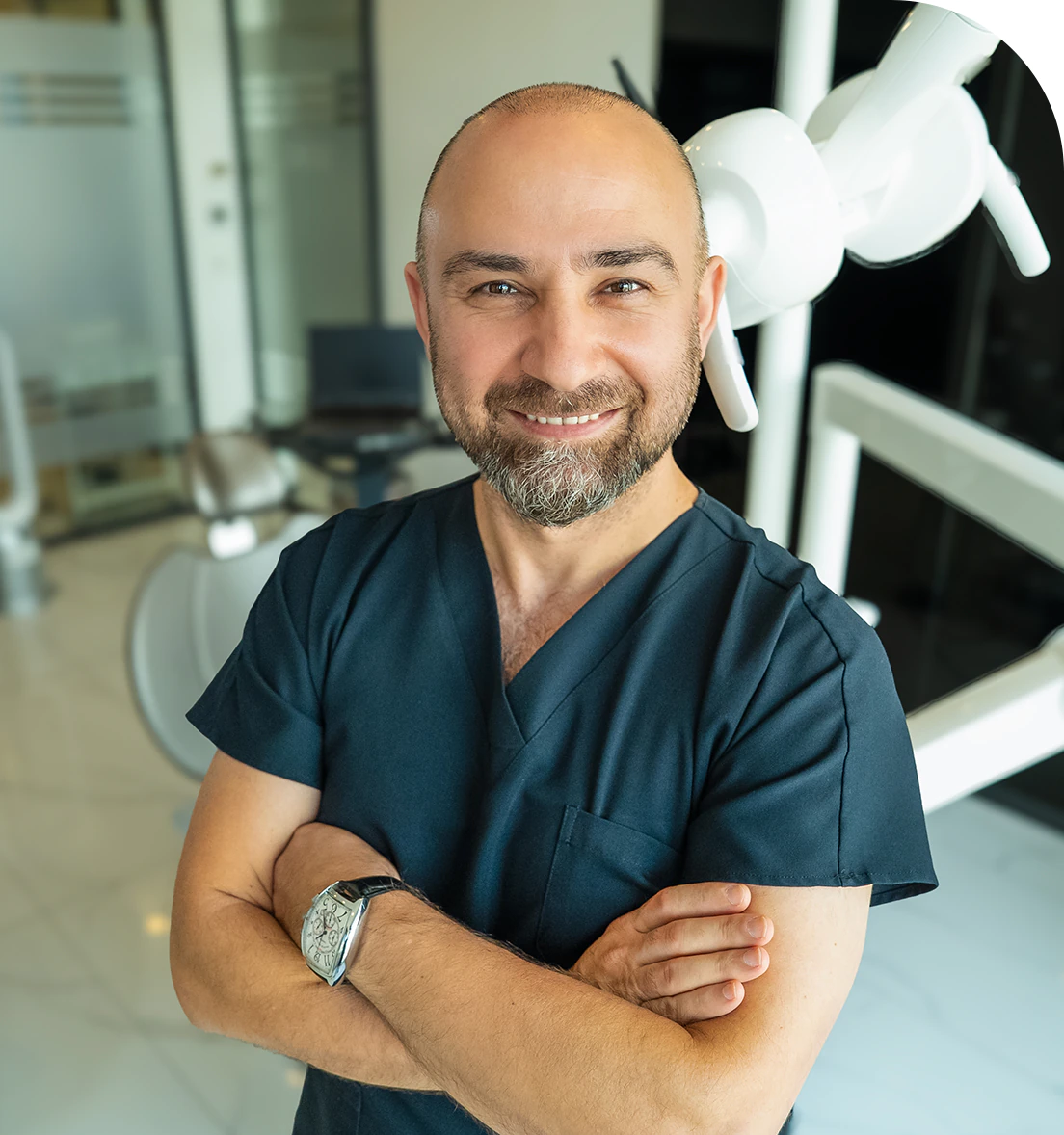
Dr. Dt. Ömer Atar provides care at his private clinic in Istanbul, combining his academic background and many years of clinical experience in dentistry. With a treatment approach that integrates aesthetic and functional solutions, he aims to achieve natural, balanced, and long-lasting results through personalized planning for each patient. Dr. Atar completed his education at the Marmara University Faculty of Dentistry, which he began in 1994, graduating in 2000. He continued his academic work in the Department of Prosthodontics at the same university. In 2007, he earned his PhD degree with his scientific thesis on implants and implant-supported prostheses in patients undergoing distraction osteogenesis. His academic expertise deepened in the fields of metal-free aesthetic systems, implant-supported prostheses, and cosmetic dentistry. Integrating modern technologies and digital dentistry into his practice, Dr. Ömer Atar achieves high success rates in treatments such as smile design, All-on-4/All-on-6 implant treatments, laminate veneers, zirconium crowns, teeth whitening, and gingival aesthetics (gummy smile). As a member of EDAD (Turkish Academy of Aesthetic Dentistry), he embraces a holistic approach focused on modern, functional, and natural outcomes in aesthetic dentistry.


