
 Türkçe
 Français
 Deutsch

Dental root inflammation generally develops as a result of a bacterial infection reaching the dental pulp and can progress to the root tip. It manifests with symptoms such as severe pain, chewing sensitivity, and swelling. If left untreated, it can spread to surrounding tissues and lead to serious complications.
Symptoms include persistent throbbing toothache, hot‑cold sensitivity, jaw swelling, and the formation of an abscess in the gums. In advanced cases, systemic findings such as fever and fatigue may also be seen. These symptoms are indicative of an infection at the root tip.
The most effective method for cleaning dental root inflammation is root canal treatment. During this procedure, the infected pulp tissue is removed, the root canals are cleaned and disinfected, and sealed with appropriate filling material. The treatment can be completed in a few sessions.
In cases where the inflammation has spread, antibiotic therapy may be added. After root canal treatment, filling or crown restoration may be applied to restore the tooth. Regular check‑ups and good oral hygiene after treatment reduce the risk of recurrence and support healing.
| What You Need to Know | Information |
| Definition | Dental root inflammation is inflammation of the nerve and blood vessel tissue (pulp) inside the tooth as a result of a bacterial infection. This infection can gradually spread to the root tip and surrounding bone tissue. It is also medically called “apical periodontitis.” |
| Causes | – Deep cavities reaching the pulp – Nerve damage due to trauma – Previously failed root canal treatment – Cracks or fractures in the tooth – Bacteria from gum disease reaching the root tip |
| Symptoms | – Throbbing, severe, persistent toothache – Hot‑cold sensitivity (may decrease in advanced cases) – Pain when touching the tooth (sensitivity while chewing) – Swelling, redness, or abscess in the gum – Bad taste and odor in the mouth – Facial swelling and fever in advanced cases |
| Diagnostic Methods | – Clinical examination and patient complaints – Detection of infection at the root tip with X‑ray (periapical film) – Pulp vitality tests (assessment of nerve vitality) |
| How It Is Cleaned (Treatment Methods) | – Root Canal Treatment: The infected pulp tissue is removed, root canals are cleaned, shaped, and disinfected. Then the canal is filled. – Root tip resection (apical resection): In chronic cases that do not improve with root canal treatment, the infected area at the root tip is surgically removed. – Antibiotic therapy: Only if there are systemic infection signs (fever, widespread swelling), short‑term antibiotics are given as supportive treatment. – Tooth extraction: Applied as a last resort for teeth too damaged to be treated. |
| Treatment Process | Root canal treatment is generally completed in 1–3 sessions. In the presence of acute infection, drainage (abscess drainage) may be done at the first stage. |
| Is Surgery Necessary? | Not required in standard cases. However, if the infection has spread beyond the root tip, surgical procedures such as root tip resection may be necessary. |
| Home Care (Supportive) | – Pay attention to oral hygiene – Avoid excessive hot/cold and hard foods – Use painkillers for temporary pain (consult your doctor) – Apply cold compress in case of abscess |
| If Untreated | – Infection can spread to the jawbone – Risk of cyst formation, tooth loss, and systemic infection – The health of other teeth and surrounding tissues is endangered |
| Prevention Methods | – Regular dental check‑ups – Early treatment of cavities – Rapid intervention in dental trauma – Effective oral care habits |
What Is Dental Root Inflammation?
Dental root inflammation is an infection that occurs at the root tip of the tooth or in the surrounding tissues. It usually develops as a result of deep cavities, trauma, or failed root canal treatment.
Causes and How Dental Root Inflammation Forms
Although our teeth may appear lifeless and hard from the outside, they contain a very lively core made up of blood vessels and nerve networks that we call the “pulp.” This living tissue nourishes the tooth and allows it to sense external stimuli. However, this system is like a closed box. When tooth decay deepens and bacteria penetrate into this closed box, the internal balance is disrupted.
As a result of bacterial invasion, inflammation begins in the pulp tissue. In medicine, we call this “pulpitis.” If this is not treated at this stage, the pressure inside the closed space increases, disrupting circulation and the living tissue inside the tooth begins to die. This is called necrosis, meaning tissue death. Dead tissue is a perfect feast and multiplication environment for bacteria. The tooth that has lost vitality is now defenseless. Bacteria rapidly advance along the root canals and through that tiny hole at the root tip out into the jawbone.
When our body’s immune system detects these bacteria and the toxins they produce reaching the bone tissue, it goes on alert. It immediately sends defense cells to the area. The inflammation that forms at the root tip is actually the debris of this battle between defense cells and bacteria. Pus accumulates in this region and the pressure increases. This process can progress silently within the bone or suddenly flare up into a severe condition. Especially previously failed root canal treatments or teeth that have experienced trauma are among the main sources of this infection.
What Are the Symptoms of Dental Root Inflammation?
When our patients generally visit the clinic, even when they do not know what the problem is, they describe their experience very clearly. Dental root inflammation is not a disease that hides itself; on the contrary, it gives obvious signs that significantly reduce the quality of life. The most typical symptom is a throbbing type of pain that feels like a pulse. This pain is caused by the pressure created by the inflammation and can especially increase when lying down at night.
One of the most frequently complained conditions by patients is the feeling that the “tooth has grown longer.” The inflamed fluid accumulated at the root tip pushes the tooth slightly upward out of its socket. Therefore, when the patient closes their mouth, that tooth touches first and an incredible pressure pain occurs. Chewing becomes almost impossible. Also, the pain that starts when consuming hot food or beverages and continues to throb for minutes even after the stimulus is gone is characteristic of the infection.
The main symptoms that may be seen in this process are:
- Severe throbbing pain
- Heat sensitivity
- Cold sensitivity
- Pain while chewing
- Sensitivity when touching the tooth
- Swelling of the gums
- Facial asymmetry
- Bad taste in the mouth
- Bad odor in the mouth
- Swelling in the lymph nodes
- Pimple‑like structure on the gums
- Darkening of tooth color
When Should You Go to the Emergency Room for Dental Root Inflammation?
Most of the time, dental problems are seen as conditions that can be solved by going to the doctor the next day. However, dental root inflammation is a condition that should not be taken lightly and can sometimes become life‑threatening. When the infection exits the root tip and spreads into soft tissues, the situation changes color. Especially if the type of infection that spreads between tissues called “cellulitis” develops, waiting for the morning for intervention may be too late.
Bacteria can enter the bloodstream or advance into the vital spaces in the neck region. If the swelling on your face has grown large enough to cover your eyelid, is heading down toward your neck, or if you feel a hardened mass under your jaw, the situation is serious. These local signs accompanied by systemic symptoms show that your body is struggling to cope with the infection.
Emergency medical assistance is required in the following situations:
- High fever
- Difficulty swallowing
- Difficulty breathing
- Restricted mouth opening
- General weakness
- Confusion
- Swelling spreading to the eye area
- Redness spreading to the neck
If you are experiencing any of these symptoms, it is vital to go to the nearest fully equipped hospital emergency department. Physicians here typically begin powerful antibiotics intravenously in an attempt to bring the infection under control.
How Is Dental Root Inflammation Diagnosed?
Undoubtedly, correct treatment begins with the correct diagnosis. The first step when you sit in the dental chair is to take a detailed history. Information about when the pain started, how long it has lasted, and what triggered it provides us with valuable clues. Then comes the clinical examination stage. Here the procedure we call the “percussion” test, in which the back of an instrument is lightly tapped on the tooth, is applied. If you feel pain during this process, it is a strong sign that the inflammation has spread to the root tip and surrounding tissues.
In addition, cold and heat tests are applied to measure the vitality of the tooth (vitality). A cotton swab sprayed with cold is applied to the tooth. A healthy tooth feels the cold and the sensation disappears when the cotton is removed. However, in infected or dying teeth, this sensation is either absent or the pain continues for a very long time.
Radiological imaging is essential to understand conditions within the bone that cannot be seen with the naked eye. Conventional dental X‑rays (periapical radiography) show us the dark area at the root tip, i.e., the infection. However, in today’s technology, especially in complex cases and surgical planning, two‑dimensional X‑rays may be insufficient.
Advanced imaging methods used at this point are:
- Periapical X‑ray
- Panoramic X‑ray
- Cone Beam Computed Tomography (CBCT)
Especially CBCT, i.e., three‑dimensional tomography, is revolutionary for us. With conventional X‑rays, overlapping structures can be examined layer by layer with tomography. Seeing how far the infection has spread within the bone, its proximity to the neurovascular bundle, and the complex anatomy of the root canals in three dimensions directly affects the success and safety of treatment.
How Is Dental Root Inflammation Cleaned?
The procedure commonly known as “root canal treatment” is actually a very comprehensive disinfection protocol. Our aim is not just to stop the pain, but to completely clean the microscopic bacterial nests inside the tooth. The treatment process begins with local anesthesia for the comfort of the patient. Once the area is numb, a rubber barrier called a “rubber dam” is applied to isolate the tooth from saliva. This is an indispensable step to prevent new bacteria from entering the cleaned area from the mouth.
After entering the tooth and removing decay and dead tissue, the root canals are reached. This is not a straight pipe system; like the roots of a tree, it is a complex labyrinth with side branches, curves, and hidden chambers. Mechanical cleaning with metal files expands and cleans the main canals but cannot reach those fine side branches. This is where the secret of success lies — in the “chemical cleaning” stage.
The solutions used are critically important to kill bacteria in unreachable areas. A special solution called “Sodium Hypochlorite” is applied into the canal. This liquid not only has the ability to kill even the strongest bacteria but also dissolves remaining dead tissue debris and flushes it out. However, bacteria cling to the canal walls to protect themselves and form a dirty layer called the “smear layer.” Another agent called EDTA is used to dissolve this layer and open the pores of the tooth.
The main chemical and medical agents used in treatment are:
- Sodium Hypochlorite
- EDTA solution
- Chlorhexidine
- Calcium Hydroxide paste
- Biocompatible canal filling materials
Especially in teeth with bone infection, treatment is generally not completed in a single session. After the canals are cleaned, a white medication called “Calcium Hydroxide” is placed inside. This medication creates an environment where bacteria cannot survive due to its high pH value. More importantly, it neutralizes the toxins (endotoxins) released by bacteria as they die that cause bone destruction. This medication usually stays in the canal for about a week or longer. In this way, the healing process at the root tip is initiated from the inside. In the second session, the canals are sealed in a leak‑proof manner and the tooth structure is completed.
If Root Canal Treatment Is Not Sufficient, How Is Dental Root Inflammation Treated?
Although endodontic treatments (root canal treatment) have very high success rates, sometimes the infection may be stubborn or anatomical difficulties (excessively curved roots, calcified canals) may not allow complete cleaning. In teeth that still have pain despite root canal treatment, swelling that does not decrease, or lesions that do not shrink on X‑ray, a surgical method called “Apical Resection” comes into play. This procedure is a way of intervening from the outside when we cannot solve the problem from the inside.
In this procedure, the gum is raised with a small surgical incision to directly reach the infected area in the bone and the root tip. The physician completely cleans the inflamed tissue (the cyst or granuloma tissue) there. But cleansing alone is not sufficient; the root tip that is the source of the infection must also be cut. The approximately 3 millimeter part at the very tip of the tooth root is cut and removed with special instruments. Because this tip is where bacteria are most densely stored and hardest to clean.
There are very important safety rules to observe during this surgical procedure. Especially when cutting bone, devices that blow compressed air should not be used. Air can escape into the tissue spaces and cause dangerous swelling called “emphysema.” For this reason, surgery should be performed under continuous saline irrigation.
After the root tip is cut, the remaining canal end does not remain open. A procedure called “retrograde filling” is performed here, which seals the root tip. Materials such as MTA (Mineral Trioxide Aggregate), which are extremely biocompatible and have excellent sealing properties, are used to seal the root tip. In this way, any bacterial leakage from the canal into the bone is physically prevented.
The main steps in surgical treatment are:
- Application of local anesthesia
- Lifting of the gum tissue
- Opening the bone window
- Cleaning the inflamed tissue
- Cutting the root tip
- Performing the root tip filling (MTA)
- Placing sutures
What Is the Healing Process After Dental Root Inflammation Treatment?
Once you get up from the treatment chair, the healing process begins. Whether it is root canal treatment or a surgical intervention, the body needs time to recover. Feeling mild pain or sensitivity for the first few days is completely normal. Especially when biting down on the treated tooth, there may be sensitivity. This is a natural reaction of the tissues to the procedure performed, and there is no reason for concern.
Your dentist may prescribe antibiotics depending on the condition of the infection. The use of antibiotics is to reduce the existing infection load and support the body’s defense system. Regular use of medications is critical for the healing process to proceed quickly and smoothly. Usually, a noticeable reduction in swelling and relief in pain is expected from the second or third day of antibiotic use.
If a surgical procedure (apical resection) was performed, mild swelling and bruising may be seen on the face. This condition is temporary and can be controlled with ice application. Sutures are usually removed about a week after surgery. However, true healing, meaning the bone repairing itself, is a long‑term process. The dark infected area (lesion) seen on the X‑ray filling in with bone and becoming whitish can take months, even up to a year depending on the size of the lesion.
Things to pay attention to during the healing process are:
- Regular use of medications
- Maintaining oral hygiene
- Avoiding hard foods
- Limiting smoking
- Attending follow‑up appointments
- Applying ice if there is swelling on the face
- Avoiding excessively hot drinks
What Happens If Dental Root Inflammation Is Left Untreated?
Patients may sometimes tend to postpone treatment due to fear or negligence. However, untreated dental root inflammation does not go away on its own. The body limits this infection for a while, the pain subsides, and it turns into a “chronic” state. But this silence is deceptive. Bone destruction continues stealthily. The infection can turn into a cyst and create large cavities in the jawbone, leading to tooth loss and even weakening and fracture of the jawbone.
More importantly, this focus of infection constantly poses a threat to overall health. It has been scientifically proven that this chronic infection in the mouth can affect heart valves, joints, and kidneys, and can make controlling systemic diseases such as diabetes more difficult. Therefore, dental root inflammation is not only a concern for the tooth but for the entire body’s health.
Is Extracting the Tooth an Easier Solution?
Faced with such elaborate treatments, the idea of “just pulling it out and being done with it” can sometimes be appealing. Yes, tooth extraction instantly gets rid of the infection and pain. However, the fundamental philosophy in dentistry is always to preserve the natural tooth. Because no prosthesis, implant, or bridge can replace your own natural tooth.
There are special fibers around the natural tooth called the “periodontal ligament.” These fibers sense the force applied to the tooth, act as a cushion, and transmit information to the brain about “how hard you are biting.” This sensation is absent in implants or prostheses. In addition, when a tooth is extracted, the jawbone in that area begins to resorb, neighboring teeth tilt into the space, and the chewing pattern is disrupted.
With modern dental protocols, advanced disinfection methods, and surgical techniques, many teeth that were previously considered “extractable” can now be saved. With a well‑performed root canal treatment and high‑quality restoration (filling or crown), that tooth can serve you for a lifetime. Remember that dental root inflammation is not the end of the tooth but a treatable process with the right intervention. Every effort to keep your own tooth in your mouth is the best investment for your long‑term health and comfort.
Frequently Asked Questions
What symptoms does dental root inflammation present with?
Among the most common symptoms of dental root inflammation are throbbing toothache, sensitivity when chewing, discoloration of the tooth, swelling of the surrounding gums, and sometimes fever.
Why does dental root inflammation hurt more at night?
Night pain usually intensifies due to increased blood flow when lying down and pressure changes in the horizontal position. This causes more pressure on the nerve endings of the inflammation.
Does dental root inflammation go away on its own?
No, dental root inflammation does not go away on its own. If left untreated, the inflammation progresses, an abscess can form, and it can spread to surrounding tissues. You must consult a dentist.
Is antibiotic use sufficient for dental root inflammation?
Antibiotics only provide temporary relief; unless mechanical cleaning such as root canal treatment is performed, the infection does not permanently heal.
How is dental root inflammation cleaned?
Cleaning is usually carried out with root canal treatment. The infected tissue inside the tooth is removed, the root canals are disinfected, and sealed with filling material.
What happens if dental root inflammation is left untreated?
Untreated inflammation can form a cyst or abscess at the root tip, spread to the jawbone, and even lead to systemic infections.
Is dental root inflammation treatment safe during pregnancy?
Root canal treatment is generally safe in the second trimester of pregnancy. Treatment should not be delayed due to the risk of the infection harming the baby.
When is extraction necessary in dental root inflammation?
If the tooth structure is severely damaged or cannot be saved by root canal treatment, extraction of the infected tooth may be necessary.
How long does pain last after dental root inflammation?
Mild pain can last a few days after treatment, but if there is severe or persistent pain, you should return to the dentist.
How can you prevent dental root inflammation?
Regular tooth brushing, flossing, routine check‑ups, and early treatment of cavities greatly prevent the formation of root inflammation.
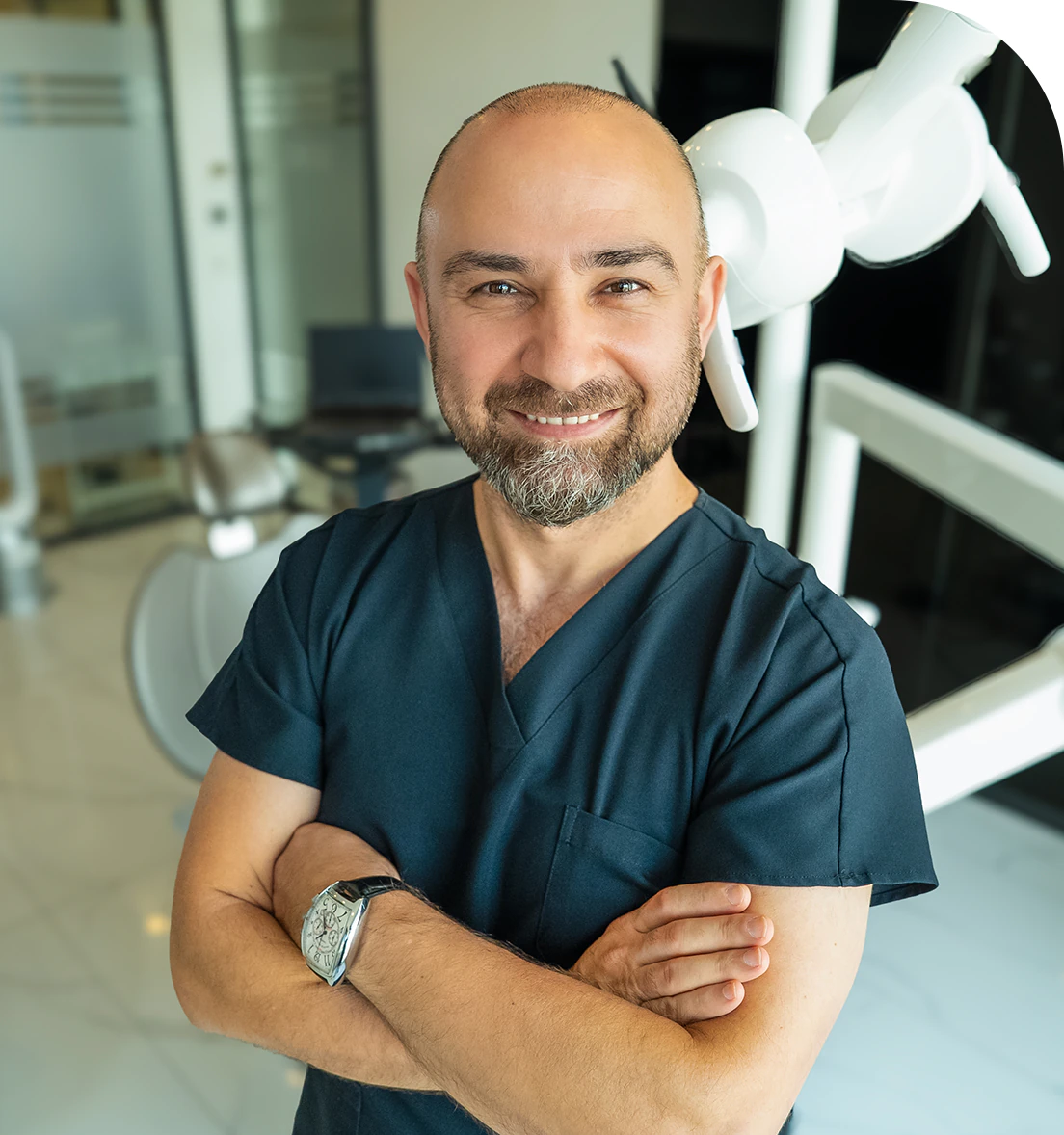
Dr. Dt. Ömer Atar provides care at his private clinic in Istanbul, combining his academic background and many years of clinical experience in dentistry. With a treatment approach that integrates aesthetic and functional solutions, he aims to achieve natural, balanced, and long-lasting results through personalized planning for each patient. Dr. Atar completed his education at the Marmara University Faculty of Dentistry, which he began in 1994, graduating in 2000. He continued his academic work in the Department of Prosthodontics at the same university. In 2007, he earned his PhD degree with his scientific thesis on implants and implant-supported prostheses in patients undergoing distraction osteogenesis. His academic expertise deepened in the fields of metal-free aesthetic systems, implant-supported prostheses, and cosmetic dentistry. Integrating modern technologies and digital dentistry into his practice, Dr. Ömer Atar achieves high success rates in treatments such as smile design, All-on-4/All-on-6 implant treatments, laminate veneers, zirconium crowns, teeth whitening, and gingival aesthetics (gummy smile). As a member of EDAD (Turkish Academy of Aesthetic Dentistry), he embraces a holistic approach focused on modern, functional, and natural outcomes in aesthetic dentistry.


