
 Türkçe
 Français
 Deutsch

Root canal treatment in Turkey is a dental procedure that removes infected pulp tissue, disinfects the root canals, and seals the tooth to preserve its natural structure. The procedure is performed by qualified endodontists using modern imaging and rotary instrumentation systems to ensure precision and long-term success.
Cost of root canal treatment in Turkey is generally more affordable compared to many European countries while maintaining high clinical standards. Treatment fees vary depending on the number of canals, tooth location, and need for additional restorative procedures such as crowns or post-core applications.
Root canal procedure steps in Turkish dental clinics include detailed radiographic assessment, local anesthesia administration, mechanical canal shaping, chemical irrigation, and hermetic obturation. Advanced sterilization protocols and digital radiography systems support accurate diagnosis and minimize procedural complications.
Aftercare following root canal treatment in Turkey involves temporary or permanent restoration to reinforce tooth integrity and prevent reinfection. Patients are advised to maintain optimal oral hygiene, attend follow-up appointments, and report any persistent discomfort to ensure functional and structural longevity.
| What You Should Know | Information |
| Definition | Root canal treatment (endodontics) is a therapeutic procedure performed when the pulp — the nerve and vascular tissue inside the tooth — becomes inflamed or damaged. The goal is to clean and fill the inside of the tooth to save it. |
| Purpose | To clean the damaged pulp tissue caused by deep decay, trauma, or cracks, prevent infection, and preserve the natural tooth. |
| Symptoms | Severe and persistent toothache, sensitivity to hot and cold, pain during chewing, tooth discoloration, swelling or abscess in the gums. |
| Procedure Steps | 1) Numbing the tooth with local anesthesia 2) Creating an access hole in the tooth 3) Removing infected pulp tissue 4) Cleaning and shaping the root canals 5) Disinfecting and filling the canals with suitable material 6) Sealing the access cavity with permanent filling or crown |
| Duration | May take 1 to 3 sessions depending on the condition of the tooth. In single-rooted teeth, the procedure is usually completed in 30–60 minutes. |
| Materials Used | Root canal files, irrigation solutions, gutta-percha filling material, root canal sealers, and micromotor systems. |
| Success Rate | When done properly, has a success rate of over 90%. With proper oral care, the treated tooth can remain functional for many years. |
| Alternatives | If root canal treatment cannot be performed or fails, tooth extraction followed by implant or bridge applications may be considered. |
| Post-Treatment Care | Mild sensitivity may occur for a few days. Hard foods should be avoided, and if a temporary filling is used, it must be followed up with permanent restoration. |
| Who Is It Suitable For? | Suitable for anyone who wants to save a natural tooth with an infected pulp but intact root structure that does not require extraction. |
What Is Root Canal Treatment?
Root canal treatment is a procedure applied when the inner pulp tissue of the tooth becomes inflamed or infected.
During the treatment, the infected pulp is removed, the root canals are cleaned, disinfected, and sealed with a special filling material. This procedure allows the natural tooth to remain in the mouth without extraction. It is typically performed under local anesthesia and restores the tooth to functionality by eliminating pain.
What Symptoms Indicate the Need for Root Canal Treatment?
It is not always easy to realize there is a deep problem with your tooth. Sometimes you wake up with a severe toothache; other times, a subtle color change may be the only symptom. However, there are certain signs that indicate the pulp tissue needs help:
The most common symptoms we observe in our patients include:
- Pain that wakes you up at night
- Extreme sensitivity to hot drinks
- Prolonged sensitivity to cold
- Pressure pain during chewing
- Pimple-like swelling on the gum
- Grayish discoloration of the tooth
- Gum tenderness
- Facial swelling
- Swollen lymph nodes in the neck
- Bad taste in the mouth
If one or more of these symptoms are present, the inner nerve tissue is either on the verge of dying or has already died. Especially pain that starts when eating or drinking something “hot” and persists for several minutes is the clearest sign that the nerves have suffered irreversible damage. On the other hand, pain when touching the tooth or biting while eating indicates that the infection has spread outside the tooth and started affecting the bone at the root tip (apical periodontitis).
What Are the Conditions That Require Root Canal Treatment?
So, why does this well-protected tissue inside the tooth become diseased? The pulp lives in a chamber surrounded by hard walls and has limited blood circulation. Therefore, its ability to self-heal is very low. While inflammation in other parts of the body may heal, inflammation inside a tooth usually results in tissue death.
The main causes that lead to endodontic treatment are:
- Deep dental caries
- Physical trauma to the tooth
- Teeth grinding habits
- Cracked tooth syndrome
- Old and leaking fillings
- Advanced gum diseases
- Improperly placed crowns
- Repeated dental procedures
Traumas can be especially insidious. A tooth you bumped years ago may not have broken at the time but could have suffered nerve damage from the impact and may later present with discoloration (necrosis). These kinds of “non-vital” teeth may sometimes not cause pain but reveal themselves on X-ray with a large cyst or infection at the root tip.
How Is Diagnosis and Preparation Performed Before Treatment?
Successful treatment begins with a definitive diagnosis. When you come to the clinic, we don’t just listen to your complaint — we examine the internal structure of the tooth and its surroundings in detail. The first step is always a radiographic examination. X-ray films act like a map, showing us the shape, number, and curvature of the roots as well as the bone condition at the root tips.
In addition, we perform “vitality tests.” By applying cold spray or heat stimuli to the tooth, we measure the nerves’ response. If the tooth reacts strongly and for a long time to cold, the nerves are inflamed; if there is no response, the nerves are dead. Both conditions indicate the need for root canal treatment.
Once we decide to proceed with treatment, the first and most important step is pain control. The biggest fear of our patients is, “Will it hurt?” With modern local anesthesia techniques, it is nearly impossible to feel pain during the procedure. After completely numbing the area, we place a rubber dam — a special latex sheet — to isolate the tooth from saliva and oral bacteria.
What Modern Technologies Are Used During Root Canal Treatment?
In the past, root canal treatments were performed using stainless steel files operated by hand. These instruments were rigid and not flexible, making it difficult to work in curved canals and prolonging the procedure. However, with advances in medical science, we now use much more advanced systems in our clinic.
The core technologies included in our treatment protocol are:
- Nickel-Titanium alloy files
- Rotary instrument systems
- Electronic apex locators
- Microscopic magnification systems
- Ultrasonic tips
- Digital imaging systems
In particular, Nickel-Titanium (Ni-Ti) rotary instrument systems have been the biggest revolution in improving treatment quality. This metal is known as “memory metal” and has incredible flexibility. Root canals are not straight pipes — they are curved and complex pathways. Ni-Ti files adapt perfectly to these curves and navigate them smoothly.
The third-generation rotary systems we use have special “offset” designs. This design prevents the instrument from binding and breaking inside the canal (screw-in effect). It is also much more effective at removing infected debris from within the canal. As a result, treatment time is shortened and the procedure becomes much safer.
Why Is Chemical Cleaning of the Root Canals Important?
Root canal treatment should not be seen as merely a mechanical “filing” procedure. No matter how much we enlarge the canal, there are always microscopic lateral canals and indentations that tools cannot reach. The only way to eliminate bacteria in these areas is through strong chemical disinfection. This is known as “irrigation.”
The primary agents we use in the irrigation process are:
- Sodium hypochlorite
- EDTA
- Citric acid
- Chlorhexidine
- Distilled water
- Saline solution
Sodium Hypochlorite (NaOCl) is indispensable for us. This solution is unmatched in its ability to dissolve infected organic tissue (nerve remnants) and kill bacteria. However, during mechanical procedures, a layer of sludge composed of dust and organic debris, called the “smear layer,” accumulates on the canal walls. This layer prevents disinfectants from penetrating deep into the tooth.
This is where chelating agents like EDTA come into play. EDTA dissolves this stubborn smear layer and calcifications, leaving the canal walls clean and the dentinal tubules open. In our protocol, using these fluids in a specific sequence and duration allows for up to 99% sterilization of the canal system.
How Is Root Canal Filling Done and Why Is Sealing Important?
We have cleaned, shaped, and disinfected the canals. Now it’s time to seal this space in a way that prevents bacteria from ever entering again. This is called “obturation.” If even the smallest gap remains inside the canal, bacteria can repopulate, leading to treatment failure. Therefore, our goal is a “hermetic,” meaning perfectly sealed, filling.
The primary material used in canal filling is called “Gutta-Percha,” a rubber-based, biocompatible material. However, gutta-percha alone is not sufficient; it must be used with special canal sealers to adhere to the canal walls.
Traditionally, these cones were cold-compacted into the canal. However, in our clinic, we prefer proven Thermoplastic Injection Techniques (e.g., Obtura II, System B). In this technique, the filling material is heated in a special device to become flowable.
Advantages of the thermoplastic filling method include:
- Ability to fill lateral canals
- Perfect adaptation to canal shape
- Gap-free filling
- Maximum sealing
- Prevention of bacterial leakage
The heated material flows into the finest canal details and hardens there, forming a three-dimensional plug. Scientific studies have shown that this method minimizes void formation and increases the long-term success of the treatment.
Is Root Canal Treatment Completed in One Session or Multiple?
The answer to this question depends entirely on the current condition of your tooth. If the tooth is vital (alive) or the infection hasn’t yet spread to the bone, it’s possible to complete the treatment in a single session, which is now frequently preferred. Single-session treatments offer great comfort to the patient.
However, if there is persistent inflammation, abscess, discharge, or swelling at the root tip, it’s best not to rush. In such cases, we spread the treatment over two or more sessions. In the first session, we perform the cleaning and place a calcium hydroxide-based medication inside the canals.
The goals of intra-canal medication include:
- Killing resistant bacteria
- Drying out inflammation at the root tip
- Balancing pH levels
- Accelerating tissue healing
- Controlling pain
After placing this medication, we seal the tooth temporarily. The medication remains inside for 1–2 weeks to show its therapeutic effect. If infection signs have disappeared by the second session, the canals are rinsed and permanently filled.
How Is the Tooth Restored After Root Canal Treatment?
When the root canal is finished, our job is not yet done. In fact, the restoration that follows is one of the most crucial steps in determining whether the tooth will remain in the mouth. Teeth that undergo root canals often suffer extensive tissue loss due to large caries or fractures. Moreover, since the internal blood vessels are removed, the tooth gradually loses moisture and becomes more brittle.
If the remaining tooth structure is strong enough, a standard filling may suffice. However, if there is too much substance loss, there may not be enough structure for the filling to hold. In that case, the tooth must be reinforced from within — this is where we use Post-Core systems.
The components of this system are:
- Post: A thin rod, usually made of fiber, placed inside the root canal.
- Core: The filling portion built around the post to replace the missing parts of the tooth.
What Should Be Considered During the Post-Treatment Period?
You’ll return home happy after your treatment, but there are a few important rules to follow during recovery. First of all, it’s crucial not to eat or drink anything until the anesthesia wears off (approximately 2–4 hours).
Our post-treatment recommendations include:
- Using the painkillers recommended by your dentist
- Avoiding hard foods
- Not chewing on the treated side for the first few days
- Maintaining good oral hygiene
- Avoiding extremely hot drinks
- Continuing to use dental floss
How Long Does a Root Canal-Treated Tooth Last?
One of the most frequently asked questions by our patients is: “How long will this tooth last me?” A well-executed root canal, cleaned thoroughly and sealed properly, with an appropriate restoration on top, can last a lifetime.
Factors that determine the longevity of the tooth include:
- Consistent oral hygiene
- Use of dental floss
- Regular dental check-ups
- Reducing sugary food consumption
- Managing teeth grinding habits
Before & After Photos


Frequently Asked Questions
In what cases is root canal treatment necessary?
Root canal treatment is applied when the nerve tissue of the tooth becomes inflamed or dies. It is usually needed due to deep decay, trauma to the tooth, or infection beneath an old filling.
What happens if root canal treatment is not performed?
An untreated infected tooth can lead to abscess formation that spreads to surrounding tissues, severe pain, and bone loss. If delayed, tooth extraction may become inevitable.
Is there pain during root canal treatment?
Thanks to modern local anesthesia, no pain is felt during the procedure. Mild sensitivity may occur afterward but is temporary.
How many sessions does root canal treatment require?
In simple cases, it can be completed in a single session. However, advanced infections may require multiple sessions.
How durable is the tooth after root canal treatment?
When properly treated, the tooth can last for years. To increase durability, a filling or crown is usually recommended afterward.
Can root canal treatment be done during pregnancy?
Yes, it can be safely performed, especially during the second trimester.
Can a root canal-treated tooth break?
The tooth may become more fragile after treatment. Therefore, crowns are especially recommended for back teeth.
Does root canal treatment affect aesthetics?
Over time, the treated tooth may change color. This can be corrected with a crown or aesthetic filling.
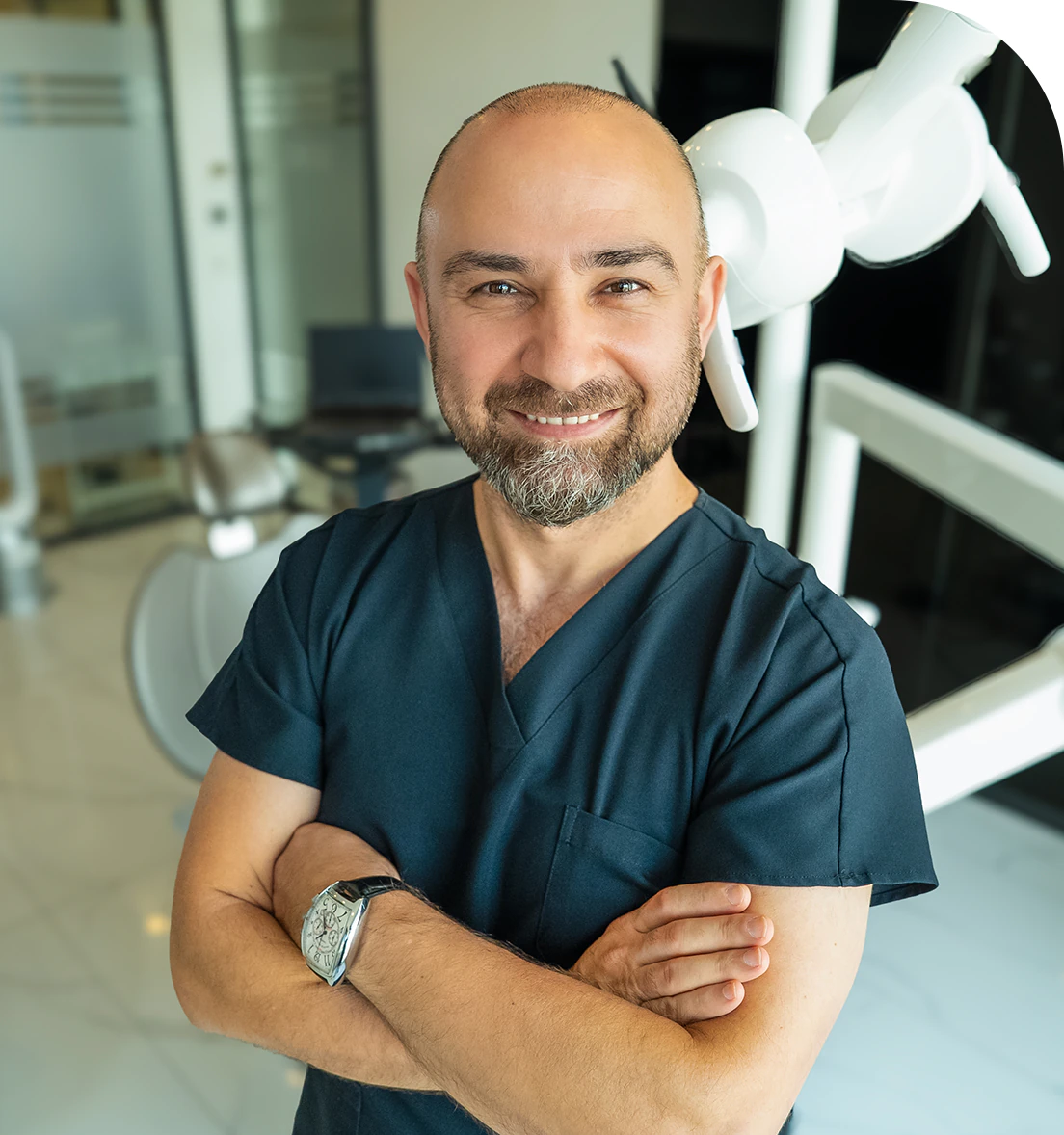
Dr. Dt. Ömer Atar provides care at his private clinic in Istanbul, combining his academic background and many years of clinical experience in dentistry. With a treatment approach that integrates aesthetic and functional solutions, he aims to achieve natural, balanced, and long-lasting results through personalized planning for each patient. Dr. Atar completed his education at the Marmara University Faculty of Dentistry, which he began in 1994, graduating in 2000. He continued his academic work in the Department of Prosthodontics at the same university. In 2007, he earned his PhD degree with his scientific thesis on implants and implant-supported prostheses in patients undergoing distraction osteogenesis. His academic expertise deepened in the fields of metal-free aesthetic systems, implant-supported prostheses, and cosmetic dentistry. Integrating modern technologies and digital dentistry into his practice, Dr. Ömer Atar achieves high success rates in treatments such as smile design, All-on-4/All-on-6 implant treatments, laminate veneers, zirconium crowns, teeth whitening, and gingival aesthetics (gummy smile). As a member of EDAD (Turkish Academy of Aesthetic Dentistry), he embraces a holistic approach focused on modern, functional, and natural outcomes in aesthetic dentistry.


