
 Türkçe
 Français
 Deutsch

Dental curettage treatment in Turkey is a periodontal procedure that removes infected soft tissue and bacterial deposits from periodontal pockets to control gum disease and prevent further attachment loss. It is performed by qualified dentists under sterile conditions to preserve oral health and support long-term periodontal stability.
Professional dental curettage procedures in Turkey are carried out in advanced clinical settings using ultrasonic devices and manual curettes to ensure effective debridement. Comprehensive periodontal evaluation, pocket depth measurement, and radiographic assessment are conducted prior to treatment to determine the severity of inflammation and tissue involvement.
Cost of dental curettage treatment in Turkey is generally more affordable compared to many European countries while maintaining high clinical standards. Treatment planning may include scaling and root planing, adjunctive antimicrobial therapy, and personalized oral hygiene protocols to enhance therapeutic outcomes and reduce recurrence risk.
Post-treatment recovery after dental curettage in Turkey involves mild sensitivity and temporary gingival discomfort, which typically resolve within a few days. Regular follow-up appointments, professional dental cleaning, and strict oral hygiene practices are essential to maintain periodontal health and prevent progression of chronic gum disease.
| Things You Should Know | Information |
| Definition | Dental curettage is the procedure of cleaning plaque, tartar, and inflamed tissues accumulated in the gum pockets using special instruments in gum diseases (especially periodontitis). The aim is to restore gum health by cleaning the tooth root surfaces and the interior of the pocket. |
| Purpose of Application | – To eliminate bacteria from gum pockets – To reduce gum inflammation and bleeding – To enable periodontal tissues to reattach in a healthy manner – To prevent tooth loss |
| Indications | – Presence of deep periodontal pockets (4 mm and above) – Diagnosis of gingivitis or periodontitis – Gum recession accompanied by tartar accumulation – Complaints such as gum bleeding, bad breath, and sensitivity |
| Types | – Superficial (Gingival) Curettage: Scraping of inflamed tissues only within the soft tissue – Deep (Subgingival) Curettage: Detailed cleaning of the root surface and deep pockets beneath the gum |
| Procedure Process | 1. Local anesthesia is applied (in necessary cases). 2. Gum pockets are scraped using special hand instruments called curettes. 3. Plaque, calculus, and infected tissue are removed. 4. If necessary, the area is disinfected with antiseptic solutions. 5. The procedure is usually performed regionally and may be divided into several sessions for multiple areas. |
| Duration of Treatment | The procedure duration may vary depending on the number and depth of the areas to be cleaned, generally lasting between 30–60 minutes. |
| Does It Require Surgery? | No. Curettage is not a surgical procedure; however, in advanced cases, surgical intervention (flap surgery) may be required. |
| Post-Procedure Care | – Hot foods and beverages should be avoided for the first 24 hours – Soft foods should be preferred – Smoking should be avoided – Use of antiseptic mouthwash and medications may be required upon the dentist’s recommendation – Greater attention should be paid to oral hygiene |
| Advantages | – Reduces gum bleeding and inflammation – Supports healing of periodontal tissues – Lowers the risk of tooth loss – Reduces bad breath and improves overall oral health |
| Possible Complications | – Temporary tooth sensitivity – Mild bleeding or gum recession – Short-term pain after the procedure |
| Follow-Up and Control | A follow-up appointment is usually scheduled within 7–10 days after the procedure. If necessary, a second cleaning may be performed. |
What Is Dental Curettage?
Dental curettage is a deep cleaning procedure applied in the treatment of gum diseases. It is performed to remove plaque and tartar deposits located below the gum line. This procedure helps eliminate inflammation by cleaning the interior of gum pockets in advanced gum diseases such as periodontitis and supports the healing of gum tissue. It is usually performed under local anesthesia.
How Do Gum Diseases Develop and Why Is Dental Curettage Necessary?
If you think of oral health as a building, the teeth are the floors, while the gums and jawbone are the foundation that keeps the building standing. If the foundation is damaged, it does not matter how well the building is painted or how shiny the windows are. Periodontal diseases are a stealthy infectious process that targets this foundation. Everything begins with “microbial dental plaque,” which adheres to the tooth surface through the combination of food residues and saliva. This plaque is a soft and sticky layer. If it is not removed by regular brushing, it combines with minerals in saliva, hardens, and turns into the structure we call “dental calculus.”
Once calculus forms, it can no longer be removed by brushing. Due to its rough surface, it retains more bacteria and constantly irritates the gums. The body initiates a defense response against these bacteria. The first signs of this battle are redness and bleeding in the gums. If left untreated, the gums begin to detach from the teeth, forming spaces called “periodontal pockets.” Bacteria accumulate inside these pockets and progress toward the bone. This is exactly where dental curettage becomes essential. This procedure is mandatory to clean these infection reservoirs deep within the gums—areas that toothbrushes or dental floss cannot reach—and to stop the disease from destroying the bone.
The most prominent signs of gum disease include:
- Gum bleeding
- Persistent bad breath
- Gum swelling
- Gum redness
- Tooth mobility
- Gum recession
- Spacing between teeth
- Biting sensitivity
What Are the Main Differences Between Standard Tartar Cleaning and Dental Curettage?
Many of our patients ask, “I already had my teeth cleaned; why do I need curettage again?” The answer lies in the depth of the cleaning. Standard tartar cleaning usually involves removing calculus accumulated above or just at the gum line. This procedure is more preventive in nature and may be sufficient at the early stage of gum disease known as gingivitis.
However, if the infection has progressed into the depths of the gum pocket, superficial cleaning is merely cosmetic and does not resolve the root cause of the problem. Dental curettage focuses on the subgingival area—beneath the gum line. The goal here is not only to remove calculus. The most important objective is “root surface planing.” Diseased tooth roots absorb toxins released by bacteria, making their surfaces rough. Rough surfaces provide an ideal environment for bacterial adhesion.
During curettage, this rough, toxin-laden root surface is scraped to create a smooth, glass-like, clean surface. This process prepares a biological foundation that allows the gum tissue to reattach to the root surface. In short, while standard cleaning is aesthetic and preventive, curettage is a fully therapeutic and tissue-restorative procedure.
Why Is Pocket Depth Important When Deciding on Dental Curettage?
The most important guide in determining our treatment plan is a thin hand instrument called a “periodontal probe,” marked with millimeter measurements at its tip. During examination, we use this instrument to measure the depth of the space between the tooth and the gum. In healthy gums, this depth ranges from 1 to 3 millimeters and can be cleaned with brushing.
However, as pocket depth increases, it becomes impossible for the patient to clean that area. If we detect pockets measuring 4–5 millimeters, we understand that bone loss has begun and infection has become established. This depth tells us which type of curettage is required. For pockets up to 5 millimeters, we generally prefer non-surgical methods; for deeper pockets, we begin to consider surgical approaches due to reduced instrument effectiveness.
Risk factors contributing to the formation of deep pockets include:
- Smoking
- Genetic predisposition
- Diabetes
- Poor oral hygiene
- Hormonal changes
- Stress
- Bruxism (teeth grinding)
- Faulty dental restorations
How Is Closed Dental Curettage Performed?
Closed curettage, also known among patients as “deep cleaning,” is a method performed without making a surgical incision. It is generally the first-choice treatment for early to moderate periodontitis cases. Patient comfort is our top priority, so the area is completely numbed with local anesthesia before the procedure.
After anesthesia takes effect, specially designed fine-tipped hand instruments (curettes) and ultrasonic devices are used to access the gum pocket. The dentist’s experience and manual sensitivity are crucial, as the procedure is performed “blindly.” Since the gum is not incised, the root surface cannot be seen directly; instead, the dentist senses whether the surface is rough or smooth through the vibrations felt at the instrument tip.
Ultrasonic devices break down calculus using high-frequency vibrations while simultaneously flushing out inflamed tissue and bacteria with water spray. Fine manual instrumentation then smooths the root surface. The goal is to allow the gum tissue to reattach to the tooth. The mouth is usually divided into four quadrants, and treatment is carried out over multiple sessions.
Why Is Open Dental Curettage or Flap Surgery Preferred in Advanced Cases?
In some cases, the disease has progressed so far that gum pockets reach 6 millimeters or more, and bone loss has created deep craters. In such situations, working blindly with closed techniques is like “digging a well with a needle” and may not be sufficient to eliminate all infection. Accessing root furcation areas or very deep bone defects with hand instruments becomes impossible.
At this point, “open curettage,” medically known as “flap surgery,” becomes necessary. This is a microsurgical intervention aimed at saving the tooth. After anesthesia, the gum is gently lifted with a small incision, allowing direct visualization of the tooth roots, bone loss, and calculus.
Working under direct vision allows thorough removal of infection even from the deepest areas. Additionally, bone graft materials or regenerative substances may be placed to repair lost bone tissue. After cleaning and repair, the gum is sutured back into position. Sutures are typically removed after about one week. This method is our most powerful option for preserving teeth without extraction.
How Is Laser Technology Used in Dental Curettage Treatment?
With technological advancements in dentistry, lasers have become indispensable adjuncts in periodontal therapy. At the microscopic level—where traditional mechanical cleaning with hand instruments and ultrasonic devices may be insufficient—lasers come into play.
Laser energy is highly effective in killing bacteria within gum pockets (bactericidal effect). It can selectively vaporize inflamed granulation tissue without damaging healthy tissue. Another advantage of lasers is their “biostimulation” effect, which increases cellular energy levels, accelerates healing, and reduces pain.
Laser-assisted curettage offers better bleeding control and improves post-procedure comfort. However, it should be noted that lasers are not a magic wand that solves everything; they are powerful “team players” that complement mechanical cleaning and enhance treatment success.
The main advantages of laser use include:
- Bacterial elimination
- Faster healing
- Reduced bleeding
- Less swelling
- Tissue regeneration
- Postoperative comfort
- Pain control
Is Pain or Discomfort Felt During Dental Curettage?
Pain is the primary concern for most patients when they sit in the dental chair. We hear the question “Will it hurt a lot?” many times every day. I can confidently say that dental curettage is not a painful procedure because effective local anesthesia is administered beforehand.
Since the gums and surrounding tissues are fully numbed, the patient does not feel sharp pain during the procedure. Only sensations such as vibration, touch, or mild pressure may be perceived, which are different from pain. Thanks to modern anesthesia techniques, patient comfort is maintained at the highest level even during deep cleanings.
After the anesthesia wears off, mild soreness may occur, but it is usually manageable with simple painkillers and does not interfere with daily life.
Does Gum Recession or Appearance Change Occur After Treatment?
After treatment, some patients may notice that their teeth appear longer, which can cause concern. Patients often ask, “Have my gums receded?” In fact, this reflects a normal healing process.
Before treatment, inflamed gums are swollen, edematous, and larger than normal. Once the infection is removed, the tissue heals, swelling subsides, and the gums tighten and return to their normal size. This shrinkage may expose part of the tooth root.
Although this may be aesthetically concerning, medically it represents healthy “pink aesthetics.” Tight, pale pink, non-bleeding gums are always preferable to swollen, bleeding gums. If recession is aesthetically problematic, gum grafting or other cosmetic periodontal procedures can be considered later, once gum health is stabilized.
What Should Be Considered During the Healing Process After Dental Curettage?
We perform the curettage in the clinic, but half of the treatment’s success depends on what the patient does at home. Gentle care of the tissues is essential for smooth and rapid healing. The first 24 hours are critical for clot formation and the initiation of wound healing.
During this period, patients are advised not to traumatize the treated area while maintaining oral hygiene. Avoiding brushing out of fear of bleeding is a major mistake. On the contrary, gentle cleaning with a very soft-bristled toothbrush is necessary to prevent plaque accumulation. Saltwater rinses also significantly help reduce swelling.
Foods to avoid during the healing period include:
- Very hot foods
- Very hot beverages
- Spicy foods
- Acidic drinks
- Hard-shelled foods
- Sticky foods
- Popcorn
- Sesame-containing products
Why Is Maintenance Therapy So Critical After Dental Curettage?
Periodontal disease is not like an appendectomy that permanently solves the problem. It is more like diabetes or hypertension—a chronic condition that must be managed. If there is genetic predisposition or oral hygiene habits do not improve, recurrence is always possible.
What we call “maintenance therapy” begins after active treatment and continues for life. Scientific studies show that in patients who do not attend regular follow-ups after curettage, periodontal pockets deepen again and bone destruction resumes—regardless of how well the initial cleaning was performed.
Therefore, depending on risk level, we schedule follow-ups every 3, 4, or 6 months. These appointments are not just simple cleanings; pocket depths are measured individually, brushing technique is evaluated, and high-risk areas are addressed immediately. Regular maintenance therapy is the most important insurance for preserving your teeth long-term.
What Are the Effects of Dental Curettage on Systemic Health?
The mouth is not an isolated compartment from the rest of the body. Millions of bacteria live in gum pockets, and in individuals with gum bleeding, these bacteria can enter the bloodstream. This results in a “low-dose chronic infection.”
Modern medicine has proven strong links between periodontal disease and overall systemic health. There are direct associations between gum infections and conditions such as cardiovascular disease, poorly controlled diabetes, increased stroke risk, and preterm birth in pregnant women.
For example, diabetic patients often experience improved blood sugar control after periodontal treatment. Conversely, uncontrolled blood sugar delays gum healing. This bidirectional relationship shows that dental curettage not only saves teeth but also contributes significantly to overall health and quality of life by reducing the body’s infection burden.
What Happens If Conditions Requiring Dental Curettage Are Left Untreated?
The belief that “it will pass with time” or “I don’t have pain, I’ll do it later” is the most dangerous approach to periodontal disease. This condition often progresses silently without causing severe pain until advanced stages. Untreated gum disease gradually destroys the bone surrounding the teeth.
Eventually, teeth begin to loosen, shift, develop gaps, and chewing function deteriorates. Ultimately, even teeth without cavities may be lost due to lack of supporting bone. Tooth loss is not merely an aesthetic issue; it is an organ loss that can lead to nutritional deficiencies, speech disorders, and serious psychological problems.
Possible consequences of untreated periodontal disease include:
- Advanced bone loss
- Tooth mobility
- Tooth loss
- Loss of chewing function
- Speech disorders
- Aesthetic deterioration
- Digestive problems
- Increased risk of systemic infection
Before & After Photos


Frequently Asked Questions
What is dental curettage and what is it used for?
Dental curettage is the procedure of scraping and cleaning inflamed tissues and dental calculus inside gum pockets. It is performed to stop the progression of gum disease and support healing.
In which cases is dental curettage necessary?
Dental curettage is recommended in cases of gum recession, deep pocket formation, chronic gum inflammation (periodontitis), and advanced plaque accumulation. It is generally preferred when standard cleaning is insufficient.
Is anesthesia applied during dental curettage?
Yes, the procedure is performed under local anesthesia, allowing deep cleaning without pain or discomfort. In small areas, surface anesthesia may be sufficient.
How is dental curettage performed?
Dental calculus and inflamed tissue are removed using special curettes or ultrasonic devices beneath the gum line. Root surface planing may be performed if necessary. The procedure can be done in one area or over several sessions for the entire mouth.
What is the healing process like after dental curettage?
Mild pain, gum sensitivity, and bleeding may occur during the first few days. These symptoms can be managed with prescribed mouth rinses and painkillers. Healing typically begins within 1–2 weeks.
Does dental curettage stop gum recession?
Yes, by eliminating inflammation, it can stop the progression of gum recession. However, existing recession cannot be reversed. The treatment prevents further tissue damage.
What should be considered after dental curettage?
Hot and cold foods should be avoided for the first 24 hours, smoking should be avoided, and recommended oral care should be followed. Brushing should be gentle, and follow-up appointments should not be neglected.
Is dental curettage repeated?
Depending on the patient’s oral hygiene, the procedure may need to be repeated. In chronic conditions such as periodontitis, periodic follow-ups and repeat curettage may be recommended.
Can dental curettage be performed during pregnancy?
It can be safely performed during the second trimester (months 4–6). Considering the serious risks gum disease poses during pregnancy, treatment is generally not postponed.
What is the difference between dental curettage and tartar cleaning?
While tartar cleaning removes superficial plaque and calculus, dental curettage targets deeper areas beneath the gum line. Curettage is required in more advanced gum diseases.
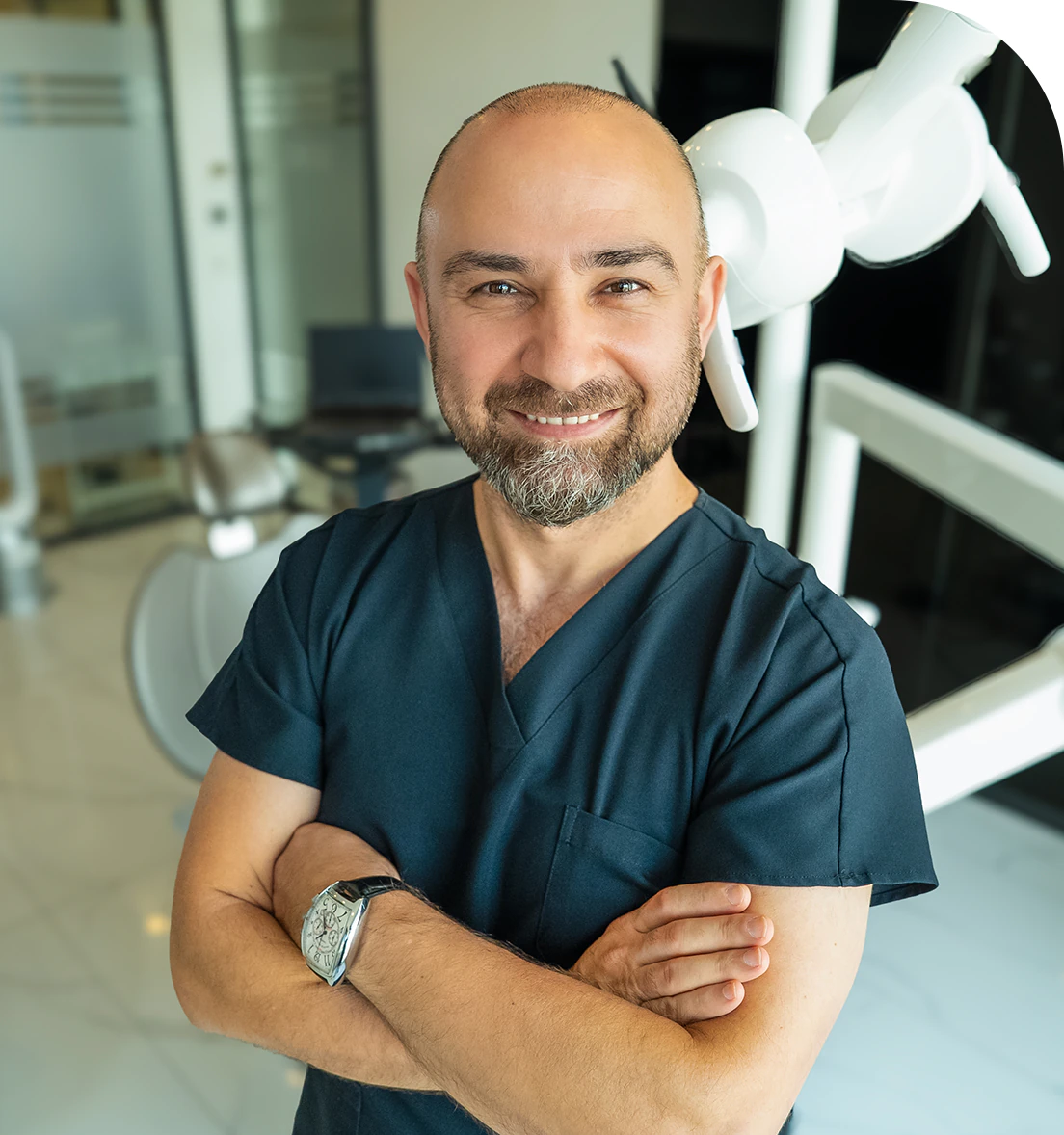
Dr. Dt. Ömer Atar provides care at his private clinic in Istanbul, combining his academic background and many years of clinical experience in dentistry. With a treatment approach that integrates aesthetic and functional solutions, he aims to achieve natural, balanced, and long-lasting results through personalized planning for each patient. Dr. Atar completed his education at the Marmara University Faculty of Dentistry, which he began in 1994, graduating in 2000. He continued his academic work in the Department of Prosthodontics at the same university. In 2007, he earned his PhD degree with his scientific thesis on implants and implant-supported prostheses in patients undergoing distraction osteogenesis. His academic expertise deepened in the fields of metal-free aesthetic systems, implant-supported prostheses, and cosmetic dentistry. Integrating modern technologies and digital dentistry into his practice, Dr. Ömer Atar achieves high success rates in treatments such as smile design, All-on-4/All-on-6 implant treatments, laminate veneers, zirconium crowns, teeth whitening, and gingival aesthetics (gummy smile). As a member of EDAD (Turkish Academy of Aesthetic Dentistry), he embraces a holistic approach focused on modern, functional, and natural outcomes in aesthetic dentistry.


