
 Türkçe
 Français
 Deutsch

Incisors are anatomical structures composed of four upper and four lower teeth located in the anterior region of the dental arch. They are responsible for cutting food and directly determine smile aesthetics. Current diagnostic and treatment protocols for the aesthetic and functional management of these teeth include minimally invasive approaches that preserve healthy tooth structure to the maximum extent, restorative techniques such as composite bonding and porcelain laminates, and orthodontic solutions aimed at achieving skeletal harmony. Success in anterior restorations is not only achieved by ensuring the structural integrity of the tooth, but also by perfectly integrating biomechanical criteria such as facial symmetry, phonation, and occlusion.
Why are incisors so important for aesthetics and function?
When you look in the mirror, the first thing you usually notice is your front teeth. These teeth, also known as the “social six,” form the foundation of smile design. However, it’s not just about looking good. Incisors have another very important function: they protect the posterior teeth. When you move your jaw forward or sideways, the front teeth come into contact and separate the back teeth from each other. Thanks to this guidance system, the enormous forces generated by the chewing muscles are prevented from damaging the back teeth and the jaw joint.
From an aesthetic perspective, nature provides us with certain mathematical rules. Criteria such as the ratio of a tooth’s height to its width, the symmetry of the gum line, and the alignment of the midline with the center of the face create the appearance we perceive as “beautiful.” The goal of treatment is not just to create a white tooth, but to achieve the form that best suits your face and complies with the rules of the “Golden Ratio.” A tooth that does not function properly cannot be aesthetically long-lasting either.
What is the minimally invasive (conservative) approach in modern dentistry?
In the past, it was common practice to reduce and trim teeth all around for aesthetic crowns. However, the philosophy of modern dentistry has completely changed. Today, our priority is not to touch the healthy tooth structure nature gave you, or to touch it as little as possible. This is called the “Minimally Invasive Approach.”
The basis of this approach lies in the value of enamel. Enamel is the hardest and most valuable tissue produced by the human body. Thanks to advances in adhesive technologies, we can now bond porcelain or composite materials to enamel with incredible strength. The more enamel we preserve, the stronger the restoration bonds to the tooth and the lower the risk of damage to the tooth’s nerve. Therefore, the goal of modern treatments is not to cut the tooth, but to complete what is missing and preserve the existing tissue.
In which situations is composite bonding preferred?
Composite bonding, commonly referred to as “aesthetic filling” or “add-on” by the public, is one of the most artistic and practical solutions in dentistry. Unlike porcelain veneers, it does not require a laboratory stage and is usually completed in a single appointment. The dentist layers composite resins—matching the tooth color and with different levels of translucency and opacity—to give the tooth a new form.
The best part of this method is that it can be applied with almost no abrasion to the tooth. Only the tooth surface is roughened with special solutions, and the material is chemically bonded to the tooth. Its fast results and lower cost compared to porcelain make bonding a very popular option.
Common indications for bonding include:
- Gaps between teeth
- Minor fractures
- Surface cracks
- Slight shape irregularities
- Permanent discolorations
- Tooth lengthening
This procedure can be applied to almost any patient with healthy gums and no cavities. With good care, it can maintain its aesthetic appearance for many years. However, compared to porcelain, it has a slightly higher tendency to discolor over time due to staining foods like tea and coffee.
What are the differences between porcelain laminate veneers and composite?
If a more permanent, shinier, and non-discoloring solution is desired, porcelain laminate veneers come into play. This system works similarly to press-on nails but with much higher technology. These ultra-thin porcelain shells, approximately 0.3 to 0.5 millimeters thick, are bonded only to the front surface of the tooth and represent the pinnacle of aesthetic dentistry.
The main difference between porcelain and composite lies in the material itself. Thanks to its glass-ceramic structure, porcelain reflects light like natural teeth and offers an incredible “vitality.” Its surface is extremely smooth and hard, which means it does not absorb stains from substances like cigarettes, tea, or coffee. Even after years, it retains its original shine.
Advantages of porcelain laminates include:
- Stain resistance
- Color stability
- High durability
- Tissue compatibility
- Natural light reflection
During application, a very thin layer (about the thickness of a fingernail) may need to be removed from the front surface of the tooth. Since this is custom-made in a lab, the process usually takes two or three sessions. Although it is more costly than bonding, its lifespan of up to 15–20 years makes it a worthwhile investment in the long run.
In cases of crowding, is orthodontic treatment or veneering better?
Many patients come to the clinic complaining about crooked teeth, saying, “Let’s just do veneers and fix it quickly.” However, a very careful decision must be made. If the crowding exceeds a certain level, trying to fix it by trimming and covering the teeth can be one of the worst things for dental health. Instead of sacrificing healthy tooth structure, it is always best to move the teeth to their proper positions.
Here, what we call the “Multidisciplinary Approach” comes into play, involving collaboration among different specialties. For example, in cases of “peg laterals”—congenitally small lateral incisors—direct veneering may not be aesthetically pleasing due to the insufficient surface area. First, orthodontic treatment or clear aligners (invisible orthodontics) are used to create ideal spacing, and then bonding or porcelain is applied in the appropriate size.
Orthodontic treatment options include:
- Clear aligners
- Metal brackets
- Porcelain brackets
- Jaw expanders
Especially in adult patients, skeletal mismatches between the upper and lower jaws (protruded or retruded jaws) cannot be corrected by aligning teeth alone. In such cases, jaw surgery may be required alongside orthodontics. Remember, even the most expensive porcelain on a tooth in the wrong position is doomed to break under improper force.
What should be done first when an incisor trauma occurs?
Fracture or complete avulsion of front teeth is a common issue, especially in school-aged children, athletes, or home accidents. Staying calm and being informed can save the tooth. In dental trauma, time is the most critical factor.
If the tooth is completely dislodged with the root (avulsion), the first step is to find the tooth. Do not touch the root—only hold the white, visible crown portion. The living cells on the root surface are vital for reattachment, and they die within minutes if dry. If possible, reinsert the tooth immediately. If this is not possible, keep it moist until you reach the dentist.
The best storage media for the tooth include:
- Cold milk
- Patient’s saliva
- Physiological saline
- Inside the cheek
Never wrap the tooth in tissue, place it in water, or attempt to clean it with alcohol. If you can reach the dentist within an hour, the chances of replanting and saving the tooth are very high. If the tooth is broken, finding and keeping the fragment moist will allow the use of a “re-attachment” technique, which is the most aesthetic repair option.
Why is it vital to protect the nerve (pulp) in young patients?
In children and adolescents, even if the permanent teeth have erupted, root development may not yet be complete. The closure of the root tip and thickening of the root walls is a process that takes years after eruption. If a young tooth is damaged due to trauma or deep decay, we do not want to perform a traditional root canal and remove the nerve immediately. A tooth that loses its nerve stops developing; its roots remain thin and weak, increasing the risk of fracture in the future.
At this point, we apply “Vital Pulp Therapies.” Our goal is to preserve as much of the living tissue (pulp) inside the tooth as possible. In procedures like “vital pulpotomy” or “amputation,” only the infected upper portion of the nerve is removed. The healthy tissue in the roots is left untouched and sealed with special biological medications.
Advantages of this treatment include:
- Continued root development
- Preservation of tooth vitality
- Thickening of root walls
- Prevention of early tooth loss
In this way, the tooth completes its natural development and gains a strong structure capable of lasting a lifetime in the mouth. This is a sort of “intensive care” process for young teeth and is critically important for their future.
What should be done to extend the life of aesthetic restorations?
Whether it’s bonding, porcelain laminates, or orthodontic treatment, the longevity of the beautiful result depends largely on patient care. No restoration lasts a lifetime without issues based solely on the notion of “it’s done.” The oral environment is constantly moist, experiences temperature changes, and is filled with bacteria—an extremely challenging setting.
Especially for bonding and laminates, the greatest threat is uncontrolled forces. Biting hard objects with the front teeth, habits like chewing pens, nail biting, or eating seeds can lead to fractures in restorations. Additionally, patients with teeth grinding or clenching (bruxism) should always use protective night guards after treatment.
Important maintenance tips include:
- Regular brushing
- Use of dental floss
- Use of interdental brushes
- Use of night guards
- Avoiding acidic foods and drinks
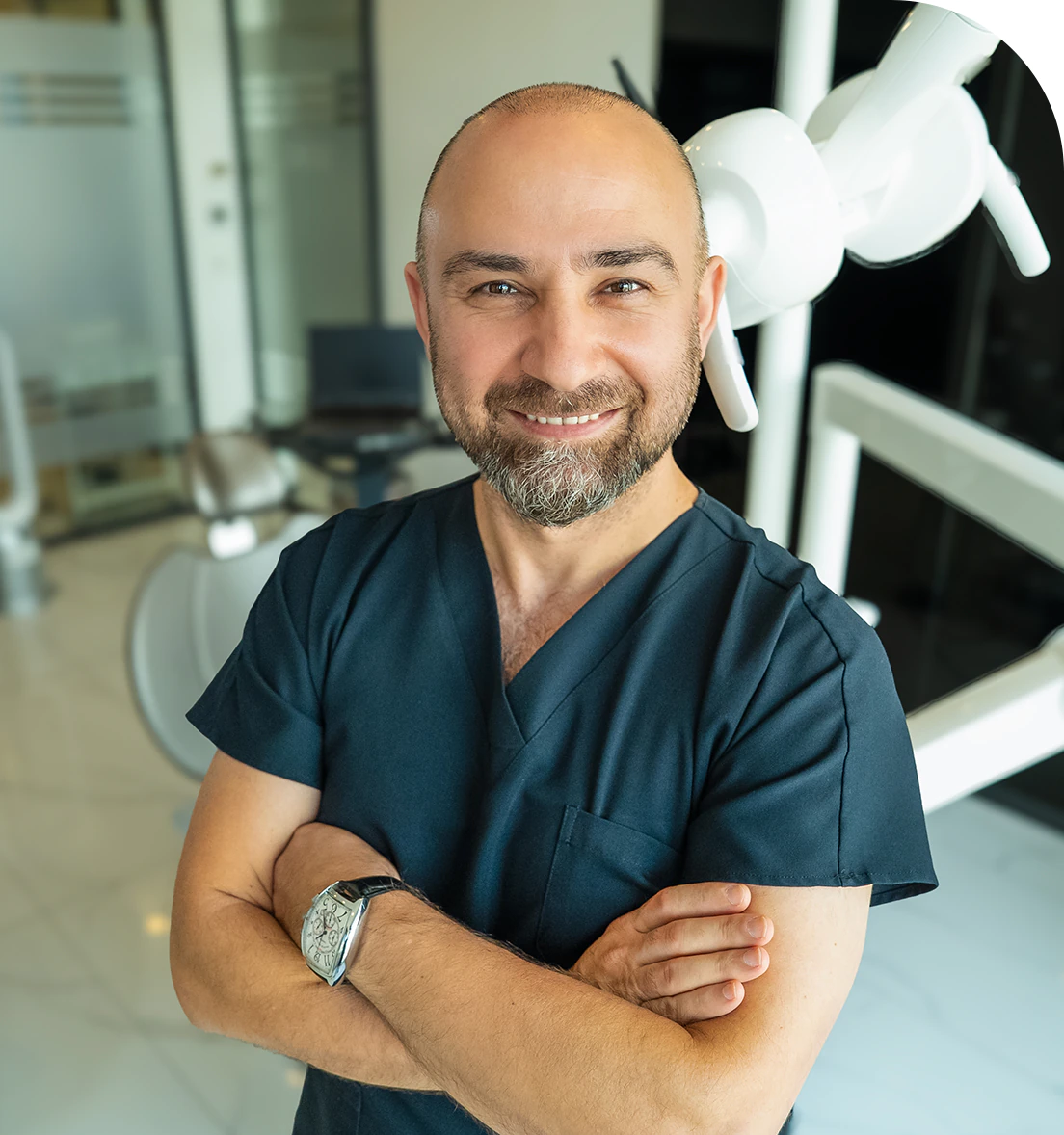
Dr. Dt. Ömer Atar provides care at his private clinic in Istanbul, combining his academic background and many years of clinical experience in dentistry. With a treatment approach that integrates aesthetic and functional solutions, he aims to achieve natural, balanced, and long-lasting results through personalized planning for each patient. Dr. Atar completed his education at the Marmara University Faculty of Dentistry, which he began in 1994, graduating in 2000. He continued his academic work in the Department of Prosthodontics at the same university. In 2007, he earned his PhD degree with his scientific thesis on implants and implant-supported prostheses in patients undergoing distraction osteogenesis. His academic expertise deepened in the fields of metal-free aesthetic systems, implant-supported prostheses, and cosmetic dentistry. Integrating modern technologies and digital dentistry into his practice, Dr. Ömer Atar achieves high success rates in treatments such as smile design, All-on-4/All-on-6 implant treatments, laminate veneers, zirconium crowns, teeth whitening, and gingival aesthetics (gummy smile). As a member of EDAD (Turkish Academy of Aesthetic Dentistry), he embraces a holistic approach focused on modern, functional, and natural outcomes in aesthetic dentistry.


