
 Türkçe
 Français
 Deutsch
 Nederlands
 Svenska

Zirconium and laminate porcelain are two aesthetic dental veneer types with different indications. Zirconium covers the entire tooth, providing both aesthetic improvement and structural strength, whereas laminate porcelain is a thin layer applied only to the front surface of the tooth. The choice is made based on the current condition of the tooth and aesthetic expectations.
Laminate porcelain applications require minimal tooth reduction and are generally preferred for teeth whose natural structure is largely intact, with only discoloration or minor shape irregularities. Zirconium, on the other hand, is used in broader restorative needs, especially in structurally compromised teeth or teeth with old fillings.
From an aesthetic perspective, both materials offer high success. However, laminate porcelain has higher light transmittance and provides results closest to the appearance of natural teeth. Zirconium stands out with its durability alongside aesthetics and can therefore be safely used on posterior teeth as well.
In terms of the treatment process, laminate porcelain requires more delicate and personalized planning. Since the application area is more limited, it may not be suitable for every patient. Zirconium crowns, however, have broader indications and offer long-lasting solutions.
What Is a Zirconium Dental Crown?
A zirconium dental crown is a fixed prosthesis that uses zirconium oxide instead of metal in its substructure. Due to its durability and appearance close to the natural tooth color, it has been frequently preferred in recent years. It is commonly used in single-tooth restorations, bridges, or posterior teeth exposed to intense chewing forces.
During this procedure, the tooth needs to be reduced by a certain amount. The aim is to ensure that the crown fits harmoniously onto the tooth. The light transmittance of zirconium is better than that of traditional metal-supported crowns, contributing to a more natural aesthetic appearance.
What Is Laminate Porcelain (Veneer Porcelain)?
Laminate porcelains are thin porcelain layers most commonly preferred for aesthetic correction of the front teeth. They are also known as “veneer porcelain.” In this application, very minimal reduction is performed on the front surface of the tooth; in some cases, the procedure can even be carried out without any reduction.
The most remarkable feature of laminate porcelains is that they provide an appearance very close to natural tooth enamel. They are frequently considered for patients with high aesthetic expectations in terms of color, form, and surface texture. Individuals who are dissatisfied with their smile due to shape irregularities, gaps, or permanent discolorations often explore this option.
Differences in Terms of Aesthetic Expectations
When aesthetic concerns are at the forefront, laminate porcelains are generally more prominent. Thanks to their thin structure, they reflect light like natural teeth. This is especially important for patients who expect a result in the front teeth where “it is not noticeable that a crown is present.”
Zirconium crowns, while aesthetically satisfactory, may be slightly more opaque compared to laminate porcelains. This difference is usually noticeable upon close inspection. However, in posterior teeth or in situations where durability is prioritized over aesthetics, this characteristic generally does not pose a problem.
Durability and Areas of Use
Zirconium is known for its high durability. Its hard structure makes it resistant to chewing forces. For this reason, it is more frequently considered in individuals with teeth clenching or grinding habits, in posterior regions, or in bridge applications.
Laminate porcelains, due to their thin structure, are more delicate. Proper patient selection and correct usage habits become important at this point. Habits such as cracking hard-shelled foods with the teeth can pose a risk for laminate porcelains. Therefore, whether they are suitable for each patient must be carefully evaluated.
Preservation of Tooth Structure
For many patients, how much the teeth will be reduced is an important concern. Laminate porcelains are advantageous in terms of preserving tooth structure thanks to the minimal preparation they require. This may be a reason for preference among individuals who are hesitant about irreversible procedures.
In zirconium crowns, a certain amount of reduction is performed around the entire circumference of the tooth. This is necessary for the crown to be strong and long-lasting. However, the loss of tooth structure is greater compared to laminate porcelains.
Treatment Process and Patient Experience
The treatment process for both applications is planned individually. It generally includes impression taking, try-in, and placement stages. In laminate porcelains, aesthetic planning may be more detailed; meticulous work is carried out on smile design, tooth length, and form.
In zirconium crowns, functional expectations may be more prominent. Patients often aim to increase chewing comfort and protect teeth with fractures or excessive material loss. In both processes, temporary teeth can be used so that the patient can continue daily life.
Which Is Considered in Which Situation?
The answer to the question “Zirconium or laminate porcelain?” is closely related to the current condition of the teeth, the patient’s expectations, and oral habits. Laminate porcelains may be considered for individuals who want aesthetic correction in the front teeth and whose tooth structure is largely intact.
In contrast, zirconium crowns may be evaluated as a more suitable option for teeth with large fillings, fractures, or root canal treatment. In addition, when durability is prioritized over aesthetics in posterior teeth, zirconium may be preferred.
The Importance of Professional Evaluation
Neither application is suitable for everyone. Oral structure, gum health, occlusion, and parafunctional habits (such as teeth clenching) must be taken into account. Therefore, the final decision is made after a detailed clinical examination and personalized evaluation.
Information obtained by patients over the internet can be guiding; however, it is not sufficient on its own. Treatment selection is shaped according to individual needs and does not have a standard prescription.
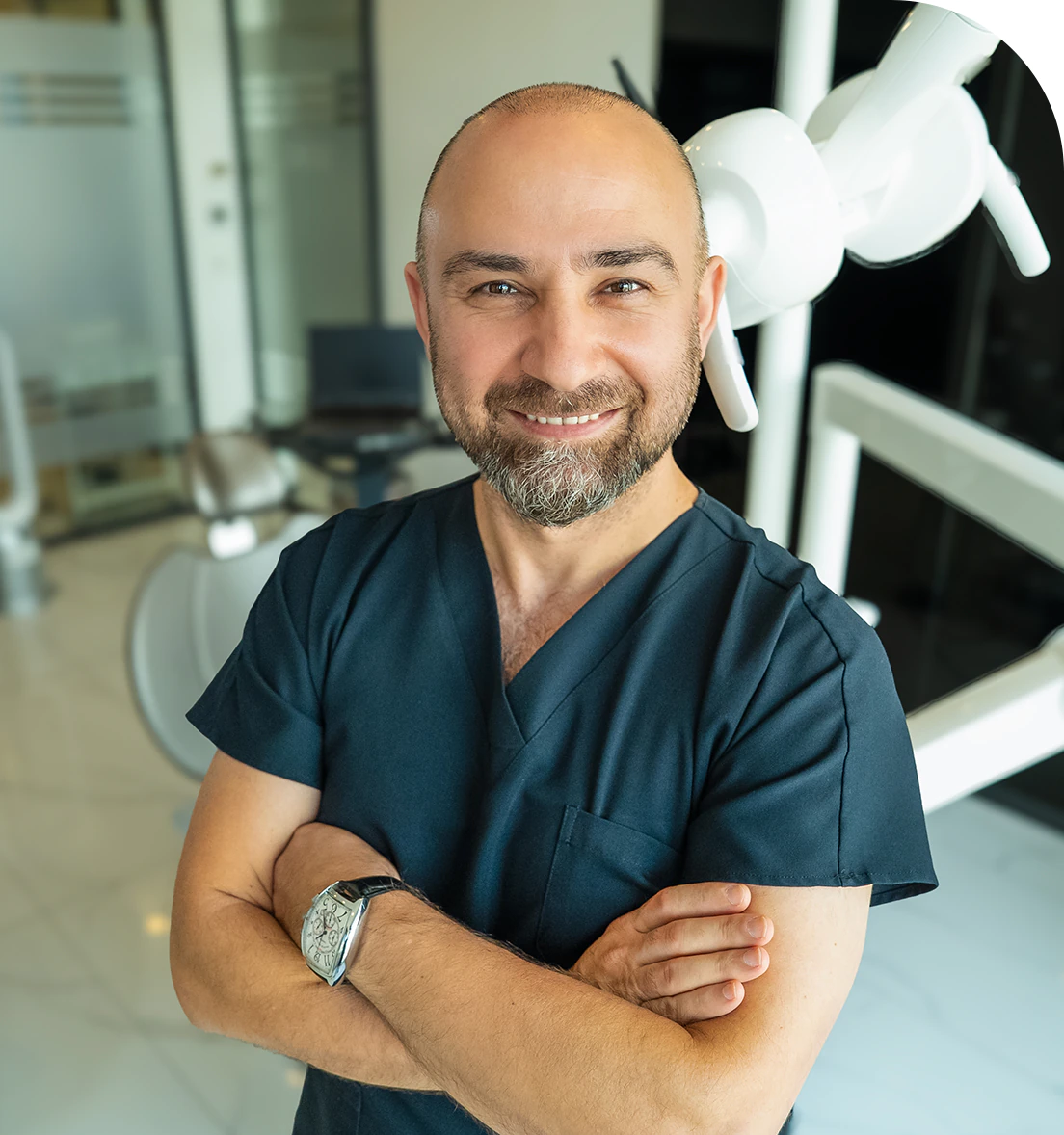
Dr. Dt. Ömer Atar provides care at his private clinic in Istanbul, combining his academic background and many years of clinical experience in dentistry. With a treatment approach that integrates aesthetic and functional solutions, he aims to achieve natural, balanced, and long-lasting results through personalized planning for each patient. Dr. Atar completed his education at the Marmara University Faculty of Dentistry, which he began in 1994, graduating in 2000. He continued his academic work in the Department of Prosthodontics at the same university. In 2007, he earned his PhD degree with his scientific thesis on implants and implant-supported prostheses in patients undergoing distraction osteogenesis. His academic expertise deepened in the fields of metal-free aesthetic systems, implant-supported prostheses, and cosmetic dentistry. Integrating modern technologies and digital dentistry into his practice, Dr. Ömer Atar achieves high success rates in treatments such as smile design, All-on-4/All-on-6 implant treatments, laminate veneers, zirconium crowns, teeth whitening, and gingival aesthetics (gummy smile). As a member of EDAD (Turkish Academy of Aesthetic Dentistry), he embraces a holistic approach focused on modern, functional, and natural outcomes in aesthetic dentistry.


