
 Türkçe
 Français
 Deutsch

Prosthetic dental treatment in Turkey is a comprehensive restorative dentistry service that replaces missing or damaged teeth using fixed or removable prostheses under advanced clinical standards. Procedures are performed by qualified specialists utilizing digital planning systems and biocompatible materials to ensure functional and aesthetic rehabilitation.
Cost of prosthetic dental treatment in Turkey is generally more affordable compared to many European countries, while maintaining high medical quality and regulatory compliance. Pricing depends on the type of prosthesis, materials used, laboratory technology, and the complexity of the patient’s oral condition.
Types of prosthetic dental procedures in Turkey include crowns, bridges, full dentures, partial dentures, and implant-supported prostheses designed to restore chewing efficiency and facial symmetry. Each treatment plan is individualized based on radiological evaluation, occlusal analysis, and overall oral health status.
Recovery process after prosthetic dental treatment in Turkey involves scheduled follow-up visits, oral hygiene instruction, and adaptation monitoring to ensure long-term stability. Proper maintenance, regular dental controls, and professional cleaning significantly extend the lifespan and functionality of dental prostheses.
| What You Need to Know | Information |
| Definition | Prosthetic dental treatment is a branch of dentistry that includes fixed or removable prosthesis applications aimed at restoring the function, aesthetics, and speech abilities of missing or damaged teeth. Prostheses can be made on both natural teeth and implants. |
| Purpose | – To restore chewing and speaking functions by placing artificial teeth in place of missing ones – To improve facial aesthetics – To preserve the position of existing teeth and jaw structure |
| Who It Is For | – Individuals who have lost one or more teeth – Patients with excessive tooth substance loss – Individuals with congenital tooth deficiency – Individuals with an oral structure suitable for prosthesis use |
| Types of Prostheses | – Fixed Prostheses: Crowns, bridges, zirconium, porcelain, etc. – Removable Prostheses: Full dentures, partial (clasped) dentures – Implant-Supported Prostheses: Can be fixed or removable – Overdenture Prostheses: Removable prostheses with special systems supported by teeth or implants |
| Treatment Process | 1. Clinical examination and radiological evaluation 2. Analysis of teeth or jawbone condition 3. Impressions are taken, and prostheses are prepared in the lab 4. Trial sessions are performed, and after necessary adjustments, they are fixed or delivered to the patient |
| Materials Used | – Porcelain – Zirconium – Metal alloys – Acrylic – Composite materials |
| Treatment Duration | Varies by type of prosthesis: – Fixed prostheses typically 1–2 weeks – Removable prostheses 2–4 weeks – For implant-supported prostheses, including osseointegration time, 3–6 months |
| Advantages | – Aesthetic and functional losses are restored – Jaw deformities due to missing teeth are prevented – Speech clarity improves – Psychological and social confidence is gained |
| Care and Check-ups | – Daily oral hygiene is essential for fixed prostheses – Removable prostheses should be removed daily and cleaned with special products – Annual or semiannual check-ups are recommended |
| For Long-Term Success | – Regular maintenance and dentist follow-up – Avoiding harmful habits like smoking and teeth grinding – Paying attention to oral hygiene |
| Alternative Applications | – Orthodontic treatment (for closing gaps) – Implant applications (if bone condition is suitable) – Temporary prostheses (for support during treatment) |
What Is Prosthetic Dental Treatment?
Prosthetic dental treatment is a branch of dentistry applied to replace lost teeth or dental structures with artificial ones. This treatment includes fixed prostheses (crowns, bridges), removable prostheses (complete and partial), implant-supported prostheses, and aesthetic restorations. The aim is to improve the patient’s quality of life both functionally and aesthetically. The treatment process is planned individually.
What Is the Main Purpose of Prosthetic Dental Treatment?
When making a prosthesis, we do not only aim to fill the gap. The philosophy of the treatment is to eliminate the factors that lower the patient’s quality of life. In an individual who has lost their teeth, the first function to deteriorate is chewing. Inadequate grinding of food causes problems at the beginning of the digestive system and may trigger stomach disorders. The primary and most important purpose of prosthetic treatment is to restore this chewing ability.
The second major goal is phonetics, i.e., speech. Teeth, together with the tongue and lips, are instruments that enable correct pronunciation of sounds. Especially in anterior tooth loss, pronouncing certain letters becomes impossible. The loss or hissing of sounds like “f,” “v,” and “s” during speech seriously impairs social communication. With the prostheses we make, we enable these sounds to be produced correctly again.
The third pillar is aesthetics and psychology. Individuals with missing teeth or deformities often tend to cover their mouths while laughing. They avoid smiling in photos. Over time, this leads to social isolation and loss of self-confidence. Our duty is to design a smile suitable for the person’s facial features, age, and character, and to restore the self-confidence they’ve lost.
The Main Goals of Prosthetic Dental Treatment Are:
- Chewing function
- Speech clarity
- Aesthetic appearance
- Psychological self-confidence
- Tissue health
How Are Digital Technologies Used in the Treatment Process?
The biggest revolution in dentistry in recent years is undoubtedly digitalization. In the past, one of the most dreaded steps for our patients was taking impressions. Those large metal trays filled with putty-like materials that had to set in the mouth often triggered gag reflexes and caused significant discomfort. Fortunately, we have largely left those scenarios behind.
Today, with intraoral scanners (such as Primescan or Trios), we can transfer a 3D image of the teeth to the computer screen within seconds. These small camera tips are moved inside the mouth to create a highly precise digital map of the teeth and gums. This method is much more comfortable for the patient and minimizes error.
The digital data obtained is transferred to CAD/CAM (Computer-Aided Design and Manufacturing) systems. This means your tooth is designed digitally, not handcrafted in the lab, and is produced from block materials using extremely precise milling devices. This technology has brought us incredible speed. Porcelain manufacturing processes that used to take weeks can now, in appropriate cases, be completed in a single session. The patient sits in the chair, the tooth is prepared, a digital scan is taken, and while the patient enjoys a coffee, the prosthesis is produced and bonded in the same session.
We also benefit from this technology in implant surgery. With 3D surgical planning software, we determine virtually where and at what angle to place the implant in the bone before the operation. This shortens the surgery time and maximizes success.
Advantages of the digital workflow include:
- High speed
- Maximum comfort
- Precise fit
- Predictable outcomes
- Error-free manufacturing
What Are the Types of Fixed Prostheses?
Fixed prostheses are the most preferred restorations by our patients and offer a feeling closest to natural teeth in terms of comfort. As the name implies, these prostheses are cemented onto the teeth by the dentist and cannot be removed by the patient. They do not move while eating or fall off while speaking. Depending on the condition of the existing teeth and the extent of tooth loss, various types exist:
The most well-known is the crown. If a tooth has lost too much structure due to decay or fracture, it may not be possible to restore it with a filling, or there may be a high risk of fracture. In such cases, the tooth is reduced in size and covered with a cap-like material. This both protects the tooth and improves its aesthetics.
Another type is the bridge prosthesis. In cases of one or more missing teeth, support is taken from the healthy teeth in front of and behind the gap. The supporting teeth are slightly reduced, and the pontic (middle part) is connected to them. However, with the growing popularity of implant treatments, the use of bridges that require cutting healthy teeth has declined.
The crown jewel of aesthetic dentistry is the laminate veneer, also known as porcelain veneer. These are used to correct discolorations, shape irregularities, or gaps, especially in the front teeth. Instead of cutting the whole tooth, only a very small amount (sometimes as little as 0.3 mm) is removed from the front surface—or none at all with “prepless” techniques. You can think of them like false nails; thin porcelain shells are bonded onto the tooth surface.
Types of fixed prostheses include:
- Crowns
- Bridges
- Laminate veneers
- Inlay fillings
- Onlay fillings
- Temporary restorations
Should Zirconium or E-MAX Be Preferred for Restoration Materials?
One of the most frequently asked questions from our patients is: “Doctor, is zirconium better, or E-MAX?” In fact, there is no single “best” material—there is only the most appropriate one for the case. Each material has its own unique advantages:
Lithium disilicate, commonly known as E-MAX, is a glass-ceramic material. Its light transmittance is so high that it is almost indistinguishable from natural enamel. For this reason, it is our first choice in the most esthetically demanding anterior regions, smile makeovers, and laminate veneers. However, due to its glassy nature, it is not as flexible as metal and is slightly more brittle. Therefore, its use is limited in very long bridges or in posterior regions with high chewing forces.
Zirconium, on the other hand, can be considered a white-colored metal alloy. It is extremely durable and esthetic due to its white color. The grey reflection or gum darkening issues seen in older metal-supported porcelains are not experienced with zirconium. It is highly biocompatible and gum-friendly. Especially in posterior molars, long bridges, or implant-supported prostheses, its durability makes it indispensable. With advancing technology, the translucency of zirconia has also been improved, although it still does not match the transparency of E-MAX.
There is also Metal-Supported Porcelain (PFM), the oldest and most traditional method. It consists of a porcelain layer over a grey metal substructure. It is very strong and economical. However, since it blocks light, it may appear matte, and if the gums recede over time, the metal edge may become visible. It is generally preferred for posterior teeth where aesthetics are less critical or when the budget is limited.
Factors Influencing Material Selection:
- Aesthetic expectations
- Tooth location
- Chewing force
- Remaining tooth structure
- Budget
How Are Prostheses Cemented to Teeth?
The method of attachment is just as critical as the quality of the prosthesis when it comes to long-term success. This process is known as “cementation.” The type of cement used varies depending on the type of prosthetic material.
For glass ceramics like E-MAX and laminate veneers, we use “resin cements.” These materials are not just adhesives—they form a chemical bond (adhesion) between the tooth and porcelain, making the two behave as a single unit. This process is highly sensitive: the tooth surface is etched, special agents are applied, and the bonding is completed in a completely moisture-isolated environment.
For zirconia or metal-supported crowns, either resin cements or traditional cements can be used. However, as clinicians, we prefer newer generation high-strength cements to maximize retention and prevent microleakage.
Types of cements used include:
- Resin cements
- Glass ionomer cements
- Polycarboxylate cements
- Zinc phosphate cements
- Temporary cements
What Are the Advantages of Implant-Supported Prostheses?
Tooth loss doesn’t just mean the absence of a tooth—it also means the surrounding bone is no longer stimulated. Our body works efficiently; it eliminates tissues that are no longer in use. When a tooth is lost, the jawbone begins to resorb due to the lack of root function. This is where implants perform their miracle. Titanium screws act as artificial roots, transmitting force to the bone and halting this resorption process.
Implant-supported prostheses offer patients nearly the same comfort as natural teeth. Unlike traditional dentures, they don’t shift or cause sore spots. Patients can bite into apples or chew meat confidently. In cases of single-tooth loss, implants allow us to avoid cutting down healthy neighboring teeth for a bridge. We place an implant directly in the gap without touching adjacent teeth—a very conservative approach.
There are two main types of implant prostheses: Fixed (cemented or screw-retained) and Removable (snap-on). Fixed ones are porcelain restorations the patient cannot remove. Removable types are used in fully edentulous patients, where implants improve retention.
Advantages of implant treatment:
- Bone preservation
- Natural chewing sensation
- Preservation of neighboring teeth
- High aesthetics
- Longevity
What Are All-on-4 and All-on-6 Treatment Concepts?
There are excellent treatment options for patients who are completely edentulous or need full-mouth extractions. In the past, full-arch fixed prosthetics required 8–10 implants, and bone loss in the posterior region necessitated challenging surgeries like sinus lifts, prolonging the healing process. All-on-4 and All-on-6 concepts were developed to overcome these challenges.
In this technique, only 4 or 6 implants are strategically placed per jaw. Posterior implants are angled to avoid anatomical structures like nerve canals or sinuses. This allows us to utilize available bone without grafting.
The biggest appeal of this system is speed. On the same day the implants are placed, patients can receive fixed temporary teeth. This “immediate loading” protocol enables patients to continue their daily lives without interruption. After a healing period of about 3 months, permanent aesthetic porcelain or hybrid prostheses are fabricated.
Key features of these concepts:
- Fewer implants required
- No need for advanced surgery
- Fast results
- Lower cost
- High patient satisfaction
What Are the Types of Removable Dentures?
Not every patient is suitable for or willing to undergo implant treatment. In such cases, removable dentures are used. These are prostheses that patients can insert, remove, and clean themselves.
The most common type is the “Complete Denture,” commonly known as a “plate.” These are made when there are no remaining teeth, relying on tissue support. Retention comes from the vacuum seal formed between the denture and the palate. However, in the lower jaw, retention may be challenging due to tongue movement.
Another type is the “Partial Denture.” If some teeth remain, clasps (metal hooks) are used for support. While functional, some patients find the visible metal clasps unaesthetic when smiling.
To address this, “Precision Attachment Dentures” were developed—also known as “snap-on dentures.” These have no visible metal clasps. The retention mechanism is hidden inside porcelain crowns placed on the supporting teeth. From the outside, only teeth and pink gum acrylic are visible, offering a highly aesthetic and secure solution compared to clasp-retained dentures.
Types of removable dentures:
- Complete dentures
- Partial dentures
- Precision attachment dentures
- Immediate dentures
- Overdenture prostheses
What Is the Adaptation Process for Removable Dentures?
Let’s be honest—while getting used to fixed prosthetics takes only a few days, adapting to removable dentures can take weeks or even months. It’s a learning curve—like learning to ride a bike. It’s completely normal to feel a “bulky foreign object” sensation initially.
In the first few days, salivary glands may overreact and produce excess saliva, mistaking the denture for food—this is temporary. During speech, the tongue adjusts to the denture’s presence, which may temporarily affect pronunciation of sounds like “s,” “sh,” “z,” and “f.” The best remedy is to read aloud from a book or newspaper at home. Over time, the tongue adapts and speech normalizes.
The most common issue encountered is “sore spots.”
No matter how precisely a denture is crafted, small ulcers can develop where it exerts pressure on the soft tissues. This is completely normal. Patients should never assume “this denture didn’t work” and instead return to their dentist. Minor adjustments in the pressure areas will provide relief. A denture becomes more comfortable the more it is “used” and “adjusted.”
Common issues during the adaptation period include:
- Foreign body sensation
- Increased saliva production
- Speech difficulties
- Reduced sense of taste
- Soft tissue irritation
How Should Dentures Be Cleaned and Maintained?
The success of prosthetic treatment is 50% the dentist’s skill and 50% the patient’s maintenance. The belief that “these are artificial teeth, they won’t decay” is a major misconception. While porcelain itself doesn’t decay, the root holding the crown can, or bone around an implant may resorb.
For fixed prostheses (crowns, bridges, implant-supported crowns), cleaning is just like with natural teeth. Brushing twice a day is essential. However, brushing alone does not clean the interdental spaces. Using “superfloss” and “interdental brushes” is mandatory. Increasingly popular “oral irrigators” are excellent for cleaning under bridges and around implants.
Cleaning removable prostheses requires a different approach. These are made of acrylic, which contains microscopic pores. If not properly cleaned, these pores can harbor food particles and bacteria, leading to bad odors and fungal infections known as “denture stomatitis.”
Removable dentures should be taken out and rinsed under water after every meal. Regular toothpaste should never be used to clean them. Abrasives in toothpaste can scratch and dull the surface, increasing bacterial buildup. Instead, use liquid soap or special denture cleaning gels. Soaking the prostheses once or twice a week in denture cleaning tablets provides chemical disinfection. Removing them at night is essential for letting the tissues rest and allowing proper blood circulation.
Essential maintenance tools:
- Soft toothbrush
- Interdental brushes
- Dental floss
- Oral irrigator
- Denture cleaning tablets
How Is the Appropriate Treatment Chosen?
There’s no single right treatment in dentistry. Every patient is unique, and each case must be evaluated individually. Dentists conduct detailed consultations when planning treatment. Your expectations, overall health, and oral anatomy guide our treatment roadmap.
The extent of tooth loss is the primary determining factor. A single missing tooth requires a very different approach than full edentulism. Bone quality is another key criterion—do we have enough bone to place implants, or is bone grafting needed first? Answers to these questions are provided by a dental CT scan.
Aesthetic expectations are also critical. In patients who are highly concerned about their appearance, especially in the front region, full ceramics like E-MAX are preferred. In bruxism (teeth grinding) cases, zirconia is favored for its durability. Naturally, budget and time also play key roles.
Factors influencing treatment planning:
- Number of remaining teeth
- Bone structure
- Aesthetic expectations
- Systemic health conditions
- Financial situation
Before & After Photos


Frequently Asked Questions
In what situations is prosthetic dental treatment applied?
Prosthetic treatment is used for cases involving one or more missing teeth, severe material loss, or aesthetic concerns. Its purpose is to restore both the function and appearance of the teeth.
What types of prostheses are used in prosthetic dental treatment?
Depending on the patient’s needs, fixed prostheses (crowns–bridges), removable dentures, and implant-supported prostheses may be used. Selection depends on the level of tooth loss, bone condition, and patient preferences.
How long does prosthetic dental treatment take?
Treatment duration depends on the type of prosthesis. Fixed prostheses are usually completed in 2–3 sessions, while implant-supported prostheses may take several months including healing time.
Will speech and chewing be affected after prosthetic treatment?
Although a short adjustment period may occur initially, prostheses significantly restore speech and chewing function. Once adapted, results closely resemble natural teeth.
Is prosthetic dental treatment painful?
The procedure is performed under local anesthesia, so no pain is felt. Temporary sensitivity or pressure may occur afterward but typically resolves quickly.
Can prosthetic dental treatment be done during pregnancy?
Unless absolutely necessary, aesthetic and extensive prosthetic procedures are postponed until after pregnancy. Simple procedures like removable dentures may be performed in the second trimester if needed.
How does prosthetic treatment affect aesthetics?
Because prostheses are designed to match the natural tooth color, shape, and alignment, they positively enhance both facial aesthetics and smile design.
How should prostheses be maintained after treatment?
Fixed prostheses require regular brushing and flossing. Removable dentures must be taken out after each meal and cleaned with a special brush and cleaning solution.
How long do prosthetic teeth last?
Depending on maintenance and usage habits, prostheses can last between 5 to 15 years. Over time, gum recession or bone loss may necessitate replacement.
What is the difference between an implant and a prosthesis?
Implant-supported prostheses are anchored into the jawbone, providing greater stability and a more natural feel. Conventional prostheses rest on the gums or teeth and may become unstable over time.
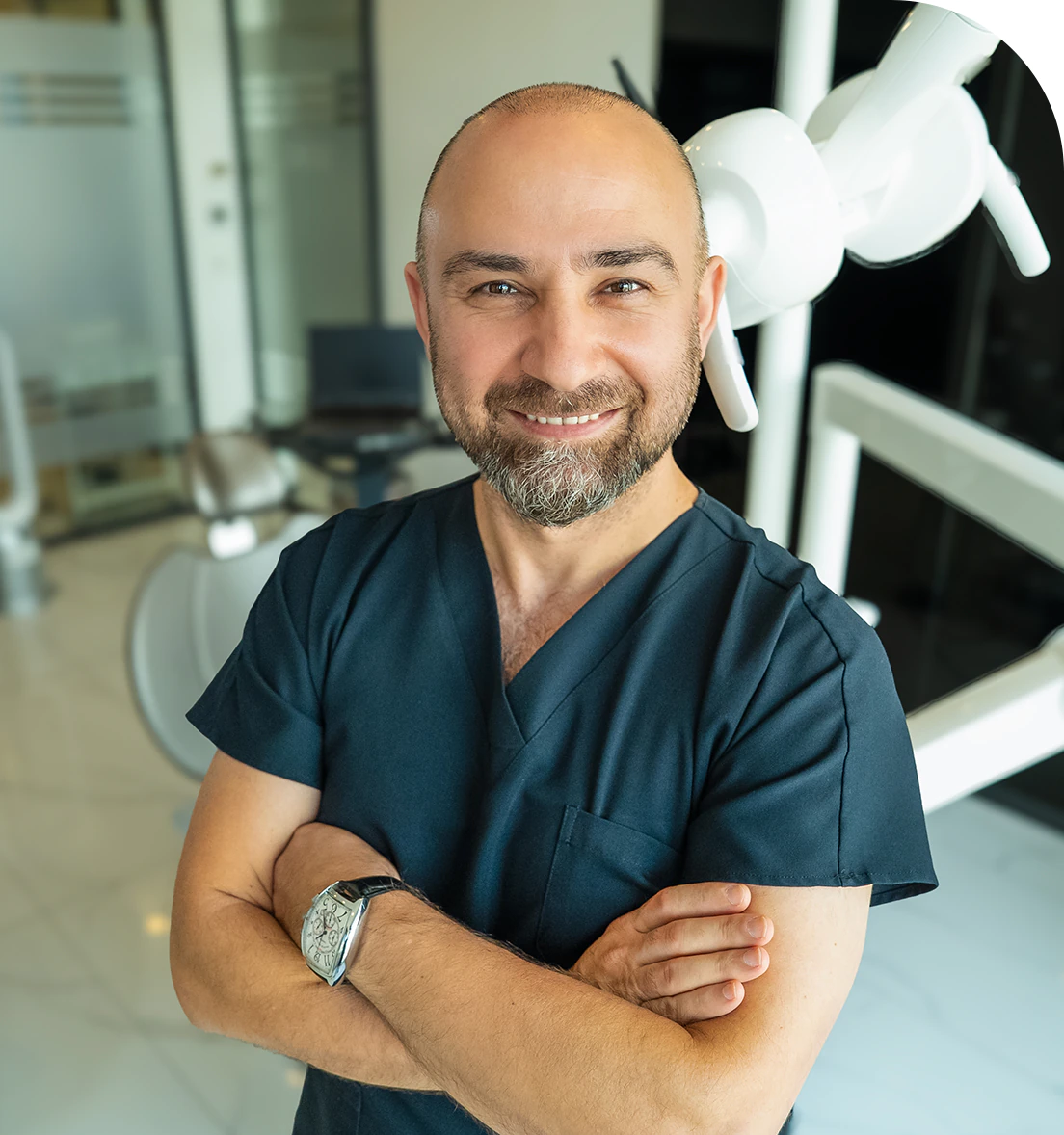
Dr. Dt. Ömer Atar provides care at his private clinic in Istanbul, combining his academic background and many years of clinical experience in dentistry. With a treatment approach that integrates aesthetic and functional solutions, he aims to achieve natural, balanced, and long-lasting results through personalized planning for each patient. Dr. Atar completed his education at the Marmara University Faculty of Dentistry, which he began in 1994, graduating in 2000. He continued his academic work in the Department of Prosthodontics at the same university. In 2007, he earned his PhD degree with his scientific thesis on implants and implant-supported prostheses in patients undergoing distraction osteogenesis. His academic expertise deepened in the fields of metal-free aesthetic systems, implant-supported prostheses, and cosmetic dentistry. Integrating modern technologies and digital dentistry into his practice, Dr. Ömer Atar achieves high success rates in treatments such as smile design, All-on-4/All-on-6 implant treatments, laminate veneers, zirconium crowns, teeth whitening, and gingival aesthetics (gummy smile). As a member of EDAD (Turkish Academy of Aesthetic Dentistry), he embraces a holistic approach focused on modern, functional, and natural outcomes in aesthetic dentistry.


