
 Türkçe
 Français
 Deutsch

Dental bridge treatment in Turkey is a fixed prosthetic solution used to replace one or more missing teeth by anchoring artificial teeth to adjacent natural teeth or implants. It restores chewing function, maintains facial symmetry, and prevents neighboring teeth from shifting out of position.
Cost of dental bridge in Turkey is significantly lower compared to many Western countries while maintaining high clinical standards and accredited dental facilities. Treatment fees vary depending on materials used, number of missing teeth, laboratory techniques, and whether additional procedures such as root canal therapy are required.
Types of dental bridges available in Turkey include traditional bridges, cantilever bridges, Maryland bonded bridges, and implant-supported bridges. Material options such as porcelain-fused-to-metal, zirconia, and full ceramic systems are selected based on aesthetic expectations, durability requirements, and oral health status.
Dental bridge procedure and recovery in Turkey involve clinical examination, tooth preparation, digital impressions, laboratory fabrication, and final cementation. The treatment is typically completed within several days, and patients are advised to maintain proper oral hygiene and attend regular dental check-ups to ensure long-term success.
| What You Need to Know | Information |
| Definition | A dental bridge is a type of fixed prosthesis used in the absence of one or more teeth, supported by the healthy teeth on both sides of the missing tooth gap. The abutment teeth are reduced and capped, while the gap is filled with an artificial tooth (pontic). |
| Purpose of Use | – To aesthetically and functionally replace missing teeth – To improve chewing efficiency – To prevent speech disorders – To stop adjacent teeth from shifting into the gap |
| Who It’s For | – Individuals with one or several missing teeth – Patients with healthy supporting teeth on both sides of the missing tooth – As an alternative treatment when implants are not feasible |
| Types | – Conventional bridge: The natural teeth on both sides of the missing tooth are cut and prepared. – Cantilever bridge: Supported only from one adjacent tooth (limited cases) – Maryland bridge: Bonded to adjacent teeth with metal or ceramic wings, minimal tooth reduction. Usually used in anterior teeth. |
| Procedure Steps | 1. Supporting teeth are reduced and shaped. 2. Impressions are taken, and a temporary bridge is applied. 3. A bridge made of porcelain, zirconia, or metal-supported materials is prepared in the lab. 4. After fitting and compatibility checks, the bridge is permanently cemented. |
| Materials Used | – Metal-supported porcelain – Full ceramic (empress) – Zirconia – Composite materials (for temporary use) |
| Treatment Duration | Completed in an average of 2–3 sessions. The process may take longer depending on the number of teeth and the type of prosthesis. |
| Advantages | – Close to natural teeth in terms of aesthetics and function – A quick and fixed solution – Does not require surgical procedures – Can be used for many years with proper care |
| Disadvantages | – Cutting of supporting teeth (loss of healthy tooth tissue) – Sensitivity or gum recession may occur if not compatible with the gum – Risk of decay or fracture in supporting teeth over time |
| Care and Cleaning | – Use special dental floss (superfloss) and interdental brushes for cleaning under the bridge – Daily brushing should not be neglected – Regular professional cleaning should be done to prevent tartar buildup |
| Lifespan | Can last an average of 10–15 years. This period can be extended with regular check-ups and good oral hygiene. |
| Alternatives | – Implant applications (if bone and general health are suitable) – Removable dentures (if more teeth are missing) – Maryland or adhesive minimal invasive bridges (in certain cases) |
What Is a Dental Bridge?
A dental bridge is a type of fixed prosthesis used to fill in the space of one or more missing teeth. The healthy teeth on either side of the missing tooth are shaved down, and the bridge prosthesis is placed over them. It resembles natural teeth in both aesthetics and function. It restores chewing function and prevents shifting that may be caused by gaps in the dental arch.
Why Is Dental Bridge Treatment Necessary and What Happens If Not Done?
When you lose a tooth, it’s not just a gap in your mouth—it starts to disrupt the balance of your entire dental arch. Teeth support each other like shoulder-to-shoulder. When one is extracted, this chain of support breaks.
One of the biggest problems caused by untreated gaps is the tilting of neighboring teeth into the empty space. Just like books tipping over when one is removed from a shelf, the back teeth tilt forward, and the front teeth tilt backward. This tilting creates harmful forces on tooth roots and forms hard-to-clean areas, increasing the risk of decay.
More importantly, it affects the opposing tooth in the other jaw. Every tooth has a counterpart it touches. If you extract a tooth, its opposite becomes unopposed. The body detects this and begins to extrude the tooth into the gap. This extrusion weakens the root, causes gum recession, and may eventually lead to loss of the healthy tooth.
Additionally, your chewing pattern changes. You start chewing on one side, which puts excessive load on your jaw joints, leading to jaw clicking and headaches. Dental bridge treatment is essential to stop this chain reaction, prevent teeth from shifting, and restore ideal chewing function, which is the beginning of the digestive process.
Who Are Suitable Candidates for Dental Bridge Treatment?
Not every tooth gap can be filled with a bridge. For this treatment to be successful, certain biological criteria must be met. A bridge, by design, distributes load onto neighboring teeth. Therefore, the condition of these supporting teeth is critical.
The supporting teeth must have long roots and be well-anchored in bone. If there is any mobility, the bridge cannot carry the load and will soon fail. Also, the patient’s gum health must be under control. If active and advanced gum disease exists, it must be treated first before planning prosthetics.
Generally, the following individuals are suitable candidates for bridges:
- Those with one or a few missing teeth
- Those with healthy abutment teeth
- Those with adequate bone support
- Those who maintain good oral hygiene
- Those with controlled systemic diseases
For patients who cannot undergo implant treatment due to uncontrolled diabetes, advanced bone loss, or history of head and neck radiation therapy, dental bridges are a safe and effective alternative.
What Are the Types of Dental Bridges and Which Materials Are Used?
With technological advancements, we now have options that provide both aesthetics and durability. The material choice depends on the location of the gap (anterior or posterior) and the patient’s aesthetic expectations.
The most commonly used dental bridge materials are:
- Metal-supported porcelains
- Zirconia-supported porcelains
- Full ceramics (e.g., E-max)
- Monolithic zirconias
- Temporary acrylic materials
Previously, metal-supported porcelains were the standard. These bridges have a gray metal substructure with a tooth-colored porcelain on top. They are very strong and still safely preferred in posterior areas where chewing force is high. However, they lack translucency and may not look very natural.
Today, zirconia bridges are much more popular. Zirconia is a white metal/crystal structure. It is both very durable and translucent, providing aesthetics nearly identical to natural teeth. It is biocompatible, non-allergenic, and has excellent gum compatibility. For patients concerned with aesthetics in the front teeth, zirconia or full ceramic bridges are undoubtedly the best options.
What Are the Designs and Models of Dental Bridges?
Depending on the clinical situation, the design of the bridge—how the abutments and pontic are positioned—can vary. We cannot use a standard bridge design for every case; engineering calculations come into play.
Common design models include:
- Traditional bridges
- Winged (Maryland) bridges
- Cantilever bridges
- Implant-supported bridges
In traditional bridges, the teeth on both sides of the gap are reduced, and the bridge rests on these two abutments. This is the most robust and commonly used method.
Winged bridges, on the other hand, are a more conservative method used in appropriate cases for patients who say, “I don’t want my teeth to be cut.” The adjacent teeth are not fully reduced; instead, small grooves are created on their back surfaces, and the bridge is bonded into these grooves using wings. However, its retention is weak and it may come off during hard biting.
In cantilever bridges, support is provided from only one side. The other end of the gap is unsupported. This creates a lever effect, posing a risk of damage to the abutment tooth, and is used only rarely in special cases.
How is a dental bridge made and what are the treatment stages?
The construction of a dental bridge is a process that includes laboratory phases and usually takes 3 or 4 sessions. The total duration varies between approximately 7 and 10 days. You can think of this process like a construction project: first the foundation is prepared, then measurements are taken, try-ins are made, and finally the product is delivered.
The treatment process generally proceeds as follows:
In the first session, a detailed examination and X-ray analysis are performed. We check whether there is inflammation in the roots of the abutment teeth or if root canal treatment is needed. If everything looks good, we proceed to the anesthesia stage.
The second stage is the preparation of the teeth. To allow the bridge to fit over the teeth like a cap, we reduce about 1.5 to 2 millimeters from the surrounding and top surfaces of the abutment teeth. The patient does not feel any pain during this process.
After the teeth are reduced, the precise impression phase follows. The mold of the teeth is taken either using digital scanners or special impression materials placed in the mouth. This mold serves as the model upon which the technician builds the bridge.
In the same session, temporary bridges are immediately made so the patient does not leave the clinic toothless. These plastic teeth preserve aesthetics and prevent sensitivity in the cut teeth.
In subsequent sessions, the substructure (metal or zirconia framework) received from the laboratory is tried in the mouth. Its fit and whether it puts pressure on the gums are evaluated. In the next trial, the finished porcelain teeth are placed; their color, shape, and occlusion are checked. If both the patient and the dentist approve, the bridge is permanently cemented using special adhesives.
Is there pain during the dental bridge procedure?
Our patients’ biggest concern when sitting in the dental chair is “Will it hurt?” I can say with confidence that you will not feel any pain during the procedure. The tooth preparation process is done under local anesthesia, meaning the area is completely numbed.
Once the anesthesia wears off, there may be slight sensitivity or cold sensitivity due to the reduction of the teeth. This is completely normal. To minimize this sensitivity, the temporary teeth we place immediately act as a protective shield. After the treatment is complete and the permanent bridge is cemented, there may be a few days of adaptation, but this passes quickly and you start using it like your own natural teeth.
Should I choose an implant or a dental bridge?
This is one of the most common dilemmas in modern dentistry. Both treatments have their own advantages and disadvantages, and the patient’s biological, economic, and social situation must be considered as a whole when making a decision.
From a medical and biological standpoint, implants are superior to bridges. The main reason is the principle of “conservation.” With implants, we do not touch or cut the neighboring healthy teeth. We only treat the gap. But with a bridge, we must reduce the teeth adjacent to the gap, even if they are perfectly healthy and have never had decay. This results in irreversible loss of tooth tissue.
Additionally, because the implant mimics the root of the tooth, it helps prevent bone resorption. Under a bridge, however, there is no root beneath the pontic, so the jawbone in that area tends to shrink and resorb over time.
However, there are also situations where bridges are preferred over implants. Time constraints are one of them. While implant treatment can take several months, bridges are completed within a week. For patients afraid of surgery, with systemic conditions preventing implant placement, or looking for a more economical solution, dental bridges are an excellent alternative.
How should dental bridges be cleaned and maintained?
Many patients mistakenly neglect brushing, thinking, “These are porcelain, they won’t decay anyway.” While it’s true that porcelain doesn’t decay, the natural tooth underneath can! The most critical factor determining the lifespan of a bridge is hygiene.
Cleaning dental bridges requires a different and more meticulous technique than cleaning natural teeth. Especially the area between the pontic (artificial tooth filling the gap) and the gum is very prone to food debris accumulation. Regular floss cannot reach this area because the teeth are connected.
The special tools that should be used for cleaning these areas include:
- Bridge floss (Superfloss)
- Interdental brushes
- Oral irrigators
- Electric toothbrushes
- Soft-bristled manual brushes
Superfloss has a stiff end like a fishing line; you need to insert this end under the bridge and clean beneath the pontic using back-and-forth motions with the spongy part. Failure to do this allows plaque to accumulate, causing bad odors and decay in the supporting teeth, ultimately rendering the bridge useless. Oral irrigators that spray pressurized water and air are also excellent tools to help clean under bridges.
What should the diet be like when using a dental bridge?
In the first few days after the bridge is cemented, care should be taken to allow the adhesive to fully set and tissues to adapt. Afterward, you may return to your normal eating habits. However, no matter how strong dental bridges are, they do not possess the elasticity of natural teeth, and porcelain is a brittle material.
Certain habits and foods should be avoided for long-term use. Do not treat your bridge like a nutcracker.
Foods to watch out for include:
- Hard-shelled nuts
- Sticky candies
- Turkish delight
- Gum
- Caramel chocolates
- Chewing on ice
- Hard fruit pits
Sticky foods like gum and Turkish delight apply an upward pulling force on the bridge during chewing. Over time, this may weaken the adhesive and dislodge the bridge. Hard foods can cause the porcelain to crack or break.
How long do dental bridges last and why do they need to be replaced?
Understandably, our patients want their dental work to last a lifetime. However, like any mechanical or biological structure, dental bridges have a limited lifespan. In literature and clinical practice, a well-made and well-maintained bridge typically lasts between 7 and 15 years.
Factors affecting this duration include oral hygiene, the presence of bruxism (teeth grinding), and the condition of the gums. We have patients who have used their bridge without problems for 20 years, and others who lost theirs in 5 years due to poor hygiene.
Signs that it may be time to replace a bridge include:
- Gum recession
- Openings at the bridge margin
- Bad taste or odor
- The bridge becoming loose
- Pain in the supporting teeth
Gums can recede physiologically over time. In such cases, a gap may form between the end of the bridge and the gum, which not only looks bad but also predisposes the area to decay. That’s why dental check-ups every six months are vital to catch problems early.
What are the differences between zirconia and metal-supported porcelain bridges?
This is the most common dilemma patients face when choosing materials. To understand the difference, one must first understand the nature of their structures.
In metal-supported porcelain bridges, a gray metal framework is used underneath to provide strength. This metal is then coated with tooth-colored porcelain. While porcelain transmits light, the underlying metal does not—it reflects light. This may cause the tooth to appear slightly dull and opaque. Over time, if the gum recedes, a thin gray line or purplish hue may become visible along the gumline—an undesirable appearance, especially in the front teeth.
In zirconia bridges, the substructure is made from a white zirconia block. Zirconia transmits light just like a natural tooth, giving the tooth depth and vitality for a more natural look. It is “gum-friendly,” does not cause graying of the gums, and has high biocompatibility. In terms of strength, it is as durable as metal but aesthetically far superior.
What should be done if a dental bridge falls off or becomes loose?
Sometimes the adhesive may lose its effectiveness over time (debonding), or the bridge may fall out or become loose due to chewing on a hard object.
In such cases, the first thing to do is not to panic and to store the bridge safely. Never try to reattach it using household adhesives (like super glue). These chemical adhesives are toxic, damage the tooth, and may make it impossible for your dentist to clean and reattach the bridge.
If the bridge is loose but hasn’t fallen off yet, try not to bite on it and visit your dentist as soon as possible. A loose bridge can expose the tooth to air and lead to rapid decay. Your dentist will examine it, and if there are no fractures or decay, it can be cleaned and re-cemented with a strong dental adhesive.
How are dental bridge prices determined?
The cost of dental bridge treatment is highly variable and cannot be defined by a single figure, as it is personalized. The most fundamental factor affecting the cost is the number of “units” the bridge consists of.
In dentistry, pricing is done per unit. For example, if one tooth is missing, we must also cover the adjacent front and back teeth. Thus, a three-unit block is created, and the cost is calculated based on three units.
Other factors affecting price include:
- Material used (metal porcelain or zirconia?)
- Temporary teeth
- Additional treatments (e.g., root canal, gum reshaping)
- Dentist’s experience and clinic equipment
Zirconia and full ceramic materials have higher lab and labor costs compared to metal-supported porcelain, which is reflected in the price. However, focusing solely on price in healthcare can be misleading. The quality of materials, lab workmanship, and sterilization standards are the real factors that determine the prosthesis’ longevity and your health in the long term.
Before & After Photos


Frequently Asked Questions
What is a dental bridge and what is it used for?
A dental bridge is a prosthetic structure fixed onto adjacent healthy teeth to close the gap of one or more missing teeth. It is used to restore both aesthetics and chewing function.
When is a dental bridge preferred?
Bridge treatment is suitable in cases of tooth loss where adjacent teeth are healthy and supportive. It is often considered an alternative to implants.
What materials are used in dental bridge construction?
Materials such as metal-supported porcelain, zirconia, and full ceramics are used. The choice depends on aesthetic expectations, the tooth’s location, and chewing force.
What is the treatment process for a dental bridge?
In the first session, supporting teeth are reduced and impressions are taken. A temporary bridge is placed. The lab-prepared bridge is inserted within 1–2 weeks and permanently cemented.
Is dental bridge treatment painful?
The procedure is performed under local anesthesia and is painless. Mild sensitivity or discomfort may occur afterward, but it is temporary. Painkillers can be provided if necessary.
How long does a dental bridge last?
With proper care, dental bridges can last 10–15 years or even longer. Gum health and regular check-ups help extend this period.
What are the advantages of a dental bridge?
It provides natural-looking results, improves chewing and speech, and prevents shifting and aesthetic issues caused by tooth loss.
What are the disadvantages of a dental bridge?
The supporting teeth must be cut, leading to loss of healthy tissue. Poor oral hygiene can lead to gum problems and decay.
What is the difference between a dental bridge and an implant?
While implants are inserted directly into the jawbone, bridges are fixed onto adjacent teeth. Implants can prevent bone resorption, unlike bridges.
How should oral hygiene be maintained after getting a bridge?
Special floss and interdental brushes should be used for the spaces under the bridge. Brushing twice a day and regular dental check-ups ensure longevity.
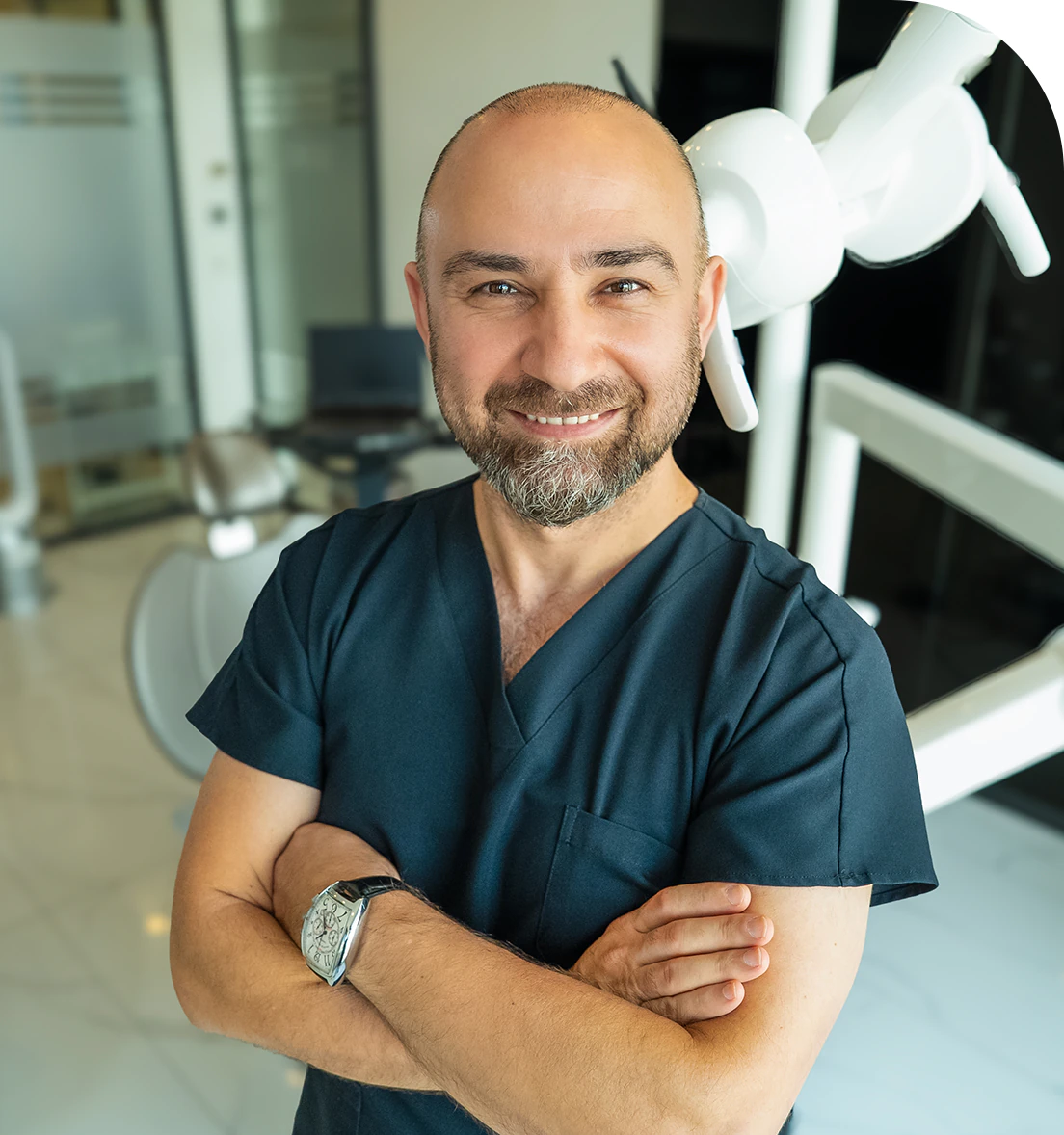
Dr. Dt. Ömer Atar provides care at his private clinic in Istanbul, combining his academic background and many years of clinical experience in dentistry. With a treatment approach that integrates aesthetic and functional solutions, he aims to achieve natural, balanced, and long-lasting results through personalized planning for each patient. Dr. Atar completed his education at the Marmara University Faculty of Dentistry, which he began in 1994, graduating in 2000. He continued his academic work in the Department of Prosthodontics at the same university. In 2007, he earned his PhD degree with his scientific thesis on implants and implant-supported prostheses in patients undergoing distraction osteogenesis. His academic expertise deepened in the fields of metal-free aesthetic systems, implant-supported prostheses, and cosmetic dentistry. Integrating modern technologies and digital dentistry into his practice, Dr. Ömer Atar achieves high success rates in treatments such as smile design, All-on-4/All-on-6 implant treatments, laminate veneers, zirconium crowns, teeth whitening, and gingival aesthetics (gummy smile). As a member of EDAD (Turkish Academy of Aesthetic Dentistry), he embraces a holistic approach focused on modern, functional, and natural outcomes in aesthetic dentistry.


