
 Türkçe
 Français
 Deutsch
 Nederlands
 Svenska

Dental implants can be done at a young age; however, the main criterion is not chronological age but whether jawbone development has been completed. Since implants integrate with the bone like a natural tooth root, applying them to individuals whose growth process is still ongoing may lead to long-term problems.
In young patients, the age limit for implants is generally considered to be around 17–18 years for females and 18–20 years for males. This period represents the stage when facial and jaw development is largely completed, and bone maturity must be confirmed through radiographic examinations.
Among the risks of placing implants before jaw development is complete is the inability of the implant to grow harmoniously with the bone. This situation may lead to aesthetic incompatibilities, bite disorders, and loss of implant function in later years.
In patients who experience tooth loss at a young age, temporary treatment options may be preferred before implant placement. Removable dentures or adhesive bridges help maintain function and aesthetics until bone development is completed, allowing for appropriate implant timing.
What Is a Dental Implant, and For Whom Is It Considered?
A dental implant is a fixed tooth solution made on titanium screws placed into the jawbone to replace a missing tooth. The aim is to mimic the function of the lost tooth root and restore chewing function.
It is generally considered in cases of single tooth loss, multiple tooth deficiencies, or for individuals who do not want to use removable dentures. However, its suitability for each age group is evaluated separately.
Can Implants Be Done at a Young Age?
The answer to this question is not simply “yes” or “no.” The most important criterion for placing implants at a young age is the completion of jawbone development.
During adolescence, the jawbones continue to grow. Implants placed before this process is complete may not be able to keep up with bone growth in later years. This can lead to aesthetic and functional problems.
Therefore, when considering implants for a young individual, biological development is taken into account as much as age.
Is There a Minimum Age Limit for Implants?
The generally accepted approach is to wait until jaw development is complete. In most individuals, this occurs:
- In females: approximately 17–18 years
- In males: approximately 18–20 years
However, these ages are not absolute limits. Development may be completed earlier in some individuals and later in others.
For this reason, the decision is not made solely based on the age stated on an ID card. The status of bone development is analyzed through radiographic examinations and clinical evaluation.
Why Is Jaw Development So Important?
An implant is a structure that remains fixed by integrating with the jawbone. Natural teeth, on the other hand, can adapt to bone growth.
If an implant is placed in a jaw that is still growing, the following situations may occur in later years:
- The implant appearing shorter or longer compared to adjacent teeth
- Level discrepancies in tooth alignment
- Aesthetic incompatibilities
- Impairments in chewing function
For this reason, implants placed at an early age may require additional interventions in the future.
What Should Be Done If There Is Tooth Loss in Young Patients?
For a patient who experiences tooth loss at a young age, implants are not the only option. Temporary or alternative solutions can be planned until jaw development is completed.
These include:
- Temporary fixed bridges
- Removable dentures
- Closing the gap with orthodontic treatments
The aim is both to reduce aesthetic concerns and to preserve bone tissue. When the appropriate time comes, the implant option can be re-evaluated.
What Is the Situation in Young Patients With Congenital Tooth Absence?
In some individuals, one or more teeth may be congenitally absent. When this condition occurs especially in the anterior tooth region, it can create psychological and social effects at a young age.
In these patients, implant planning is carried out more carefully. Instead of permanent implants before jaw development is complete, temporary aesthetic solutions may be preferred. Once the development process ends, the implant option is reconsidered.
Are There Advantages of Implants at a Young Age?
Implants placed at the appropriate time and with proper planning may offer some advantages for young patients:
- There is no need to cut adjacent teeth
- They contribute to the prevention of bone loss
- They provide a fixed and natural tooth-like feel
- They can be a long-term solution
However, these advantages are only possible with proper patient selection and individualized evaluation.
Risks and Points to Consider
When deciding on implants for young patients, haste should be avoided. Early applications may cause problems that are difficult to reverse in the future.
In addition, general health status, oral hygiene habits, and compliance with regular dental check-ups are also important. An implant is not a procedure that is “placed and forgotten”; it requires long-term follow-up.
At What Age Are Implants Done? Is There a Clear Answer?
In summary, it is not possible to state a definitive age for implants. For most patients, evaluation can be performed after the age of 18 if jaw development has been completed.
However, the final decision is made based on the dentist’s clinical examination, radiological findings, and the patient’s individual needs. The right timing may differ for each patient.
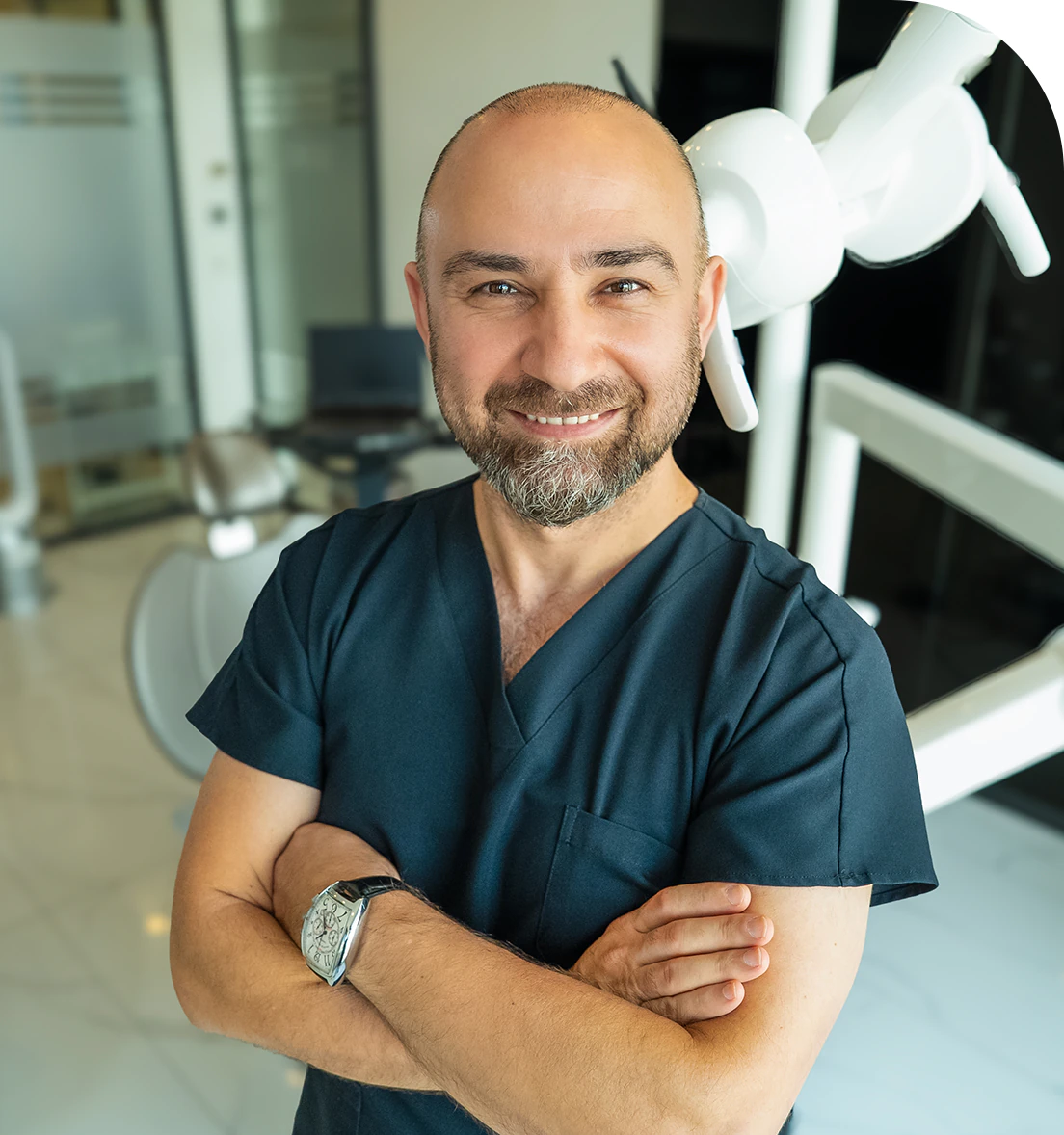
Dr. Dt. Ömer Atar provides care at his private clinic in Istanbul, combining his academic background and many years of clinical experience in dentistry. With a treatment approach that integrates aesthetic and functional solutions, he aims to achieve natural, balanced, and long-lasting results through personalized planning for each patient. Dr. Atar completed his education at the Marmara University Faculty of Dentistry, which he began in 1994, graduating in 2000. He continued his academic work in the Department of Prosthodontics at the same university. In 2007, he earned his PhD degree with his scientific thesis on implants and implant-supported prostheses in patients undergoing distraction osteogenesis. His academic expertise deepened in the fields of metal-free aesthetic systems, implant-supported prostheses, and cosmetic dentistry. Integrating modern technologies and digital dentistry into his practice, Dr. Ömer Atar achieves high success rates in treatments such as smile design, All-on-4/All-on-6 implant treatments, laminate veneers, zirconium crowns, teeth whitening, and gingival aesthetics (gummy smile). As a member of EDAD (Turkish Academy of Aesthetic Dentistry), he embraces a holistic approach focused on modern, functional, and natural outcomes in aesthetic dentistry.


