
 Türkçe
 Français
 Deutsch

Teeth whitening is a cosmetic dental procedure designed to lighten tooth discoloration and enhance overall smile brightness, and it has become one of the most popular aesthetic treatments worldwide. Prices vary significantly depending on the country, the whitening method used (in-office laser, LED, or custom take-home trays), the clinic’s reputation, and the dentist’s experience.
In the UK, professional teeth whitening typically falls into a mid-to-high global price bracket, with average costs around £600–£1,200 for in-clinic treatments. Additional expenses may include initial consultations, dental cleaning prior to whitening, and follow-up visits. As with any cosmetic procedure, patients should prioritise safety, choose reputable dental providers, and review all costs in advance.
How Much Is Teeth Whitening in the UK?
Professional teeth whitening in the UK generally costs £600–£1,200, depending on whether you choose laser whitening, LED whitening, or dentist-supervised custom trays. Prices vary based on the clinic location, dentist expertise, and the complexity of your case, especially if additional cleaning or sensitivity management is required. Below are typical averages in major UK cities:
- London: £700–£1,300
- Manchester: £550–£1,100
- Birmingham: £550–£1,050
- Glasgow: £500–£1,000
- Bristol: £550–£1,050
What do teeth whitening prices include?
When you receive a price quote for a teeth whitening procedure, it usually reflects the cost of a “packaged” service. This price does not cover only the whitening agent applied to your teeth. First and foremost, a specialist examination that determines whether this procedure is suitable for you and evaluates your current dental and gingival health is the cornerstone of this process. Not every oral structure and not every type of stain responds the same to this procedure; therefore, the first step is an accurate diagnosis.
The pricing also reflects the quality of the materials used. Professional whitening agents used in a clinical setting have high standards in terms of effectiveness and safety. The research and development costs of these agents and their international health approvals such as CE and FDA directly affect their cost.
However, a significant portion of the cost includes the procedures that ensure these powerful agents are applied safely. For example, carefully placed protective barriers to prevent damage to the gums are critical for performing the procedure safely. This isolation is a technical process that requires both time and special materials.
In addition, the amortization of the technology used (special light sources, lasers, etc.), the clinic’s costs of maintaining hygiene and sterilization standards (every instrument being sterilized in an autoclave, single-use materials), and the training and experience of the healthcare team performing the procedure are also included. In short, the fee paid is not for a product but for a comprehensive medical procedure, expertise, and a safe outcome.
Why do teeth whitening prices vary so much?
There are many reasonable reasons for the wide range in teeth whitening prices. The most common misconception is assuming that all whitening procedures are the same. Yet factors such as the method used, the quality of the materials, and the dentist’s experience fundamentally change the outcome and therefore the cost.
First, the city and even the neighborhood where the clinic is located can be reflected in the prices, as they directly affect general operating costs (rent, personnel expenses, etc.). The cost structures of clinics in large cities or central locations may differ from those in smaller settlements.
Another important variable is the experience and specialty of the dentist and team performing the procedure. It is natural for there to be a difference between the approach of a dentist who receives continuous training in aesthetic dentistry, follows the latest technologies, and has extensive experience in this field, and standard practices. This experience directly affects the outcome, especially in challenging cases (such as deep discolorations).
The technological infrastructure offered by the clinic is also a major factor. A clinic that uses the latest model laser devices or advanced LED light systems reflects the return on this technological investment in its pricing. A place that uses older or simpler technologies may have lower investment costs.
Finally, the scope of the service offered also changes the price. Some pricings cover a single session, while others may be offered as a “package” that includes multiple sessions, pre-procedure tartar cleaning, or at-home continuation kits. Therefore, when comparing prices, it is necessary to clarify “what is included in the package.”
What are the main factors that determine the cost of in-office whitening?
“In-office whitening” (rapid whitening performed in a clinical setting under a dentist’s supervision) has different costs depending on the details of the method used. This method is based on high-concentration professional whitening gels. These gels are much stronger than those used at home and must be applied by a dentist.
The main factor determining the cost of this procedure is the requirement to apply this powerful gel safely. Before the procedure, all gums are meticulously isolated with a special protective barrier. This prevents the gel from touching soft tissues and causing irritation. Providing this protection is a delicate task that requires both time and special materials.
Another factor affecting the price is the light source used to activate the gel. Different technologies can be used, such as LED lights or plasma arc lamps. These devices allow the gel to work faster and penetrate deeper. The fact that the procedure generally yields visible results in a single session (about 45 minutes to 1 hour) is the reason why this method is preferred, and its pricing is shaped by this speed and effectiveness.
A few key points stand out in the cost breakdown of in-office whitening:
- High-concentration professional whitening agent
- Application of protective gingival barriers
- Use of light or laser activation devices
- Clinical time allocated by the dentist
- The advantage of obtaining rapid results in a single session
In some cases, especially with very dark tooth colors, a second or third session may be necessary to achieve the desired whiteness. As the number of sessions increases, the amount of materials used and the time allocated will also increase, so the total cost will change accordingly.
How is at-home whitening priced?
When we say “at-home whitening,” we mean kits that are custom-prepared by your dentist for you, not standard products sold in stores. The cost structure of these professional kits differs from in-office whitening but is still a medical treatment process. The cost of this method is higher than store-bought products because it involves the production of a completely customized medical appliance:
The first component of the cost of this method is the custom-made transparent trays. Your dentist takes a precise impression of your mouth, and thin, transparent trays that fit only your teeth are produced in the laboratory according to this impression. This requires laboratory workmanship and cost. Standard trays that do not fit the teeth properly can cause the gel to overflow onto the gums and lead to serious irritation. This custom production is the key to making the treatment both safe and effective.
The second component is the professional whitening gels provided to you. These gels are at a lower concentration than those used in-office, allowing them to be used safely at home (usually during sleep at night or a few hours a day). The cost covers the amount of gel provided to you (usually enough for 1–3 weeks of treatment) and all follow-up. Your dentist will call you in for a check-up before starting treatment and after completion to make sure the process is progressing correctly. This professional follow-up is also part of the service.
How does “combined whitening” affect pricing?
As the name suggests, combined whitening is an approach in which both in-office and at-home whitening methods are used together, generally aiming for the most effective and long-lasting result. This method is preferred especially for stubborn or dark discolorations (such as tetracycline stains).
Pricing naturally includes the costs of both treatments, but it is often offered as a “package” and may be more advantageous than having the two procedures done separately. The process usually begins with a powerful in-office session performed in the clinic. This session provides an immediate and noticeable lightening in tooth color.
Then, to further deepen and stabilize (make permanent) this result, custom at-home trays and gels prepared for the patient are provided. The patient continues to apply them at home for another 1–2 weeks to reinforce the color achieved in the clinic.
Although this approach has a higher initial cost than in-office alone or at-home alone, it may deliver the most satisfying results in terms of “price/performance.” Combining the advantages of the two methods allows the achieved whiteness to be taken to a higher level and preserved for longer. Therefore, although the initial cost may seem higher, it may be advantageous in the long term because fewer “touch-up” sessions will be needed.
Do the current condition of the teeth affect the whitening price?
Absolutely yes. This is perhaps one of the most important hidden factors affecting the price. Although teeth whitening is an aesthetic procedure, it is essentially a medical procedure that requires a healthy oral environment. Whitening gels cannot be applied to unhealthy teeth or gums.
If active cavities are detected in your teeth during the examination, these cavities must be treated before whitening. If the whitening agent comes into contact with the exposed nerve tissue of a decayed tooth, it can cause unbearable pain and irreversible damage to the tooth (pulpitis). These necessary filling treatments are not included in the whitening price and constitute an additional cost item.
Likewise, if tooth surfaces are covered with heavy calculus (tartar), the whitening gel cannot reach the enamel. The gel whitens the tooth’s own tissue, not the tartar. Therefore, almost always before the procedure, professional tartar removal and polishing must be performed. This cleaning procedure is sometimes included in the whitening package and sometimes priced as a separate procedure. Healthy gums and clean tooth surfaces are a prerequisite for the success and safety of the whitening procedure.
Which treatments before whitening may require additional costs?
Whitening is applied to a healthy and clean mouth. If there are existing problems in the mouth, whitening can aggravate these problems. Therefore, the foundation must be strengthened before moving on to the aesthetic step.
Some pre-treatments that may be required to start whitening on a healthy basis—and which are generally not included in the price of the whitening package—are:
- Tartar removal (scaling)
- Polishing (mechanical cleaning of heavy stains from smoking, tea, coffee)
- Fillings for active cavities
- Replacement of old, leaking, or poorly adapted fillings
- Treatment of advanced gum disease (periodontitis), if present
These procedures are primary health treatments independent of the cost of whitening. Performing whitening without completing these treatments is risky for health and leads to an aesthetically unsuccessful result because the gel cannot penetrate the teeth evenly.
How does the type of stain on teeth change the total cost?
Not all tooth discolorations are the same, and they do not respond the same to treatment. The cost of whitening varies depending on the type of stain and how deeply it has penetrated.
The most common discolorations are “extrinsic” stains. These usually result from external factors such as tea, coffee, red wine, and smoking. These yellow or brown stains are on the outer surface of the tooth and generally respond very quickly and successfully to whitening procedures (both in-office and at-home). Often a single in-office session or a short at-home regimen is sufficient, keeping the cost predictable and at a standard level.
However, “intrinsic” discolorations are much more challenging. These stains are within the tooth structure. They usually occur due to certain antibiotics used in childhood (such as tetracycline), excessive fluoride intake (fluorosis), or trauma (a blow) to the tooth. Lightening the color of these gray, blue, or purplish stains is much more difficult.
These cases may not respond to a standard whitening session. They often require “combined” treatments that involve multiple in-office sessions followed by long-term (sometimes months) at-home applications. Since more sessions, more materials, and a longer follow-up process are required, the cost of treating such stubborn stains will be higher than that of standard extrinsic stains.
Why is whitening a root canal–treated (devital) tooth priced differently?
Teeth that have lost vitality, i.e., that have undergone root canal treatment, can turn gray or darken over time from the inside out. In this case, standard external whitening methods (in-office or at-home) do not affect this tooth, because the discoloration originates from inside the tooth. Even if the other teeth whiten, that single tooth will remain gray.
A completely different procedure called “internal bleaching” (devital bleaching or endodontic bleaching) is applied for these single teeth. The pricing of this method is also completely different from others; it is generally determined per tooth and per session, rather than for the entire arch.
The procedure begins by opening the upper part of the filling from the previous root canal treatment. A special whitening agent is placed inside the tooth’s chamber and covered with a temporary filling. The patient is sent home. They are called back for a check-up a few days later; if the tooth’s color has not lightened sufficiently, the old agent is removed and a new agent is placed.
This process is repeated until the desired whiteness is achieved (usually 2–4 sessions). Once the desired shade is obtained, the internal space is cleaned and sealed with a permanent filling. Because this method requires more chair time, more procedures, and multiple visits than other methods, its pricing is determined according to the number of sessions.
How does the technology used (laser, light) affect teeth whitening prices?
In in-office whitening procedures, a light source is often used to activate the gel applied and to speed up the procedure. The type of this technology is an investment for the clinic, and this is reflected in the price of the service.
The most commonly used technology is powerful LED light sources with a special wavelength. These “cold light” systems speed up the chemical reaction of the gel and provide effective whitening while minimizing sensitivity risk. These systems form the standard cost structure of in-office whitening.
In addition, “laser whitening” is also an option. A laser is a highly concentrated energy source at a very specific wavelength. In systems where lasers are used, it is stated that activation of the gel may be faster or penetrate deeper. Laser devices (such as diode or KTP lasers) are a very serious technological investment for the clinic. The acquisition, maintenance, and operating costs of these devices are higher than those of standard LED light systems. Therefore, whitening sessions using laser technology may have a different cost structure compared to sessions using LED lights.
Why can low-cost whitening solutions be risky?
There are non-professional, very low-cost whitening kits on the market, online, or offered in non-medical settings such as hair salons. The low cost of these options comes at a price, and that price is often paid with health.
The concentration, pH level, or chemical content of the whitening agent in these products is generally unregulated. Excessively acidic (low pH) or uncontrolled products can cause irreversible wear and roughening of the enamel. Once enamel—the tooth’s protective layer—is lost, it cannot regenerate itself. Teeth can lose their luster, take on a chalky, matte appearance, and, ironically, these roughened surfaces can become more susceptible to staining than before.
More importantly, the standard (not customized to your mouth) trays included in these kits cause the gel to overflow onto the gums, tongue, and cheeks. This can lead to severe chemical burns, gum recession, and prolonged hypersensitivity.
The cost of treating the damage caused by these methods that initially seem “cheap” (enamel erosion, gum burns, permanent sensitivity) can be much higher than having professional whitening done in the first place. The price of professional whitening covers not only white teeth but also the safe performance of the procedure while protecting your dental and gingival health.
What other indirect factors affect teeth whitening prices?
There can be price differences even between two professional whitening services that appear similar. These differences generally stem from indirect yet important details that determine the quality of the service.
Other details that shape the total cost, sometimes overlooked, are:
- The clinic’s location (operating costs in a central area)
- The experience of the dentist and team (expertise in aesthetic dentistry)
- The brand and quality of the whitening agent used (approved, reliable brands)
- Clinic hygiene and sterilization standards (autoclave devices, single-use materials)
- Whether follow-up sessions and aftercare are included in the price
- Additional agents used to prevent sensitivity or fluoride applications
These factors directly affect how safe, comfortable, and successful your procedure will be.
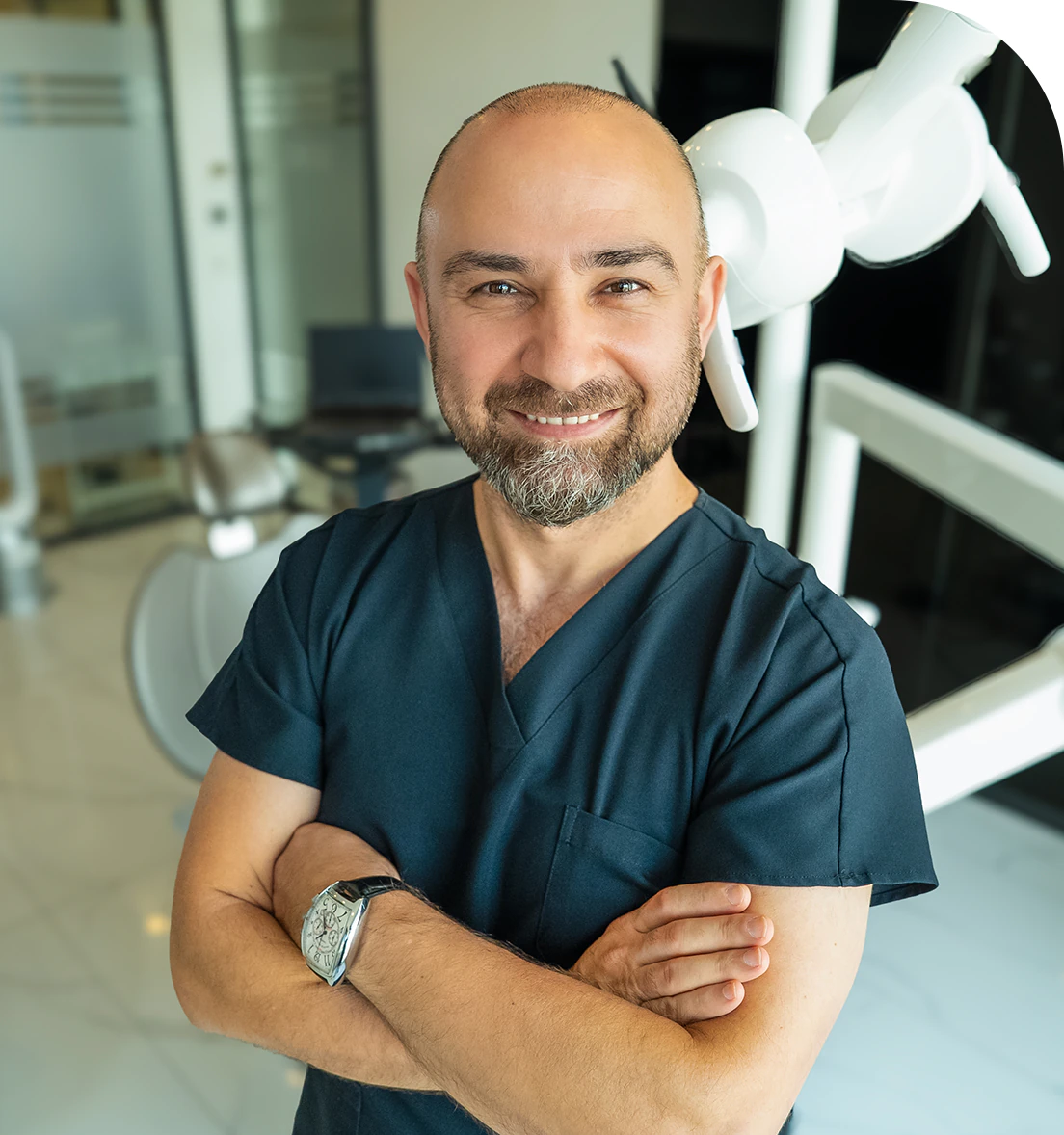
Dr. Dt. Ömer Atar provides care at his private clinic in Istanbul, combining his academic background and many years of clinical experience in dentistry. With a treatment approach that integrates aesthetic and functional solutions, he aims to achieve natural, balanced, and long-lasting results through personalized planning for each patient. Dr. Atar completed his education at the Marmara University Faculty of Dentistry, which he began in 1994, graduating in 2000. He continued his academic work in the Department of Prosthodontics at the same university. In 2007, he earned his PhD degree with his scientific thesis on implants and implant-supported prostheses in patients undergoing distraction osteogenesis. His academic expertise deepened in the fields of metal-free aesthetic systems, implant-supported prostheses, and cosmetic dentistry. Integrating modern technologies and digital dentistry into his practice, Dr. Ömer Atar achieves high success rates in treatments such as smile design, All-on-4/All-on-6 implant treatments, laminate veneers, zirconium crowns, teeth whitening, and gingival aesthetics (gummy smile). As a member of EDAD (Turkish Academy of Aesthetic Dentistry), he embraces a holistic approach focused on modern, functional, and natural outcomes in aesthetic dentistry.


