
 Türkçe
 Français
 Deutsch

Dental crowns are restorative caps placed over damaged or aesthetically compromised teeth to improve strength, function, and appearance, and they are widely performed around the world. Costs vary significantly depending on the country, the material used (porcelain-fused-to-metal, all-ceramic, zirconia), clinic reputation, and the dentist’s expertise.
In Canada, dental crowns generally fall within a mid-to-high international price range, with typical fees averaging $1,600–$4,000 CAD per crown depending on material and case complexity. Additional expenses may include consultations, X-rays, digital scans, and potential root canal treatment if needed before crown placement. As with any dental procedure, patients should prioritise safety, verify dentist credentials, and review all cost components in advance.
How Much Is a Dental Crown in Canada?
A dental crown in Canada typically costs $1,600–$4,000 CAD per tooth, depending on the crown material, the dentist’s expertise, and whether extra preparatory work is required. Zirconia and premium all-ceramic crowns sit at the higher end of the range, while porcelain-fused-to-metal options tend to be slightly more affordable. Below are typical average prices in major Canadian cities:
- Toronto: $1,700–$4,200 CAD per crown
- Vancouver: $1,700–$4,100 CAD per crown
- Montreal: $1,500–$3,800 CAD per crown
- Calgary: $1,600–$3,900 CAD per crown
- Ottawa: $1,600–$3,900 CAD per crown
What is a dental crown, and why does a tooth need one?
A dental crown can be considered as a type of “helmet” or “cap” that covers all visible surfaces of the tooth and is custom-made for each patient. Its primary purpose is to protect the underlying weakened or damaged natural tooth structure, restore its function (chewing), and improve its aesthetic appearance. It is one of the last and most protective solutions before a tooth is lost.
The main reasons a tooth may need a crown include:
- Cavities too large to be restored with fillings
- Fractured or cracked teeth
- Root canal-treated teeth (which become brittle over time)
- Severely worn teeth (especially due to teeth grinding)
- As the superstructure of dental implants
- As supporting teeth in dental bridges
- Severe discolorations or deformities that cannot be corrected otherwise
Root canal-treated teeth, in particular, become brittle over time because they lose their vitality and dry out, making them more prone to fracture than healthy teeth. A dental crown holds the tooth together and distributes chewing forces evenly, significantly extending the tooth’s lifespan.
What are the stages of a dental crown procedure?
Dental crown treatment is a precise and meticulous laboratory process that is typically completed in two main appointments. Although the duration may vary depending on the digital technologies used, the standard application steps are similar.
During the first appointment, the focus is on tooth preparation and taking impressions. After the area is numbed with local anesthesia, the tooth is carefully reduced around its circumference and on top to create sufficient space for the crown. This ensures that the crown does not appear bulky or unnatural. Any decay or old fillings are completely removed during this step. Once the preparation is complete, a very precise impression of the prepared tooth and the surrounding teeth is taken. This can be done using traditional putty-like materials or modern 3D intraoral scanners. The color selection is also made during this appointment. While the permanent crown is being prepared in the laboratory (a process that may take several days), a temporary crown is made and cemented using a temporary adhesive to protect the prepared tooth.
During the second appointment, the permanent crown is tested and cemented. The temporary crown is removed, and the tooth is cleaned. The permanent crown (zirconium, porcelain, etc.) received from the lab is placed onto the tooth. At this stage, the fit of the crown to the tooth margins, its contact with neighboring teeth, and its occlusion with the opposing tooth are carefully checked. If everything fits properly and the aesthetic result is satisfactory, the crown is permanently bonded to the tooth using special, strong dental cements.
What types of dental crowns exist, and how does this variety affect cost?
The most significant factor determining the cost of a crown is the material it is made from. Each material has a different production cost and aesthetic capability. Today, the most commonly used modern crown materials include:
- Porcelain-fused-to-metal (PFM)
- Zirconia-based porcelain
- Monolithic zirconia (Full zirconia)
- All-ceramic (E-Max or Lithium Disilicate)
Each of these materials is designed to meet specific needs (aesthetic, durability, location) and directly influences the total cost.
What is a porcelain-fused-to-metal (PFM) crown, and does it offer a price advantage?
Porcelain-fused-to-metal crowns have been used safely and reliably in dentistry for many years. Their structure includes a gray metal base (usually cobalt-chromium or nickel-chromium alloy) that fits the tooth. This metal framework is covered with tooth-colored porcelain.
The greatest advantage is the high strength provided by the metal, making it particularly suitable for molars that must withstand strong chewing forces. In terms of cost, they are generally more economical compared to other aesthetic options such as zirconium or E-Max crowns.
However, there are some aesthetic limitations. The metal core prevents light transmission, which can make the crown appear dull and opaque (chalky). Over time, if the gums recede slightly, a thin gray metal line may appear along the gumline. This can be an aesthetic concern, especially for front teeth.
Why are zirconium crowns more expensive?
Zirconium has largely replaced metal-based porcelain systems in modern aesthetic dentistry. Instead of a gray metal core, it uses a white, extremely hard, and durable ceramic called “zirconium dioxide.”
The biggest advantage of zirconium is that it eliminates the drawbacks of metal. Because the framework is white, its light transmission closely resembles that of natural teeth, resulting in a much more aesthetic and lifelike appearance. It does not create gray reflections at the gumline. Its biocompatibility (tissue-friendliness) is excellent — it integrates well with the gum tissue and has an almost zero risk of allergic reaction compared to metal alloys.
Zirconium is a versatile material that provides both the aesthetics required for front teeth and the strength required for back teeth. Its superior aesthetic quality, biocompatibility, and advanced production technology (usually manufactured with CAD/CAM systems) place zirconium crowns in a higher price range than metal-supported porcelain crowns.
What distinguishes the price of E-Max (all-ceramic) crowns from others?
All-ceramic crowns such as E-Max or Empress are designed for cases where maximum aesthetics are desired. These crowns are made of reinforced glass ceramics called “lithium disilicate.” They contain no opaque framework such as metal or zirconia — the entire crown consists purely of aesthetic ceramic material.
Their most distinctive feature is their translucency, which almost perfectly mimics the natural enamel. They refract and reflect light just like a natural tooth. Therefore, they provide unmatched aesthetic results, especially for anterior teeth (incisors and canines) or for single-tooth restorations that need to blend seamlessly with neighboring teeth.
However, this high aesthetic quality means they are not as strong as zirconium in terms of durability. For molars exposed to strong chewing forces or long-span bridges, they are not usually the first choice. The precision of their production process and their superior aesthetic results make E-Max crowns one of the most premium and costly options.
What services are included in the price of a dental crown?
The cost of a dental crown usually includes more than just the laboratory-made crown itself. It represents the total of several professional and material components. A typical cost breakdown includes:
- The main material used (Zirconium, E-Max, PFM block)
- Tooth preparation (reduction and shaping)
- Fabrication and placement of a temporary crown
- Impression cost (digital scanning or traditional impression materials)
- Laboratory technician fee (design and fabrication work)
- Fitting and cementation procedures
What are the main factors affecting the price of dental crowns?
The reason why there is no clear answer to the question “How much does a crown cost?” is that many variables determine the final price. The main factors that influence cost include:
- Type and Quality of Material Used: There are significant cost differences between zirconium, E-Max, and porcelain-fused-to-metal crowns. Even within the same material category (for example, zirconium), there are different grades and brands with varying prices.
- Laboratory Workmanship: The quality of the dental laboratory is crucial. The work of a highly skilled “master technician” who achieves perfect aesthetics and function will naturally cost more than that of a standard laboratory.
- Technology Used: Whether the treatment follows a digital workflow (CAD/CAM) or traditional methods affects the cost. 3D intraoral scanners, computer-aided design and milling systems are high-investment technologies, and their costs are reflected in the treatment price.
- Clinic Location and Standards: Clinics located in large cities or central areas typically have higher operating costs (rent, staff, etc.). The clinic’s hygiene standards and patient comfort level also affect pricing.
- Dentist’s Experience and Expertise: Managing complex aesthetic cases, especially in the front (esthetic) region, may require specialization in prosthodontics or advanced cosmetic training. The dentist’s experience and proficiency directly influence the treatment fee.
- Number of Crowns to Be Applied: Naturally, the total cost increases with the number of crowns required.
How do additional treatments before crown placement affect the cost?
This is one of the most commonly overlooked factors by patients, yet it can significantly influence the overall cost. The price quoted for a crown typically refers only to the crown procedure itself. However, the tooth must be built on a healthy foundation before the crown can be placed. If the supporting structure of the tooth is weak, these issues must first be addressed — and these additional treatments are billed separately.
Possible pre-crown treatments include:
- Root Canal Treatment: If the decay has reached the pulp (nerve) or the tooth has lost vitality, a root canal treatment must be performed before placing the crown to eliminate infection.
- Post (Pin) Application: If a root canal-treated tooth has very little healthy structure remaining, a “post” (a pin inserted into the root canal) and a “core” buildup may be required to provide support for the crown.
- Filling (Core Build-Up): If a large cavity exists, it is first cleaned and filled with restorative material to create a solid base under the crown.
- Gum Treatment (Pink Aesthetics): If the gums around the tooth are inflamed (gingivitis/periodontitis) or if aesthetic reshaping (gingivectomy) is needed, the gum health must be optimized before the final crown is applied.
If these preparatory procedures are skipped and the crown is placed immediately, decay may continue beneath the crown, gum problems may worsen, and the crown’s lifespan will be significantly reduced.
Is the price of a single crown the same as a dental bridge?
No, it is not, and this is often misunderstood. Pricing is usually calculated “per unit” rather than “per tooth.”
A single crown covers one tooth and is counted as one unit.
A dental bridge, on the other hand, replaces one or more missing teeth by using adjacent teeth for support. For example, if one tooth is missing and the two neighboring teeth are prepared to support a bridge, the treatment is counted as three units (2 supporting crowns + 1 pontic). This means the cost will be equivalent to three crowns. Therefore, the total price of a bridge is considerably higher than that of a single crown.
Does a higher-cost crown mean longer durability?
The material quality, production technology, and dentist’s expertise directly affect the crown’s longevity. A well-made zirconium or E-Max crown that fits perfectly with the gums and prevents leakage can last 10–15 years, or even longer with proper care.
In contrast, more economical options like metal-fused porcelain may experience issues over time, such as metal oxidation or gum discoloration, which can cause aesthetic concerns. Although high-end treatments may seem more expensive initially, they can be more cost-effective in the long term (e.g., 15 years of trouble-free use) compared to cheaper alternatives that require frequent replacement.
Is the maintenance of crowns costly or difficult?
No, the maintenance of crowns is neither costly nor difficult. It is the same as maintaining natural teeth. While the crown itself cannot decay, the underlying natural tooth and especially the margin where the crown meets the gum can still develop decay.
To prolong the life of your crown, the following care routine is essential:
- Brush your teeth at least twice daily
- Always use dental floss (especially around the crown margins)
- Use interdental brushes if necessary
- Avoid biting hard foods, nuts, or ice
- Use a night guard if you suffer from teeth grinding (bruxism)
- Visit your dentist every 6 months for regular check-ups
This simple routine helps protect the underlying tooth structure and maximize the crown’s lifespan.
What should you pay attention to when getting a crown price quote?
When deciding on crown treatment, focusing solely on the price can be misleading. This is a health investment, and the evaluation should be holistic. The most important factor to consider is the details of the treatment offered.
It should be clarified which material (PFM, Zirconium, or E-Max) will be used, the laboratory quality, whether digital technology will be utilized, and most importantly, whether any additional procedures (root canal treatment, fillings, gum treatment, etc.) are required beforehand. Sometimes, a very low “crown price” may not include these necessary additional treatments, and the total cost may end up being much higher than expected.
The right decision should consider all these factors, focusing not only on the immediate price but also on long-term health, function, and aesthetic expectations.
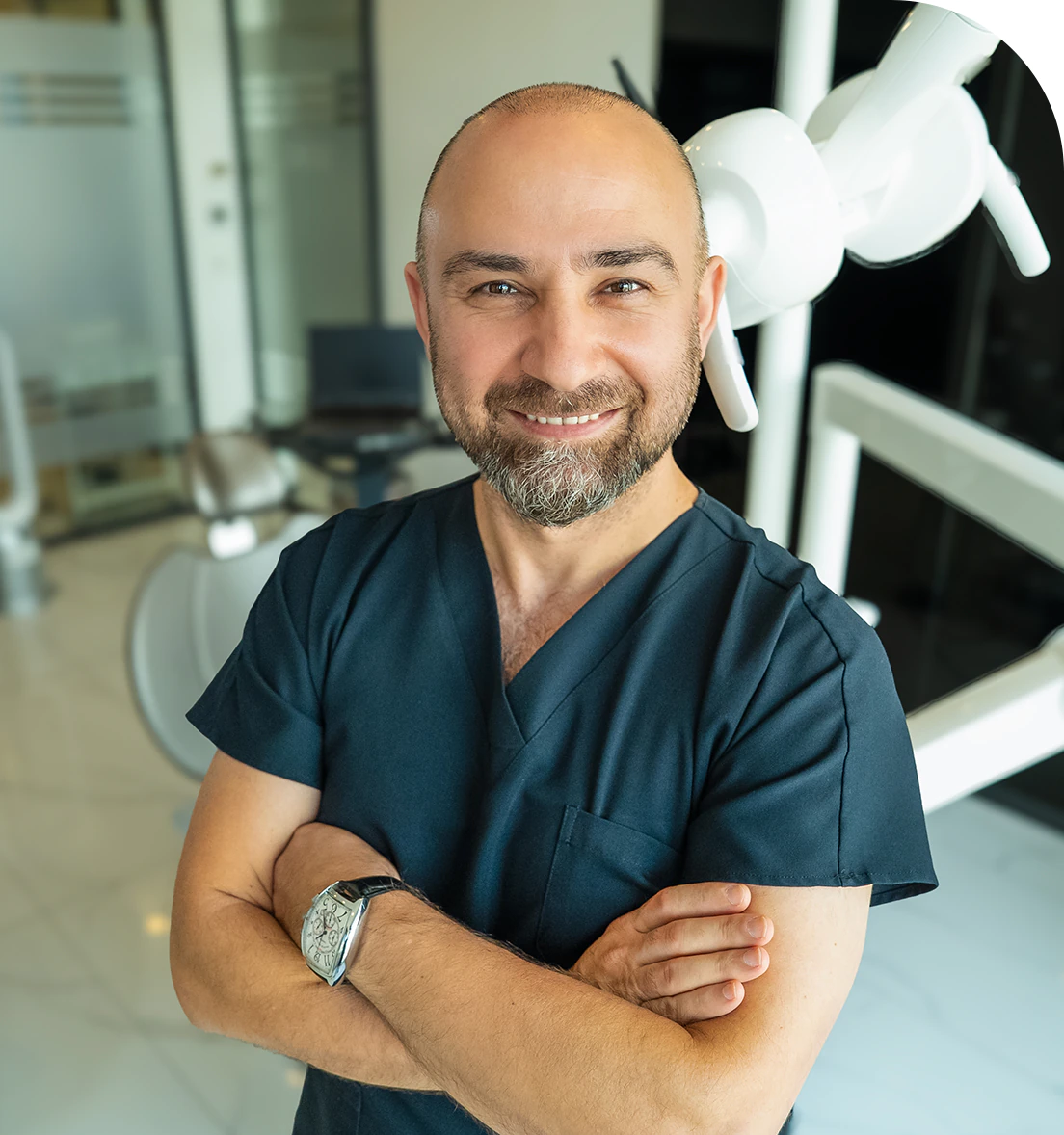
Dr. Dt. Ömer Atar provides care at his private clinic in Istanbul, combining his academic background and many years of clinical experience in dentistry. With a treatment approach that integrates aesthetic and functional solutions, he aims to achieve natural, balanced, and long-lasting results through personalized planning for each patient. Dr. Atar completed his education at the Marmara University Faculty of Dentistry, which he began in 1994, graduating in 2000. He continued his academic work in the Department of Prosthodontics at the same university. In 2007, he earned his PhD degree with his scientific thesis on implants and implant-supported prostheses in patients undergoing distraction osteogenesis. His academic expertise deepened in the fields of metal-free aesthetic systems, implant-supported prostheses, and cosmetic dentistry. Integrating modern technologies and digital dentistry into his practice, Dr. Ömer Atar achieves high success rates in treatments such as smile design, All-on-4/All-on-6 implant treatments, laminate veneers, zirconium crowns, teeth whitening, and gingival aesthetics (gummy smile). As a member of EDAD (Turkish Academy of Aesthetic Dentistry), he embraces a holistic approach focused on modern, functional, and natural outcomes in aesthetic dentistry.


