
 Türkçe
 Français
 Deutsch

A Hollywood smile—often referred to as smile design or a full smile makeover—is a comprehensive cosmetic dentistry approach that enhances tooth colour, shape, alignment, and overall harmony of the smile. Its global popularity continues to rise as patients seek transformative aesthetic results through procedures such as veneers, crowns, whitening, and sometimes orthodontics. Costs vary widely depending on the number of teeth treated, the materials used (composite vs. porcelain), clinic reputation, and dentist expertise.
In the UK, a Hollywood smile generally ranges from £8,000–£20,000, while in the USA prices typically fall between $12,000–$30,000, depending on how many veneers or crowns are required. Total expenses may increase when including consultations, digital smile design scans, gum contouring, and follow-up appointments. As with all cosmetic treatments, careful research, safety considerations, and choosing qualified aesthetic dentists remain essential.
How Much Is a Hollywood Smile / Smile Makeover in the UK?
A Hollywood smile in the UK typically costs £8,000–£20,000, with pricing influenced by the number of veneers or crowns, the materials used, and the complexity of reshaping or alignment needed. Premium cosmetic dentists in major cities often charge more due to advanced technology and aesthetic expertise. Below are average city-specific cost ranges:
- London: £10,000–£22,000
- Manchester: £8,000–£18,000
- Birmingham: £7,500–£17,000
- Glasgow: £7,000–£16,000
- Bristol: £7,500–£17,500
How Much Is a Hollywood Smile / Smile Makeover in the USA?
A Hollywood smile in the USA generally ranges from $12,000–$30,000, with costs shaped by the number of porcelain veneers or crowns, the prestige of the cosmetic dentist, and the specific design techniques used. Major metropolitan areas, especially those known for cosmetic dentistry, tend to sit at the top end of the range. Average costs in key cities include:
- New York City: $15,000–$32,000
- Los Angeles: $16,000–$34,000
- Miami: $12,000–$28,000
- Chicago: $12,000–$26,000
- Houston: $11,000–$25,000
Why Can’t Smile Design Prices Be Presented as a Fixed List?
Smile design does not resemble a ready-made product taken off the shelf; it is more like a master tailor sewing a bespoke suit according to your measurements. While one patient may only need slight shade lightening, another may need braces, implants, and porcelain veneers together.
You can think of this process like renovating a house. Just as there is a big cost difference between painting a single room and renewing the entire house from top to bottom, including the plumbing and roof, a similar situation applies in smile design. Needs and expectations are the main determinants of the total budget.
What Are the Main Factors That Determine the Total Cost of Smile Design?
Pricing is like the pieces of a puzzle. The total cost becomes clear only when all these pieces come together.
The basic factors that affect the cost are:
- The types of procedures planned (whitening, veneers, implants, etc.)
- The total number of teeth to be treated
- The type of main material used (porcelain, zirconia, composite)
- The necessity of additional surgical interventions such as gingival aesthetics
- The need for orthodontic treatment (braces or aligners)
- Preparatory procedures required before treatment (fillings, root canal treatment)
- The digital technology used and the quality of the laboratory
Do the Personal Planning and Mock-up Stages Affect the Price?
Yes, because a professional smile design cannot be done by “trial and error.” The first step is always a detailed analysis and planning. At this stage, facial photographs of the patient are taken, intraoral measurements are taken with digital scanners, and the targeted smile is designed on a computer using special software.
Most importantly, there is the mock-up method. This is the application of the designed smile onto the teeth with a temporary material before any permanent procedure is performed, so that it can be shown to the patient. The patient can see the finished look in their mouth, approve it, or request changes. This detailed preliminary preparation requires significant effort and time, and is therefore an important part of the treatment cost.
How Does the Choice of Material Change Smile Design Prices?
The type of material used in smile design is perhaps one of the factors that most affects the cost. Aesthetic and durability expectations determine the choice of material.
There are two main groups most commonly used: Composite and Porcelain.
- Composite Applications (Bonding): These are tooth-colored aesthetic filling materials. They are usually applied in a single session with very little (or no) removal of tooth structure. They are ideal for repairing small fractures, closing gaps, or slightly changing tooth shape. They are much more economical than porcelain. However, their color may change slightly over time, they are more prone to staining, and they are not as long-lasting as porcelain.
- Porcelain Applications (Laminate or Crown): Porcelain is the most superior material aesthetically. Its translucency perfectly imitates natural teeth, it does not stain, and its color never changes. They are specially produced in the laboratory. Initial costs are much higher than composite, but thanks to their durability and aesthetic stability, they are advantageous in the long term.
How Are Porcelain Laminate (Veneer) Prices Calculated?
Laminate veneers (porcelain laminates) are among the “star” players of smile design. They are very thin porcelain layers that are bonded only to the front surface of the tooth.
The cost of laminates is generally calculated “per tooth.” The factors that affect the price are:
- The total number of laminates to be applied
- The type of porcelain used (e.g., reinforced glass-ceramics such as E-max)
- The workmanship quality of the laboratory where they are produced
- The difficulty of the case (e.g., masking a very dark-colored tooth)
How Do Zirconia Crowns Affect the Smile Design Budget?
Zirconia is a white, metal-free substructure material that has both aesthetic qualities and very high chewing resistance. It is preferred especially when strong chewing forces in the posterior teeth must be withstood or in bridge applications where teeth are missing.
Zirconia crowns are also priced per tooth. Their cost is higher than traditional metal-supported porcelain crowns. The reason is the cost of the material itself and the CAD/CAM (computer-aided design/production) technology required to process it. Although they may sometimes be less aesthetic than porcelain laminates on anterior teeth (their translucency is slightly lower), they deliver excellent results in terms of durability and gingival compatibility.
Why Is the Number of Teeth to Be Treated So Important for the Total Price?
This is the simplest mathematical rule that determines the total budget. The cost of aesthetic procedures (laminates, zirconia, or bonding) is generally multiplied by how many teeth they will be applied to.
In some cases, treating only the upper 6 or 8 teeth visible when smiling is sufficient to achieve an aesthetic result. However, in some patients—especially where there are bite problems or severe wear—both the upper and lower teeth (generally 20 to 28 teeth) may need to be renewed. This comprehensive treatment, known as “full mouth” restoration, will significantly increase the budget compared to a plan that includes only the anterior teeth.
How Does Teeth Whitening (Bleaching) Reflect on the Smile Design Price?
This depends entirely on the plan. If a person’s tooth shape, alignment, and health are adequate and the only complaint is the color, smile design may consist solely of a professional teeth whitening (bleaching) procedure. This scenario is a much more economical solution compared to a plan requiring crowns and laminates.
However, if veneers are to be placed, whitening plays a different role. For example, if only the upper teeth will receive laminates, whitening is first applied to the natural teeth that will remain on the lower arch. Thus, the color of the new porcelains on the upper arch is adjusted according to the whitened lower teeth, achieving overall color harmony in the mouth. In this case, whitening becomes a cost item added to the total plan.
What Are the Price Differences Between In-Office and At-Home Whitening?
Teeth whitening costs also vary depending on the method chosen.
There are essentially two main methods and their cost dynamics:
- In-Office Whitening: Applied in the clinic under the supervision of a dentist, usually in sessions lasting 1–2 hours. It provides fast and effective results.
- At-Home Whitening: A method in which the patient applies the treatment at home using custom trays and gels provided by the dentist, lasting 1–2 weeks.
- Combined Treatment: For the most lasting and effective result, in-office whitening is usually performed first, then supported with at-home whitening.
In-office whitening generally has a higher initial cost than the at-home type due to the devices used and higher-concentration agents.
How Are Gingival Aesthetics (Pink Aesthetics) Costs Determined?
An ideal smile does not consist only of white teeth. The health, symmetry, and level of the gums (pink aesthetics) surrounding the teeth are at least as important as the teeth themselves. Excessive gingival display when smiling (gummy smile) or asymmetric gingival levels disrupt aesthetics.
Factors affecting the cost of gingival aesthetics (gingivoplasty) are:
- The extent of the area to be treated (single tooth or the entire smile line)
- The method used (conventional surgery or laser)
Gingival contouring performed with a laser may slightly affect the cost because it usually offers a more comfortable recovery and requires technological investment.
In some advanced “gummy smile” cases, more complex surgical procedures such as lip repositioning or, in addition to gum treatment, botox applications may be required. These are additional elements that increase the budget.
Why Does the Need for Orthodontic Treatment (Braces) Increase the Total Price?
This is one of the situations that most affects the smile design budget. If there are severe crowding, misalignments, or bite problems, performing aesthetic crowns or laminates without solving these issues is like building a luxury building on a crooked foundation. It will not be healthy and lasting.
In such cases, orthodontic treatment (braces or clear aligners) is absolutely necessary before starting aesthetic procedures. Orthodontic treatment is a major treatment item in itself, lasting between 6 months and 2 years. Smile design planning is updated to include the cost of orthodontic treatment.
How Do Clear Aligners Affect Smile Design Prices?
When crowding needs to be corrected, clear aligners (e.g., Invisalign) come to the fore as an aesthetic alternative to traditional metal or ceramic braces. These aligners are almost invisible and can be inserted and removed by the patient.
However, this comfort and aesthetics come at a price. Because clear aligner treatments require a series of trays produced specifically for the individual and high-level digital planning technology, their costs are generally higher than traditional braces. If the patient prefers clear aligners during the orthodontic phase of the smile design process, this will increase the total budget more than metal braces.
How Is the Implant Cost Added to the Budget in the Presence of Missing Teeth?
If there is one or more missing teeth in the smile line, the design cannot be considered complete without filling these gaps. The most modern and healthy way to replace missing teeth is dental implants.
Implant treatment is another important item that significantly increases the smile design budget. Factors affecting implant cost are:
- The number of implants to be placed
- The brand and quality of the implant used
- The crown to be made on the implant (zirconia or porcelain)
- The patient’s bone density.
If there is not enough bone to place the implant, additional surgical procedures such as adding bone graft (bone powder) or sinus lifting (sinus augmentation) in the upper jaw may be required. These additional procedures further increase the total cost of implant treatment.
Do Preparatory Procedures (Fillings, Root Canal) Reflect on the Price Before Treatment?
Before starting aesthetic procedures, the mouth must be completely healthy. During the detailed examination performed in smile design planning, if cavities, old and leaking fillings, or inflamed teeth (requiring root canal treatment) are detected under the teeth to be crowned, these problems must be solved first.
The cleaning of existing tartar, periodontal treatment, removal of caries (fillings), or root canal treatments are generally reflected as additional costs to the pricing of aesthetic procedures. This is because these procedures are fundamental treatments for “health,” not “aesthetics.”
Does the Dentist’s Experience and Expertise Determine the Price of Smile Design?
Absolutely. Smile design requires not only technical knowledge but also a strong artistic perspective and experience. It is not only about placing veneers on the teeth, but also ensuring that these veneers suit the patient’s facial shape, skin tone, lip structure, and character—this is a matter of vision.
The cost of the service provided by a dentist or team who has received special training in aesthetic dentistry, has substantial case experience, and can coordinate different specialties (periodontology, orthodontics, prosthodontics) will differ from that of a less experienced approach. This is a fee paid not only for the material used but also for the experience of the artist who works that material.
Do the Digital Technologies Used Reflect on the Price?
In modern dentistry, intraoral 3D digital scanners are now used instead of traditional (putty-like) impressions. Designs are made on a computer screen (CAD), and restorations are produced on robotic devices (CAM).
These high-tech devices (digital scanners, 3D printers, CAD/CAM production units) mean significant investment costs for clinics. While the use of these technologies increases the speed, precision, and comfort of treatment, the cost of this investment is also naturally reflected in the total service fee. However, this technology can save the patient from additional session costs in the long term by reducing the number of try-ins and delivering more accurate results.
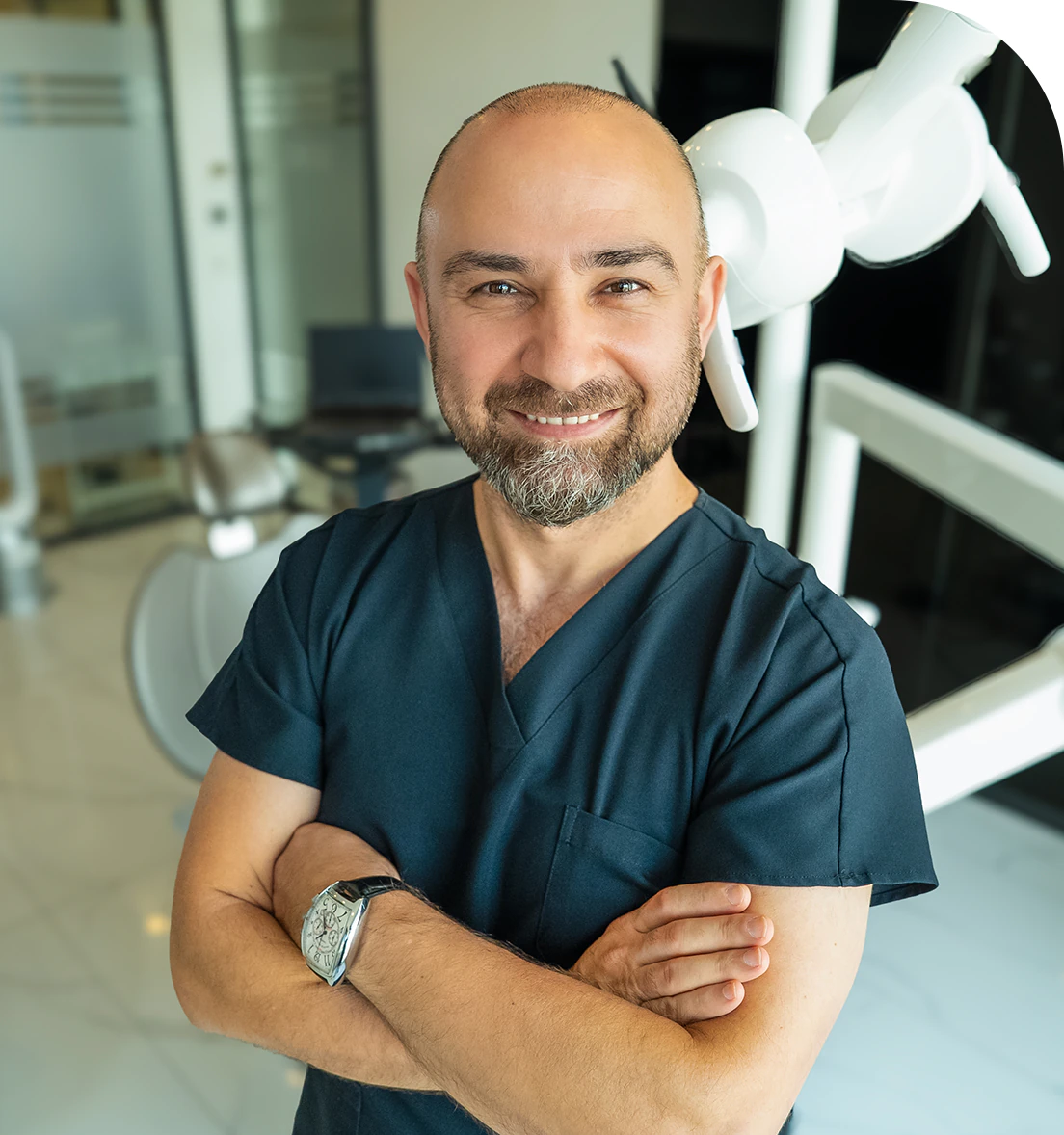
Dr. Dt. Ömer Atar provides care at his private clinic in Istanbul, combining his academic background and many years of clinical experience in dentistry. With a treatment approach that integrates aesthetic and functional solutions, he aims to achieve natural, balanced, and long-lasting results through personalized planning for each patient. Dr. Atar completed his education at the Marmara University Faculty of Dentistry, which he began in 1994, graduating in 2000. He continued his academic work in the Department of Prosthodontics at the same university. In 2007, he earned his PhD degree with his scientific thesis on implants and implant-supported prostheses in patients undergoing distraction osteogenesis. His academic expertise deepened in the fields of metal-free aesthetic systems, implant-supported prostheses, and cosmetic dentistry. Integrating modern technologies and digital dentistry into his practice, Dr. Ömer Atar achieves high success rates in treatments such as smile design, All-on-4/All-on-6 implant treatments, laminate veneers, zirconium crowns, teeth whitening, and gingival aesthetics (gummy smile). As a member of EDAD (Turkish Academy of Aesthetic Dentistry), he embraces a holistic approach focused on modern, functional, and natural outcomes in aesthetic dentistry.


