
 Türkçe
 Français
 Deutsch

Clasp-retained (partial) denture is a type of removable prosthesis used to replace missing teeth in cases where some natural teeth are still present in the mouth. It is fixed by anchoring to healthy teeth with metal clasps and compensates for both aesthetic and functional deficiencies.
The question of when a partial denture is preferred is important. It is generally used in individuals who have lost several teeth and are not suitable candidates for fixed prostheses or implants. It helps preserve the existing teeth and completes the missing areas without disturbing the intraoral balance.
Among the advantages of a clasp-retained denture, cost-effectiveness stands out. It is more economical than fixed prostheses and does not require surgical intervention. Additionally, being removable offers ease of cleaning and maintenance; it supports gum health.
This type of prosthesis also provides aesthetic benefits. Especially in cases of missing teeth in the posterior region, it helps maintain a natural appearance. The application period is short and offers a quick solution without negatively affecting a person’s social life.
| Things You Should Know | Information |
| Definition | Clasp-retained (partial) denture is a type of removable prosthesis that is supported by natural teeth and generally fixed with metal clasps. It is used in place of missing teeth and helps restore functions such as chewing and speaking. |
| Purpose | Used in cases of one or more missing teeth to restore oral functions and aesthetics. It is applied only in partial tooth loss, not in completely edentulous mouths. |
| Material Structure | Generally consists of a metal framework, with acrylic teeth and pink acrylic resembling gum tissue placed on top. The clasps (clammers) are made of metal. |
| Application Process | Impressions are taken from the mouth and a custom prosthesis is prepared in the laboratory. It is delivered to the patient after several trial sessions. |
| Advantages | – Provides stability as it is supported by natural teeth. – Economically and effectively restores missing teeth. – Does not require surgical procedures. – A suitable option for elderly individuals or those who cannot receive implants. |
| Cleaning and Maintenance | It should be removed and cleaned after each meal. Hygiene should be maintained using non-abrasive special brushes and denture cleaning tablets. It is recommended to remove it before sleeping at night. |
| Durability and Lifespan | It can be used for many years with proper care. However, it may need to be adjusted again over time due to changes in the oral structure. |
| Aesthetic Evaluation | Metal clasps used in the anterior region may cause aesthetic discomfort. Therefore, it is recommended to be used in the posterior regions. |
| Comfort | It may create a sense of unfamiliarity at first but is usually adapted to quickly. Speaking and chewing functions improve over time. |
| Alternatives | – Precision attachment (invisible clasp) dentures – Implant-supported prostheses – Fixed bridge prostheses |
What is a Clasp-Retained (Partial) Denture?
Clasp-retained (partial) denture is a type of removable prosthesis used to replace missing teeth in cases where some natural teeth remain in the mouth. It attaches to stable teeth with metal clasps. It aims to eliminate aesthetic and functional losses. It improves chewing ability, facilitates speaking, and prevents teeth from shifting. With regular cleaning and maintenance, it can be used for a long time. It is an economical prosthetic option.
What Are the Components of a Clasp Denture?
Understanding the structure of these prostheses is important to anticipate how they will feel in your mouth. When you hold a clasp denture in your hand, you will see three different integrated structures. Each part has a different function, and your overall comfort is determined by the harmony of these parts.
These components are:
- Pink acrylic base
- Artificial teeth
- Metal framework
- Metal clasps
- Retention arms
The pink acrylic part mimics the gums and transfers chewing force to the palate. The metal framework is the backbone of the prosthesis; it is thin and durable. The clasps are those well-known hooks that prevent the prosthesis from coming out of place.
Why Should Partial Tooth Loss Be Treated with a Clasp-Retained Denture?
When a tooth is lost, a silent but destructive domino effect begins in the mouth. Most of my patients think, “Doctor, it’s just a back tooth, it’s not visible anyway, I guess I don’t need to have it replaced.” But that’s not how it works. When one tooth is lost, the neighboring teeth begin to tilt toward that space. The opposing tooth from the other jaw elongates toward the gap. This situation can eventually lead to the loss of your otherwise healthy teeth.
The primary purpose of clasp-retained dentures is to prevent this migration of teeth. By filling the gaps, they help the remaining teeth stay in their positions. Furthermore, the bone in the area of the extracted tooth, left without function, gradually resorbs over time. Using a denture applies pressure to that area, slowing down bone loss. If chewing is not done properly in the mouth — which is the start of the digestive system — stomach issues begin. These dentures help restore your chewing efficiency and thus support your overall health.
How Does a Clasp-Retained Denture Stay in Place in the Mouth?
The biggest fear among our patients is, “Will this denture fly out of my mouth when I talk or laugh?” In clasp-retained dentures, retention is entirely based on physical principles. Your existing teeth have a convex shape; they taper slightly toward the gumline. The metal arms, called clasps, hook under this convex part of the tooth and wrap around it like a belt.
When you put the denture in, you’ll feel a slight “click” as the clasp locks into place. To remove it, you need to apply force in a specific direction. This mechanical retention prevents the denture from moving during eating or speaking. Of course, the degree of this retention is very important. If it’s too tight, it can cause tooth pain; if too loose, the denture will move. We dentists adjust this using special instruments with millimetric precision.
How Long Does the Treatment Process for a Clasp-Retained Denture Take?
The making of these dentures is not as simple as saying, “I took the impression, come back tomorrow, and we’ll place it.” We typically need about 4 or 5 sessions to produce a prosthesis that is custom-made and perfectly fits your mouth. Both we and the lab must work meticulously during this process.
These sessions typically include:
- Initial examination and impression taking
- Precise impression using a custom tray
- Metal framework try-in
- Wax try-in with teeth
- Delivery and adjustment
The “wax try-in” stage is particularly enjoyable because the teeth aren’t finished yet but are aligned on wax. We check the color, shape, and your smile in the mirror. If there’s anything you don’t like, it’s very easy to change at that stage. We don’t finish the prosthesis until you say, “Yes, I like it.”
Are Metal Framework Clasp Dentures Different from Acrylic Dentures?
Clasp dentures can be divided into two categories based on material. One type is made entirely from pink plastic (acrylic), while the other includes a metal cast framework. Full acrylic ones are generally temporary or preferred when the number of teeth is very limited. However, they are a bit thicker and cover more of the palate.
What we recommend — and what is considered the standard in modern dentistry — are “Metal Framework Clasp-Retained Dentures.” These frameworks, made from a chrome-cobalt alloy, are extremely thin and strong. Thanks to the durability of metal, the prosthesis can be manufactured more elegantly. This allows your tongue to move more comfortably. Additionally, since metal conducts heat and cold, it helps you taste your food better.
Does a Clasp Denture Cause Pain During the Adjustment Period?
To be honest, when you first wear a removable denture, you shouldn’t expect it to feel like your natural teeth right away. During the first few days, you may feel like “I have a huge bite in my mouth and I can’t swallow it.” This is completely normal. Your oral tissues and tongue are trying to get to know this new guest. Your salivary glands may start working more, thinking the denture is food.
The edges of the prosthesis may initially apply some pressure to the soft tissues. This is like a new pair of shoes slightly rubbing your feet the first time you wear them. Some areas may develop redness or mild sores. Don’t give up at this point. If you take out your denture and put it aside immediately, you’ll never get used to it. Your dentist will make small adjustments to the sore spots. Over time, your tissues will adapt to the denture, become calloused, and you will feel more comfortable.
Which Foods Should I Avoid While Using a Clasp Denture?
When you start using a denture, you will need to make small changes to your eating habits. No matter how securely clasp-retained dentures fit, they are not embedded into the jawbone like natural tooth roots; they rest on the gum. Therefore, extremely sticky or very hard foods can destabilize the denture.
Foods to Avoid or Consume with Caution:
- Chewing gum
- Turkish delight
- Caramel candies
- Whole apples
- Hard-shelled nuts
- Very hard bread crusts
- Paste-textured desserts
These foods may stick to your denture, dislodge it, or cause the clasps to bend. It will be much more comfortable to eat hard fruits like apples by slicing them and chewing with your back teeth instead of biting into them directly.
How Should I Chew While Wearing a Clasp Denture?
The most critical aspect of the adaptation process is the chewing technique. With natural teeth, we usually tend to chew on one side. However, this can cause problems with removable dentures. If you chew only on the right side, the left side of the denture may lift. This seesaw motion can cause the denture to move and damage the tooth the clasp is attached to.
That’s why you should adopt the “bilateral” chewing principle, using both sides simultaneously. When you take a bite, split it with your tongue and try to chew on both sides at the same time. This helps keep the denture balanced and distributes pressure evenly to the palate. Practicing with soft foods during the first few weeks will help your muscle memory adapt faster to this new system.
Can a Clasp Denture Affect My Speech and Sounds?
Tooth loss already makes it difficult to pronounce certain sounds. When you first wear the denture, your oral cavity volume changes, and you may experience a temporary difference in your speech. Especially with sounds produced by the tongue touching the palate, you may experience a slight lisp or whistling sound.
Sounds likely to be affected include:
- S
- Ş
- Ç
- F
- V
- Z
This is not permanent. The tongue is an incredibly adaptive muscle. The best exercise you can do to correct your speech is to read a newspaper or book out loud at home. Repeat the words you find difficult several times. Usually, within 1–2 weeks, your tongue will adapt to the thickness of the denture and the position of the teeth, and your speech will return to normal.
What Should I Use to Clean My Clasp Denture?
Hygiene is very important to extend the life of your denture and prevent bad breath. The surface of clasp dentures is smooth and polished. The biggest mistake is brushing them with toothpaste. The particles in toothpaste scratch the surface. Although these scratches are not visible to the eye, they become perfect places for bacteria to settle, causing discoloration and bad odor over time.
Products you can use for cleaning include:
- Liquid hand soap
- Special denture brush
- Soft toothbrush
- Denture cleaning tablets
- Warm water
The best practice is to remove and brush the denture under water with liquid soap after every meal. Soaking it in cleaning tablets a few times a week will also provide deep hygiene. Never use boiling water or chemicals like bleach; these will damage the structure of the denture.
Should I Remove the Clasp Denture While Sleeping?
My answer to this is definitely “yes.” The palate tissues and gums that are under pressure from the denture all day need to rest and breathe. Wearing a denture continuously can lead to fungal infections and tissue irritation called “denture stomatitis.”
Removing the denture while sleeping improves blood circulation. You should store the denture in a moist environment. A glass of clean water is ideal for this. If the denture dries out, the acrylic material may lose moisture, change shape, and cause a poor fit in the morning.
How Does a Clasp Denture Look Aesthetically?
The biggest disadvantage of clasp dentures, as the name implies, is the clasps. Especially for teeth near the front, these metal clasps may be visible when smiling or talking. As dentists, we try to hide these clasps as much as possible during design, but sometimes we must place them in visible areas for retention.
For patients with high aesthetic concerns, this metallic appearance can be bothersome. If you say, “I don’t want any metal to show, aesthetics are very important to me,” then we need to consider alternatives — namely the upgraded version of clasp dentures.
What Is a Precision Attachment (Snap-On) Denture as an Alternative?
For patients who want to get rid of the metallic look of clasps, “Precision Attachment Dentures” — also known as “Snap-On Dentures” — are a great alternative. In this system, there are no clasps on the teeth. Retention is provided by small, hidden mechanisms embedded in the porcelain crowns placed on the teeth.
The concept is similar to snaps on clothing or a key-lock mechanism. The part inside the denture connects to and locks into the part in the mouth. No metal part is visible from the outside — only the teeth and gums are visible. This provides a much more aesthetic appearance and increases retention.
What Are the Differences Between Clasp Dentures and Precision Attachment Dentures?
During the decision-making process, our patients are often torn between these two options. The biggest advantage of precision attachment dentures is their aesthetics. But that’s not the only difference. Because there is no metal arm wrapping around the tooth like in clasp dentures, cleaning the abutment teeth is easier. Also, snap-on systems are more stable; they don’t move in the mouth and “click” into place.
Differences include:
- Cost
- Aesthetic appearance
- Need for preparation of support teeth
- Retention strength
- User comfort
However, to make a precision attachment denture, the existing abutment teeth must be trimmed and crowned. In clasp dentures, the natural teeth are usually left untouched or only minimally filed. In terms of cost, clasp dentures are more affordable. If your budget is limited and your existing teeth are strong, clasp dentures remain a valid and successful treatment option.
Can a Clasp Denture Be Repaired If It Breaks?
One of the nice things about clasp dentures is that they are repairable. If your denture falls and breaks or if a clasp loosens, it can usually be repaired in the lab. Sometimes over the years, you may lose another tooth. In such cases, you don’t need to throw away the denture.
It is often possible to add a new tooth and clasp to the existing denture. However, these procedures must be done by a dentist. Trying to glue the denture at home with super glue is extremely dangerous. These chemicals are toxic and can irreparably damage the denture.
Will a Clasp Denture Loosen Over Time, and What Should I Do?
Just like the rest of our body changes over time, our jawbones do too. Bone resorption and gum recession can occur over the years. However, your denture is made of a rigid material and does not change. In this case, gaps may form between the denture and your palate, causing the denture to become loose and move.
This is entirely expected. In such cases, you don’t need to replace the denture. With a procedure called “relining,” we can apply a new acrylic layer to the inside surface of the denture, making it fit your palate perfectly again. This is why it’s essential to visit your dentist every 6 to 12 months — even if you don’t have any complaints — to maintain denture comfort and oral health.
Frequently Asked Questions
In which tooth loss situations are clasp dentures used?
Clasp partial dentures are used temporarily or permanently in cases where some natural teeth still remain. They are especially preferred for missing back teeth.
How is the retention of clasp dentures achieved?
These dentures are held in place by metal clasps that grip the remaining natural teeth. The clasps keep the denture stable in the mouth and prevent slipping while chewing.
Do clasp dentures harm the gums?
If not made properly, pressure points may develop. However, when made and adjusted under professional supervision, the gums are usually not harmed. Regular care is essential.
Do clasp dentures affect speech?
There may be slight speech difficulties in the early days, but as the oral muscles adapt to the denture, speech returns to normal. Temporary distortions may occur, especially with “s” and “ş” sounds.
Are there aesthetic disadvantages to clasp dentures?
Metal clasps near the front teeth may be visible and aesthetically unpleasing. In some cases, aesthetic clasp options can help minimize this concern.
How should clasp dentures be maintained?
They should be cleaned daily with soap and warm water. Toothpaste should not be used, and abrasive materials should be avoided. The denture should be removed at night and stored in a clean container.
What is the lifespan of clasp dentures?
With regular maintenance and check-ups, they can last between 5–8 years. Adjustments may be needed over time due to changes in oral anatomy or clasp loosening.
Can clasp dentures be used safely during pregnancy?
Yes, existing dentures can be safely used during pregnancy. However, due to increased gum sensitivity, strict hygiene and regular check-ups are recommended.
How does chewing function change after clasp dentures?
Chewing strength and balance improve as missing teeth are replaced. Support from the back areas allows for more comfortable eating.
What is the difference between a clasp partial denture and an implant?
Implants are fixed into the jawbone, while clasp dentures attach to existing teeth. Implants are more durable and aesthetic, but clasp dentures are a more economical, surgery-free alternative.
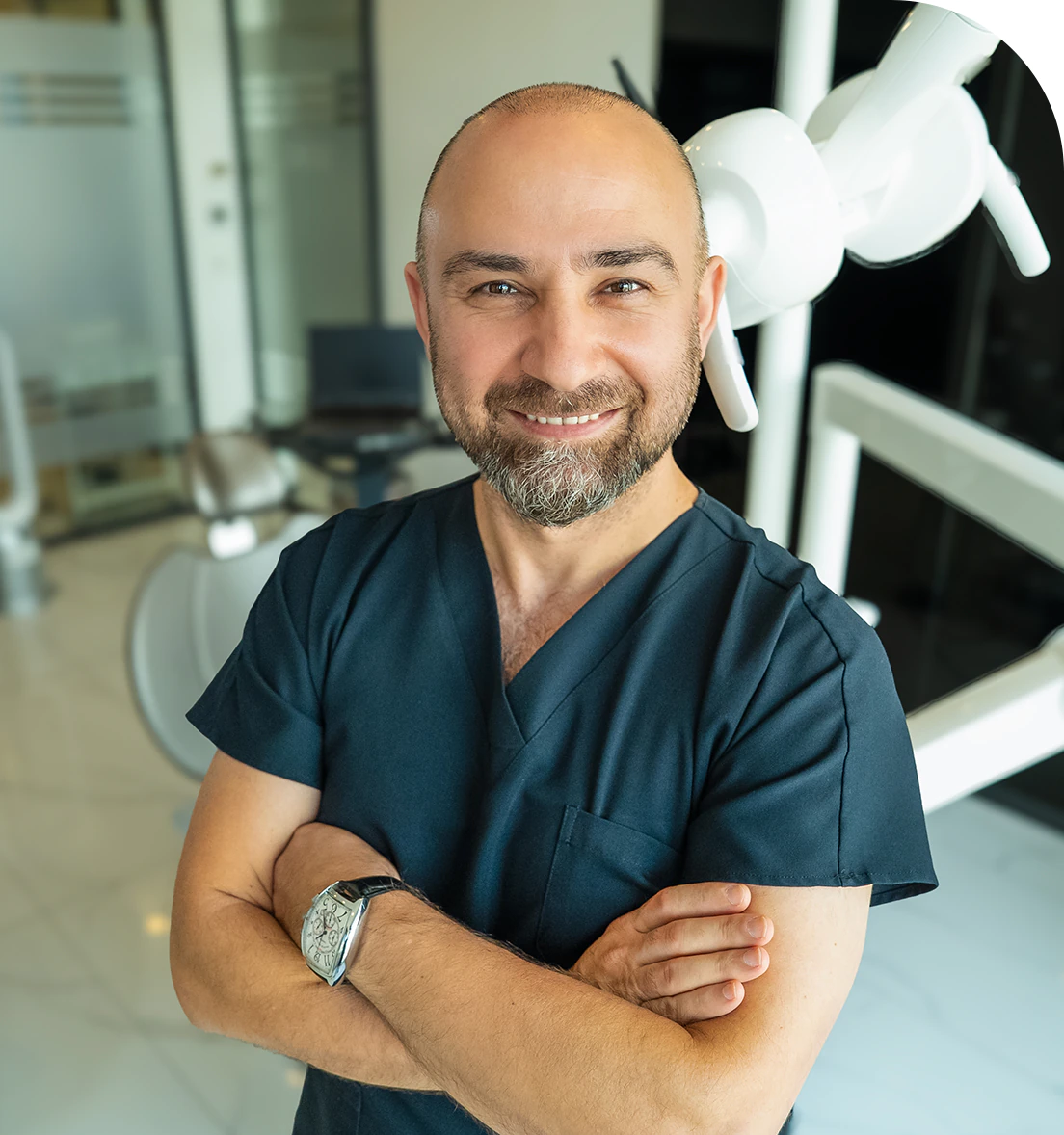
Dr. Dt. Ömer Atar provides care at his private clinic in Istanbul, combining his academic background and many years of clinical experience in dentistry. With a treatment approach that integrates aesthetic and functional solutions, he aims to achieve natural, balanced, and long-lasting results through personalized planning for each patient. Dr. Atar completed his education at the Marmara University Faculty of Dentistry, which he began in 1994, graduating in 2000. He continued his academic work in the Department of Prosthodontics at the same university. In 2007, he earned his PhD degree with his scientific thesis on implants and implant-supported prostheses in patients undergoing distraction osteogenesis. His academic expertise deepened in the fields of metal-free aesthetic systems, implant-supported prostheses, and cosmetic dentistry. Integrating modern technologies and digital dentistry into his practice, Dr. Ömer Atar achieves high success rates in treatments such as smile design, All-on-4/All-on-6 implant treatments, laminate veneers, zirconium crowns, teeth whitening, and gingival aesthetics (gummy smile). As a member of EDAD (Turkish Academy of Aesthetic Dentistry), he embraces a holistic approach focused on modern, functional, and natural outcomes in aesthetic dentistry.


