
 Türkçe
 Français
 Deutsch

Implant-supported prostheses are artificial teeth fixed or removable, placed on titanium screws (implants) inserted into the jawbone. These prostheses are used in a wide range of cases from single-tooth loss to complete edentulism and offer the closest solution to the natural function of teeth.
Understanding how implant-supported prostheses are made is important to grasp the treatment process. First, implants are placed into the jawbone, and a healing period is awaited. After this, prostheses prepared specifically for the individual are screwed onto the implants or fixed with retention attachments.
Among the advantages of this type of prosthesis are retention strength and chewing efficiency. Compared to other removable prostheses, they provide a more stable and comfortable use. Additionally, by stimulating the jawbone, they prevent bone loss and represent a long-lasting treatment alternative.
Who are implant-supported prostheses suitable for is also significant in treatment planning. Success rates are quite high in individuals with sufficient jawbone structure, suitable general health, and good oral hygiene. It is an effective solution both aesthetically and functionally.
| What You Need to Know | Information |
| Definition | Implant-supported prosthesis is a type of fixed or removable prosthesis mounted on titanium screws (implants) placed in the jawbone. It replaces missing teeth to restore aesthetic and functional integrity. |
| Purpose of Use | Used in a wide range from single-tooth loss to fully edentulous mouths. Aims to restore chewing, speaking, and smiling functions as close to natural teeth as possible. |
| Types | – Fixed Implant-Supported Prosthesis: Permanently attached to implants by screwing or cementing.
Removable Implant-Supported Prosthesis: Retained by bar, ball, or locator systems, can be removed by the patient. |
| Material Structure | Materials such as zirconia, porcelain, metal-supported porcelain, and acrylic may be used. The selection is made according to aesthetic and functional needs. |
| Application Process | 1. Implant is placed, and osseointegration with the bone is awaited for 2–6 months.
After healing, impressions are taken. The prosthesis is designed and placed onto the implant. |
| Advantages | – Reduces bone loss.
Provides the closest feel to natural teeth. Offers high chewing efficiency. Aesthetically appears natural. Durable and long-lasting. |
| Cleaning and Maintenance | For fixed prostheses, regular brushing and flossing are required. For removable prostheses, they should be removed daily and cleaned with special products. Regular dental check-ups are essential. |
| Lifespan and Durability | With proper care and regular check-ups, can be used for 10–20 years or longer. Material quality and patient habits are influential factors. |
| Aesthetic Evaluation | Provides high aesthetics. Especially in the front areas, the appearance closest to natural teeth is achieved. Materials like zirconia offer natural results thanks to light transmittance. |
| Alternatives | – Conventional removable (clasped) dentures
Fixed bridges (supported by adjacent teeth) Precision attachment dentures |
What Is an Implant-Supported Prosthesis?
An implant-supported prosthesis is an artificial dental structure applied on dental implants placed in the jawbone. It can be fixed or removable and serves to replace missing teeth both functionally and aesthetically.
These prostheses offer results close to the appearance and function of natural teeth. Thanks to their durable structure, they are long-lasting and provide comfortable use in the mouth. The treatment plan is determined individually.
What Are the Types of Implant-Supported Prostheses and How Are They Classified?
Since every patient’s bone structure, gum condition, and aesthetic expectations differ, it is not possible to talk about a single type of implant prosthesis. As clinicians, we classify prostheses based on the patient’s needs and the retention mechanism in the mouth. This classification determines the roadmap of the treatment.
The main types of implant-supported prostheses are:
- Fixed prostheses
- Removable prostheses
- Hybrid prostheses
Fixed prostheses are teeth that are screwed or cemented onto implants and cannot be removed by the patient. They offer the closest comfort to natural teeth but require sufficient bone volume and number. They are typically made of zirconia or metal-supported porcelain. Removable prostheses (Overdentures), on the other hand, can be removed by the patient for cleaning but attach to implants via “snap-on” systems while in the mouth. They are frequently preferred in cases of complete edentulism, especially when bone support is insufficient. Hybrid prostheses are a combination of these two types; they are fixed via screw systems but have a pink substructure that compensates for lost gum and bone tissue.
Why Is Zirconia the Preferred Material in Fixed Prostheses?
Material choice in fixed implant-supported prostheses is critical for long-term success and aesthetics. In the past, metal-supported porcelains were commonly used, but nowadays, zirconia has become a favorite for both clinicians and patients. Zirconia perfectly mimics natural tooth enamel due to its light-transmitting properties. The gray reflections or discoloration that can develop over time at the gum line with metal-based porcelains do not occur with zirconia, offering a major advantage particularly in the aesthetic zone.
In terms of biological compatibility, zirconia is also superior. Gum tissue adheres well to zirconia, reducing bacterial accumulation around the implant and minimizing infection risk. Additionally, zirconia is highly resistant to chewing forces. Especially monolithic zirconia blocks — which are carved from a single piece — eliminate the risk of porcelain chipping or delamination since they don’t have a porcelain overlay. For patients seeking both aesthetics and mechanical durability, zirconia is the gold standard in fixed prostheses.
What Are the Types of Attachments Used in Removable Prostheses?
In fully edentulous mouths, the components that connect removable prostheses (overdentures) to implants are called attachments. These attachments are locking mechanisms that prevent the prosthesis from moving in the mouth. The choice of attachment type depends on the number of implants, their positions, and the patient’s manual dexterity.
Commonly used attachment systems include:
- Ball attachments
- Locator attachments
- Bar systems
- Magnet systems
Ball and locator attachments function by coupling a male component on the implant with a female housing inside the prosthesis. These systems are cost-effective and relatively easy to clean. However, because the implants work independently, they may not distribute chewing forces as efficiently as bar systems. Bar systems, on the other hand, link implants via a metal bar and the prosthesis clips onto this bar. From a biomechanical perspective, bar systems distribute the load better and provide more stability, making them a more sophisticated solution, especially when multiple implants are used.
What Are the Mechanical Differences Between Bar and Ball Attachment Systems?
The main difference between these two systems lies in how they distribute forces to the implants. In ball attachment systems, each implant functions like a lone soldier. When chewing forces are applied to the prosthesis, they are transferred directly to the nearest implant. Especially in two-implant lower dentures, this can cause a see-saw motion from front to back. Over time, this movement may create stress on the bone around the implant neck and lead to bone loss. Moreover, regular maintenance like replacing worn rubber rings may be required.
Bar systems operate on the principle of “strength in unity.” When implants are connected via a metal bar, they function as a single block. The patient’s chewing force is evenly distributed across all implants through the bar. This splinting effect protects implants from overload and extends their lifespan. Bar-supported prostheses are also much more resistant to lateral movements, giving patients a comfort level close to that of fixed teeth. However, fabricating bar systems requires more precise techniques, and cleaning beneath the prosthesis demands good manual dexterity from the patient.
Who Are Hybrid Prostheses Most Suitable For?
Although hybrid prostheses are often perceived as “neither fully fixed nor fully removable,” they actually belong to the fixed prosthesis category as they cannot be removed by the patient. However, they are structurally different from other types. In patients who have been edentulous for a long time or suffered from severe gum disease, there’s often significant loss of bone and gum tissue. In such cases, standard bridges consisting of only white teeth may appear too long, and lacking lip support can make the face look older. Hybrid prostheses are designed to address this issue.
Situations where hybrid prostheses are beneficial include:
- Severe bone resorption
- Insufficient lip support
- High smile line
- High aesthetic expectations
These prostheses consist of a metal or titanium framework over which both artificial teeth and pink acrylic or composite material mimicking lost gum tissue are processed. The pink section fills facial hollowness and creates an aesthetic smile line. Moreover, the acrylic teeth used in hybrid prostheses are softer than zirconia or porcelain, which provides a cushioning effect during chewing, reducing stress on the implants. In cases of poor bone quality, this shock-absorbing feature acts like insurance for implant health.
What Is the Relationship Between Surgery and Prosthesis in Treatment Planning?
One of the biggest mistakes in implant treatment is placing implants without considering the prosthesis. The correct approach is prosthetically guided implantology. This means that before any surgical procedure, the final prosthetic outcome should be meticulously planned. The clinician should digitally or physically design the final tooth positions, sizes, and occlusion, and place implants in the most appropriate positions to support this design.
If this planning is skipped, implants may end up angled incorrectly, too far forward, or too deep. In such cases, the resulting prosthesis may look unaesthetic, be impossible to clean, or become biomechanically unstable. A poorly positioned implant cannot carry occlusal forces efficiently and may cause surrounding bone loss. Therefore, surgery and prosthetics are inseparable. Detailed analyses based on CT scans are like architectural blueprints that guide the surgeon on where to place implants, at what angle, and with what dimensions.
Why is the concept of passive fit so critical?
Just as in engineering, in dentistry, parts must fit together “without force.” In implant-supported prostheses, this is called “passive fit.” When the prepared metal or zirconia framework is placed over the implants in the mouth, it should snap into place even without tightening any screws. If the prosthesis does not fit perfectly and has to be forced into place by tightening the screws, it creates significant tension (stress) in the system.
Possible problems if passive fit is not achieved:
- Screw loosening
- Screw fracture
- Implant fracture
- Bone loss
- Pain and sensitivity
This hidden tension is a destructive force that the patient may not feel initially but continuously affects the implants. Screws can loosen or break over time under this stress. Worse, if the stress is transferred to the bone surrounding the implant, the body may react by resorbing the bone. Today, CAD/CAM (Computer-Aided Design and Manufacturing) technologies are used to ensure perfect fit. Laser sintering or milling methods allow production with micron precision, guaranteeing passive fit and minimizing mechanical complications.
What does pink aesthetics and soft tissue management mean?
The success of implant treatment is not measured only by the appearance of white teeth but also by the natural appearance of the surrounding gum tissue (pink tissue). Especially in the anterior region, gum recession or loss of papilla (triangular gum between teeth) can result in unacceptable aesthetic outcomes. The concept of “pink aesthetics” aims to harmonize the color, consistency, and shape of the gum around the implant with natural teeth.
After implant placement and before the prosthetic phase, the gum must be shaped. This is achieved using temporary prostheses or custom healing abutments, which press against the gum to help it take on a natural, curved shape around the tooth. Moreover, the abutments connecting the implant to the prosthesis can be custom-made. These “custom abutments,” made of zirconia or titanium, mimic the natural emergence profile and prevent metal color from showing through the gums. If there is significant bone and gum loss, pink porcelain or composite can be used in the prosthesis to simulate artificial gingiva.
What are the pros and cons of screw-retained vs cemented prostheses?
Fixed implant prostheses are attached to the implant either by screwing or cementation. Both methods have advantages and disadvantages, but in modern dentistry, the trend is shifting toward screw-retained systems. In cemented systems, the prosthesis is fixed to the implant with an adhesive. While this method seems advantageous aesthetically (no screw access hole), it poses a biological risk. Cement residue can remain deep in the gum and is very difficult to clean.
Issues caused by cement residue:
- Peri-implantitis (infection)
- Gum bleeding
- Bone loss
- Bad odor
In screw-retained systems, the prosthesis is attached to the implant with a small screw, and the screw access is closed with aesthetic filling. The biggest advantage of this system is its reversibility. During annual checkups or in case of porcelain fracture or other issues, the dentist can simply remove the filling and unscrew the prosthesis for easy removal and adjustment. In cemented systems, removing the prosthesis often requires cutting it, potentially damaging it. Therefore, in terms of cleanability and long-term follow-up, screw-retained systems are a safer choice.
Is teeth grinding a threat to implants?
Bruxism — teeth grinding or clenching — is a serious risk factor for patients undergoing implant treatment. Natural teeth are connected to the jawbone by microscopic fibers called the periodontal ligament, which act as shock absorbers and send feedback to the brain about excessive force. Implants, however, lack this ligament and are directly fused to the bone.
Risks posed by this condition:
- Overloading
- Screw loosening
- Porcelain fractures
- Bone loss at the implant neck
Implants cannot feel or absorb forces. Therefore, in bruxism patients, the clenching force is transferred directly to the screw, implant, and bone. These patients require special treatment planning. Occlusion (bite) must be adjusted to prevent lateral forces on the implants. Also, fracture-resistant materials like monolithic zirconia or force-absorbing hybrid structures should be selected. Most importantly, after treatment, a hard night guard (occlusal splint) should be made to protect the implants and teeth from uncontrolled nocturnal forces.
How should implant prostheses be cleaned and maintained?
A common misconception is that “implants don’t decay, so I don’t need to brush.” While titanium and porcelain do not decay, the bone and gums supporting the implant can be more vulnerable to infection than natural teeth. Inflammation of the gums around an implant is called “mucositis,” and when it progresses to bone loss, it’s called “peri-implantitis” — the leading cause of implant failure.
Recommended cleaning tools for implant prosthesis users:
- Toothbrush (manual or electric)
- Interdental brushes
- Superfloss (under-bridge floss)
- Oral irrigators (water flossers)
Especially in hybrid or bar-retained removable prostheses, food particles can accumulate in the space between the prosthesis and the gums. These areas must be cleaned daily using interdental brushes or pressurized water flossers. The undersides of fixed bridges should be cleaned with special floss using a back-and-forth motion. Regular dental checkups are vital to detect plaque buildup or early signs of infection.
In what cases is implant prosthesis contraindicated?
Implant treatment is suitable for most adults, but some systemic or local conditions can pose risks or reduce treatment success. “Absolute contraindications” (conditions where implants are not allowed) are rare and usually involve serious health problems. However, “relative” risk factors may influence treatment progress and outcomes.
Risk factors include:
- Uncontrolled diabetes
- Heavy smoking
- Head and neck radiotherapy
- Use of bisphosphonate medications
- Poor oral hygiene
- Severe bleeding disorders
For example, diabetes alone is not a barrier; what matters is that the disease is under control, with HbA1c levels below a certain threshold. Smoking delays osseointegration and increases infection risk, so patients are advised to quit or reduce smoking during treatment. If there is insufficient bone or active gum disease, these must be addressed first before implant placement. The dentist will analyze the patient’s overall health in detail and take precautions to minimize risks.
What is the lifespan and maintenance of implant prostheses?
Implants themselves can last a lifetime with proper surgery and care. However, the prosthetic parts attached to them are subject to constant chewing forces and may wear out or need maintenance over time. This does not mean treatment failure — it should be seen like periodic maintenance for a car.
Possible future maintenance needs:
- Changing retention rings
- Screw tightening
- Porcelain repairs
- Relining of removable prostheses
- Replacement of acrylic teeth
In removable prostheses (overdentures), retention components like rubber inserts can loosen over time and should be replaced annually. Acrylic teeth in hybrid prostheses may wear and need replacement. Since bone structure changes with age while the prosthesis remains fixed, relining may be needed for proper fit in removable prostheses. Implant-supported prostheses are not “set-and-forget” solutions — long-term success requires regular dental checkups and patient cooperation.
Frequently Asked Questions
What exactly does implant-supported prosthesis mean?
An implant-supported prosthesis is a fixed or removable dental prosthesis attached to titanium implants placed in the jawbone. It provides the closest functional and aesthetic solution to natural teeth.
Who is a good candidate for implant-supported prostheses?
Suitable for individuals who are partially or completely edentulous with sufficient bone volume. Patients with controlled systemic diseases also have high success rates.
What is the difference between fixed and removable implant prostheses?
Fixed prostheses are screwed into implants and cannot be removed. Removable prostheses are attached via retentive components and can be removed by the patient.
How is chewing function affected by implant-supported prostheses?
They offer chewing power very close to natural teeth. They allow comfortable consumption of hard foods and significantly improve nutritional quality.
What are the aesthetic benefits of implant prostheses?
They are designed to mimic tooth and gum form, creating a natural-looking smile. They support facial contours and can reduce signs of aging.
How should care be provided after implant prosthesis placement?
Daily brushing, interdental cleaning, and antiseptic mouth rinses are essential. Dental checkups every six months are recommended.
What is the lifespan of implant-supported prostheses?
With proper care and regular checkups, they can last 10–20 years. Since implants are fused to the bone, they offer a long-term solution.
How long does adaptation to implant prostheses take?
For fixed prostheses, adaptation usually occurs within a few days. For removable systems, 1–2 weeks may be needed for full comfort.
Can implant prostheses be used during pregnancy?
Implant surgery is not recommended during pregnancy, but prosthetic planning over previously placed implants can be done. Post-treatment care should be more cautious.
What is the biggest difference between implant-supported and conventional prostheses?
Implant-supported prostheses are fixed to the jaw and do not move, offering greater comfort. Conventional dentures have limited retention and lower chewing performance.
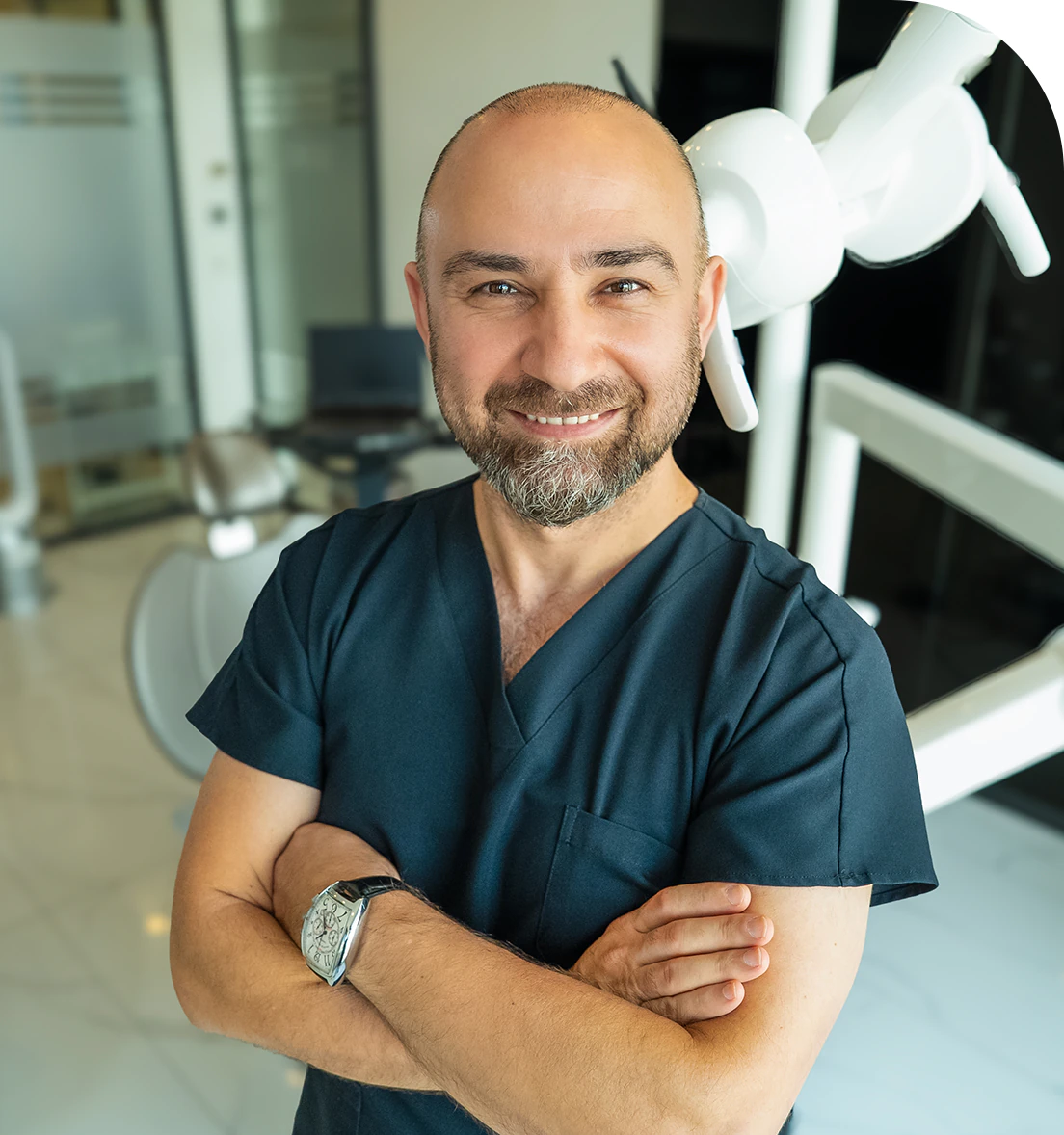
Dr. Dt. Ömer Atar provides care at his private clinic in Istanbul, combining his academic background and many years of clinical experience in dentistry. With a treatment approach that integrates aesthetic and functional solutions, he aims to achieve natural, balanced, and long-lasting results through personalized planning for each patient. Dr. Atar completed his education at the Marmara University Faculty of Dentistry, which he began in 1994, graduating in 2000. He continued his academic work in the Department of Prosthodontics at the same university. In 2007, he earned his PhD degree with his scientific thesis on implants and implant-supported prostheses in patients undergoing distraction osteogenesis. His academic expertise deepened in the fields of metal-free aesthetic systems, implant-supported prostheses, and cosmetic dentistry. Integrating modern technologies and digital dentistry into his practice, Dr. Ömer Atar achieves high success rates in treatments such as smile design, All-on-4/All-on-6 implant treatments, laminate veneers, zirconium crowns, teeth whitening, and gingival aesthetics (gummy smile). As a member of EDAD (Turkish Academy of Aesthetic Dentistry), he embraces a holistic approach focused on modern, functional, and natural outcomes in aesthetic dentistry.


