
 Türkçe
 Français
 Deutsch

Dental prosthesis in Turkey is a comprehensive restorative treatment designed to replace missing teeth and restore oral function and aesthetics. Procedures are performed by qualified prosthodontists using advanced digital planning and biocompatible materials to ensure durability, comfort, and natural appearance for both local and international patients.
Cost of dental prosthesis in Turkey is generally more affordable compared to many European countries, while maintaining high clinical standards. Pricing varies according to the type of prosthesis, material selection, laboratory techniques, and additional treatments such as implants or bone grafting required for optimal support.
Types of dental prosthesis available in Turkey include fixed crowns and bridges, removable partial or complete dentures, and implant-supported prostheses. Each option is selected based on oral health status, bone density, and patient expectations, with individualized treatment planning to achieve long-term functional stability.
Dental prosthesis procedure and recovery in Turkey involve detailed clinical examination, radiological imaging, tooth preparation or implant placement, and precise laboratory fabrication. Post-procedure adaptation is typically rapid, and regular follow-up visits are recommended to maintain oral hygiene, prosthesis integrity, and overall oral health.
| What You Should Know | Information |
| Definition | A dental prosthesis is an artificial replacement for missing natural teeth, restoring aesthetics, function (chewing, speaking), and oral health. They can be fixed or removable and may be supported by natural teeth or implants. |
| Purpose | – Replacing missing teeth – Restoring chewing and speech functions – Maintaining facial aesthetics – Preventing neighboring teeth from shifting |
| Who Can Benefit | – Individuals who have lost one or more teeth – Patients who have lost all teeth – Those with severe tooth substance loss – Individuals suitable or unsuitable for implant therapy |
| Types of Dental Prostheses | – Fixed Prostheses: Cemented to the tooth and cannot be removed by the patient. Includes crowns, bridges, zirconium and porcelain restorations. – Removable Prostheses: Can be taken in and out by the patient. Includes partial (with clasps), full (complete dentures), and precision attachment dentures. – Implant-Supported Prostheses: Fixed or removable prostheses made over implants placed in the jawbone. – Temporary Prostheses: Short-term solutions used until permanent prostheses are made. – Overdenture Prostheses: Supported removable prostheses seated over remaining tooth roots or implants. |
| Fixed Prosthesis Features | – Aesthetic and natural-looking – Cannot be removed by the patient – Crowns restore single teeth; bridges restore multiple missing teeth – Made of materials like zirconia and porcelain |
| Removable Prosthesis Features | – Can be inserted and removed – Attaches to existing teeth or tissues in the mouth – Economical and non-surgical solutions – Full dentures for completely edentulous mouths; partial dentures for partial loss |
| Implant-Supported Prosthesis Features | – May be fixed or removable – Provides chewing and speech function closest to natural teeth – Helps reduce bone loss – Offers high comfort and aesthetics |
| Advantages | – Restores aesthetic appearance – Improves chewing efficiency – Improves speech – Supports psychological confidence – Prevents collapse of facial structure |
| Care and Cleaning | – Fixed prostheses require regular brushing and interdental cleaning – Removable prostheses should be taken out daily and cleaned with special solutions – Oral tissue hygiene is as important as prosthesis cleaning |
| Long-Term Use | The lifespan of prostheses depends on the materials used, oral hygiene, chewing habits, and regular dental check-ups. It typically ranges from 5 to 15 years. |
| Alternatives | – Orthodontic treatment (for closing certain gaps) – Implant procedures (for those with sufficient bone structure) – Managing the transition period with temporary prostheses |
What Is a Dental Prosthesis?
A dental prosthesis is an artificial tooth used to replace missing teeth for aesthetic and functional purposes. There are various types such as fixed (bridges, crowns, implant-supported prostheses) or removable (full or partial dentures). It restores chewing function, improves speech, and provides an aesthetic appearance. Prostheses are custom-made in a laboratory and applied according to the dentist’s treatment plan.
What Is the Main Purpose of Dental Prosthetic Treatment?
Many patients associate the word “prosthesis” simply with “filling gaps.” However, for us as dentists, the process is much deeper and more comprehensive. The loss of a single tooth can trigger a series of problems in the mouth like a domino effect. The primary goal of dental prosthetic treatment is to replace losses that directly lower the patient’s quality of life. We are not just making an aesthetic touch; we are also restoring the biological functions of the mouth, the starting point of the digestive system.
The main objectives of this treatment include:
- Restoring chewing function
- Correcting speech disorders
- Improving aesthetic appearance
- Protecting jaw joint health
- Enhancing psychological confidence
Especially in cases of front tooth loss or deformity, we often observe that patients are hesitant to smile and cover their mouths with their hands in social situations. A properly planned dental prosthesis not only restores chewing function but also gives back a smile they can confidently see in the mirror. Additionally, loss of lip and cheek support due to missing teeth causes the face to appear older and sunken. Through prosthetics, we aim to support these soft tissues and provide our patients with a more dynamic and youthful facial expression.
How Are Dental Prostheses Categorized?
In clinical practice, the most fundamental classification of prostheses is based on whether the patient can insert and remove the prosthesis independently. This classification forms the backbone of treatment planning, as the patient’s comfort, daily habits, and oral hygiene routine are shaped entirely by it. According to the standards of the Turkish Dental Association and widely accepted prosthodontic principles, prostheses are grouped under two main categories:
- Fixed prostheses
- Removable prostheses
Fixed prostheses are restorations cemented by the dentist onto existing teeth or implants placed in the jawbone. The patient uses them just like natural teeth and cannot remove them. Removable prostheses, on the other hand, are devices that the patient can remove at will—especially during cleaning or at night—and are used in more extensive tooth loss. The choice of category is determined by evaluating several factors such as the patient’s bone structure, the number of remaining teeth, and economic considerations.
What Are Fixed Dental Prosthesis Applications?
Fixed prostheses are among the most preferred treatments by patients and offer the closest comfort to natural teeth. We typically use this method when there is significant tooth loss due to decay, trauma, or wear, or in cases of one or several missing teeth. The success of fixed prostheses directly depends on the health of the teeth or implants being used as support.
Types of fixed prostheses include:
- Single crowns
- Bridge prostheses
- Post-core applications
- Implant-supported fixed crowns
- Maryland bridges
A crown, commonly known as a “cap,” is a covering that encases the tooth and protects it from external factors. If the tooth root is intact but the upper part is too damaged for a filling, we can save the tooth using a special method called “post-core,” which takes support from the root canal. Bridges are systems where the teeth adjacent to a gap are reduced in size to act as abutments and the gap is filled with a pontic. Fixed prostheses provide chewing confidence and, since they do not move, patients psychologically adopt them as their own teeth.
What Materials Are Used for Dental Prostheses?
In dentistry, technology—especially in materials science—has undergone a revolution. In cases where meeting aesthetic expectations used to be difficult, we now achieve results indistinguishable from natural teeth. The choice of material depends on the area of the mouth (anterior or posterior), the patient’s chewing force, and aesthetic demands. In our clinic, we prefer materials approved by current literature and proven to be biologically compatible.
Commonly used materials include:
- Metal-supported porcelains
- Zirconia-based porcelains
- Monolithic zirconia
- Lithium disilicate (E-max) ceramics
- Leucite-reinforced glass ceramics
Metal-supported porcelains (PFM) are well-established materials known for their durability. However, the metal substructure prevents light transmission, which may result in a gray shadow at the gum line—making them less suitable for highly aesthetic anterior areas.
Zirconia, on the other hand, has revolutionized dentistry. While it has the strength of metal, it is white in color. It can withstand chewing pressure in posterior teeth and transmits light for a natural appearance. Full ceramics (like E-max) represent the pinnacle of aesthetics. They contain no metal or zirconia core and are made entirely from glass ceramics. Their light transmission is so high that it’s almost impossible to distinguish them from natural enamel. They are our first choice for aesthetic anterior restorations.
What Are the Types of Removable Dental Prostheses?
Removable prostheses are lifesaving in cases where fixed prosthetics are not possible due to extensive tooth loss or inadequate bone structure for implants. Although some patients are hesitant about the idea of “false teeth,” modern techniques have made removable prostheses highly functional and aesthetic. These are made from tissue-friendly acrylics and, when necessary, metal frameworks.
Types of removable prostheses include:
- Total dentures (full dentures)
- Partial dentures (removable partials)
- Immediate dentures (temporary)
- Overdentures (tooth-supported or implant-supported)
Total dentures are used when no teeth remain in the mouth and gain retention from the palate and saliva vacuum. Partial dentures are used when the patient still has some healthy teeth. These prostheses attach to the remaining teeth using metal clasps called “kroşes.” Although these clasps may have aesthetic disadvantages, they provide better stability by anchoring to support teeth. Immediate dentures are temporary prostheses inserted on the same day as tooth extraction to prevent the patient from being toothless during healing.
What Is a Snap-On (Precision Attachment) Denture and What Are Its Advantages?
One of the most common complaints from patients is the visibility of metal clasps in removable dentures when they smile. To address this aesthetic concern, we offer “precision attachment” or what is commonly known as “snap-on” dentures. These systems are a hybrid of fixed and removable prostheses and offer a highly sophisticated solution.
Features of precision attachment dentures include:
- Hidden retention mechanisms
- High aesthetic appeal
- Increased stability
- Clasp-free design
In these prostheses, instead of clasps, there are male and female components hidden on the sides of porcelain crowns placed over the teeth. When the prosthesis is inserted into the mouth, these components lock together (snap-on mechanism). No metal parts are visible from the outside, which provides an excellent aesthetic result. Furthermore, this locking mechanism offers a much firmer grip compared to traditional clasped prostheses; it doesn’t move in the mouth or make noise while speaking. However, these systems require precision craftsmanship and are slightly more expensive than conventional prostheses. Also, if the rubber components inside wear out over time, they may need to be replaced with a simple procedure.
How Is Implant-Supported Prosthetic Tooth Treatment Performed?
Dental implants are titanium screws in the shape of roots that have revolutionized the treatment of missing teeth. Implant treatment should not be seen as merely a surgical procedure; it is actually the process of creating a solid foundation for prosthetic teeth. Once the implants fuse with the bone (osseointegration), the prostheses placed on them provide a chewing sensation closest to natural teeth.
Implant-supported prosthetic options include:
- Single tooth implant crowns
- Implant-supported bridges
- Screw-retained hybrid prostheses
- Ball-retained overdentures
- Bar-retained removable dentures
Implant treatment allows us to restore missing teeth without touching the adjacent healthy ones. For example, in a case of a single missing tooth, placing an implant in the gap and covering it with a porcelain tooth is much more conservative than reducing adjacent healthy teeth to make a bridge. Additionally, in patients with no teeth at all, we can place 2 or 4 implants to enhance the retention of removable dentures (overdentures), allowing the prosthesis to be secured to the implants. This eliminates the fear of the prosthesis falling out while eating or speaking. Implant and prosthesis planning requires a multidisciplinary approach—both the surgeon and prosthodontist should evaluate the patient together.
Is It Possible to Have Fixed Prosthetic Teeth in Complete Edentulism?
Complete edentulism is both physically and psychologically challenging for our patients. Patients who have used removable dentures for years or are at the point of losing all their teeth often ask, “Can I have fixed teeth too?” Our answer: Yes, in most cases it is possible. Thanks to advanced surgical and prosthetic techniques like “All-on-4” and “All-on-6,” we can place fixed prostheses even in completely edentulous cases.
Advantages of these methods include:
- Comfort of fixed teeth
- Fewer implants required
- No need for advanced surgery
- Quick temporary tooth application
- Palate-free design
In the All-on-4 technique, 4 implants (or 6 in All-on-6) are placed strategically in the jawbone at specific angles. Especially in cases where there is significant bone loss in the posterior regions, implants are placed at an angle to avoid anatomical risks like nerve canals or sinus cavities. Temporary fixed teeth can be screwed onto these implants the same day or shortly after. This way, the patient doesn’t leave the clinic toothless. Once the healing process is complete, permanent porcelain or zirconia teeth are placed. These prostheses do not cover the palate, so the sense of taste remains unaffected, and their use is as comfortable as natural teeth.
What Are the Stages of Making a Dental Prosthesis?
Making a dental prosthesis is a process that requires patience and precision and is carried out in cooperation between the dentist and the patient. It’s never a “we took the impression today, let’s place it tomorrow” type of situation; every stage determines the success of the next. This journey usually takes a minimum of four sessions, during which we handle every detail meticulously.
Typical treatment stages include:
- Clinical and radiological examination
- Tooth preparation
- Precise impression taking
- Substructure (metal/zirconia) try-in
- Porcelain aesthetic try-in
- Cementation and delivery
- Follow-up appointments
In the first session, teeth are shaped (preparation) to receive the prosthesis, and precise impressions are taken to create the lab model. Shade selection is done together with the patient at this stage. In the next session, the framework forming the skeleton of the prosthesis is tried in the mouth and marginal fit is checked. The most exciting stage is the “aesthetic try-in,” where the teeth are very close to their final form but not yet polished. Together with the patient, we evaluate the tooth shape, smile line, and harmony with the face in the mirror. When the patient says, “Yes, this is it!” the prosthesis is sent for final finishing. In the final session, the polished prostheses are permanently cemented and cleaned.
What Should Be Considered During the Use of Dental Prostheses?
Finishing the treatment does not mean the process is over. In fact, the period after leaving the dental chair is what determines the lifespan of the prosthesis. I always tell my patients: “Just as neglect damages your natural teeth, it poses the same risk to your prostheses and supporting tissues.” While the prosthesis itself does not decay, gum disease or decay in supporting teeth can lead to prosthesis failure.
Important considerations include:
- Regular tooth brushing
- Use of interdental brushes
- Use of floss threaders under bridges
- Use of dental floss
- Use of oral irrigators
- Use of night guards
- Routine check-ups every six months
We especially recommend using special floss like “Superfloss” or oral irrigators to clean under bridge pontics. In implant-supported prostheses, the health of the gum tissue surrounding the implant is vital. Moreover, if the patient has a teeth grinding (bruxism) habit, wearing a night guard is essential to prevent porcelain fractures or excessive force on implants.
Prosthetic dental treatment is not just about replacing what’s missing; it’s about restoring the patient’s lost vitality. Whether it’s a single crown or a full arch implant restoration, prostheses made with accurate diagnosis, quality materials, and conscious care offer our patients the confidence to smile freely for years to come. Remember, every case is as unique as a fingerprint, and the best treatment plan will emerge from a detailed consultation with your dentist.
Before & After Photos


Frequently Asked Questions
In what situations are dental prostheses preferred?
Dental prosthetic treatment is preferred in cases of tooth loss, chewing difficulty, speech disorders, or aesthetic concerns. They replace missing teeth, restoring both function and appearance.
Who are fixed prosthetic teeth suitable for?
Fixed prostheses are generally suitable for cases where there are healthy teeth in front and behind the missing tooth or when used over implants. They cannot be removed by the patient and feel like natural teeth.
What is a removable dental prosthesis and who uses it?
Removable prostheses are suitable for patients with multiple missing teeth who are not candidates for fixed prostheses. They can be inserted and removed by the patient and are generally full or partial dentures.
How is an implant-supported prosthetic tooth made?
Fixed or removable prostheses are placed over titanium implants embedded in the jawbone. They offer a more stable and comfortable solution, restoring chewing function closest to natural teeth.
What is the purpose of a temporary prosthetic tooth?
Temporary teeth are used to prevent aesthetic and functional loss until the permanent prosthesis is ready. They are typically used after surgery or during the healing period.
How do prosthetic teeth look aesthetically?
Modern prostheses are designed to closely match the color and shape of natural teeth. Especially with porcelain and zirconia materials, an aesthetically pleasing and natural look is achieved.
How should dental prostheses be maintained?
Fixed prostheses should be brushed like natural teeth. Removable prostheses should be removed after every meal and cleaned with special brushes and cleaners. Regular check-ups should not be neglected.
How long does it take to get used to dental prostheses?
Speech and chewing habits may be affected in the first few days. However, most patients fully adapt to the prosthesis within a few weeks. Well-fitting prostheses speed up this process.
What is the lifespan of a dental prosthesis?
The lifespan varies between 5 and 15 years depending on the material used, maintenance quality, and oral structure. They may need to be replaced over time due to changes in the gums.
Do prosthetic teeth affect jaw structure?
Especially implant-supported prostheses help prevent jawbone loss. In removable prostheses, bone resorption may occur over time, reducing the prosthesis’ fit.
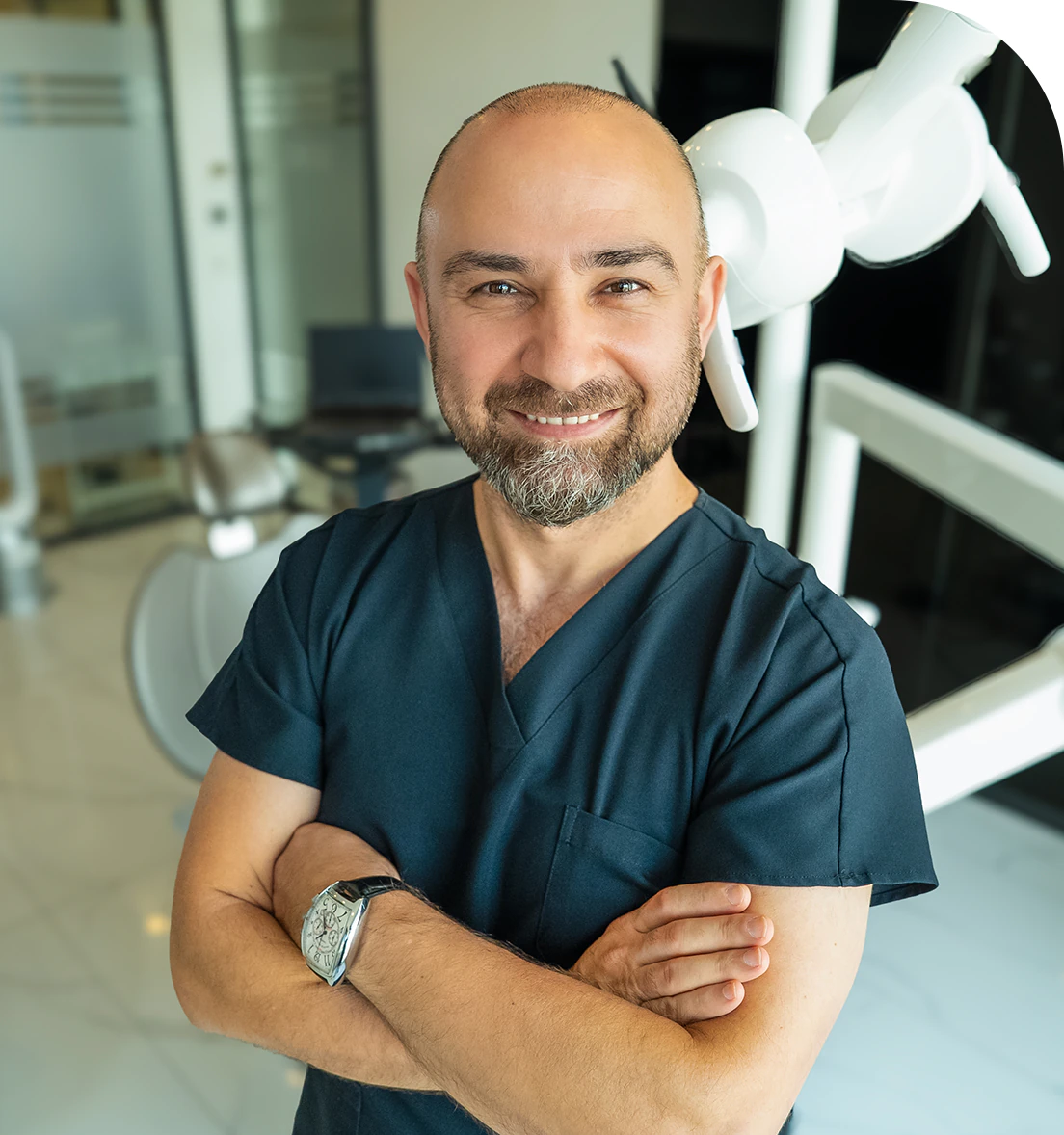
Dr. Dt. Ömer Atar provides care at his private clinic in Istanbul, combining his academic background and many years of clinical experience in dentistry. With a treatment approach that integrates aesthetic and functional solutions, he aims to achieve natural, balanced, and long-lasting results through personalized planning for each patient. Dr. Atar completed his education at the Marmara University Faculty of Dentistry, which he began in 1994, graduating in 2000. He continued his academic work in the Department of Prosthodontics at the same university. In 2007, he earned his PhD degree with his scientific thesis on implants and implant-supported prostheses in patients undergoing distraction osteogenesis. His academic expertise deepened in the fields of metal-free aesthetic systems, implant-supported prostheses, and cosmetic dentistry. Integrating modern technologies and digital dentistry into his practice, Dr. Ömer Atar achieves high success rates in treatments such as smile design, All-on-4/All-on-6 implant treatments, laminate veneers, zirconium crowns, teeth whitening, and gingival aesthetics (gummy smile). As a member of EDAD (Turkish Academy of Aesthetic Dentistry), he embraces a holistic approach focused on modern, functional, and natural outcomes in aesthetic dentistry.


