
 Türkçe
 Français
 Deutsch

Gum contouring—also known as gum reshaping or gingival sculpting—is a cosmetic dental procedure that adjusts the gumline to create a more balanced, symmetrical smile. Its popularity continues to grow worldwide as patients seek refined aesthetics and improved tooth proportions. Costs vary across countries based on the technique used (scalpel, laser, or advanced periodontal methods), the extent of reshaping, clinic reputation, and dentist expertise.
In the USA, gum contouring generally sits in a mid-to-high global price bracket, with average pricing around $400–$2,000 per tooth depending on complexity. Additional expenses may include consultations, digital smile planning, periodontal evaluations, and follow-up appointments. As with all cosmetic dental treatments, patients should research providers carefully, prioritize safety, and understand all cost components upfront.
How Much Is Gum Contouring in the USA?
Gum contouring in the USA typically costs $400–$2,000 per tooth, depending on whether laser or surgical reshaping is used, the dentist’s experience, and the extent of gum correction needed. Larger smile-line reshaping procedures covering multiple teeth naturally increase the total cost. Below are average city-specific price ranges:
- New York City: $500–$2,200 per tooth
- Los Angeles: $500–$2,100 per tooth
- Miami: $450–$1,900 per tooth
- Chicago: $450–$1,850 per tooth
- Houston: $400–$1,800 per tooth
Why do pink aesthetic costs vary so much?
Gum aesthetics, also known as “pink aesthetics” in society, is the art of achieving perfect harmony between the teeth (white aesthetics) and gums (pink aesthetics). The cost of this harmony varies depending on several factors.
You can think of it as having a custom-made dress tailored for you. Everyone’s body measurements, fabric preferences, and desired models are different. Similarly, in gum aesthetics, every patient’s oral structure, gum thickness, bone level, and aesthetic expectations are unique. In some cases, a millimetric touch is sufficient, while in others, more complex surgical interventions at the bone level may be necessary.
The main variables that affect the cost are:
- The type of procedure to be applied (for example, gum trimming or gum grafting)
- The extent of the area to be treated (a single tooth, several teeth, or the entire jaw)
- The technology used (laser, surgical scalpel, 3D planning)
- The degree of case complexity
- The number of sessions required for treatment
Therefore, a clear cost can only be determined after a detailed examination and smile analysis.
What are the main factors determining the cost of gummy smile treatment?
A gummy smile, that is, when the gums are excessively visible while smiling, is one of the most common aesthetic concerns. However, there is no single cause or treatment for this condition, so the cost also varies. The main factor determining the price is the diagnosis of the problem causing the gummy smile.
There may be different causes for a gummy smile, each requiring a different treatment cost.
- Excess Gum Tissue: This is when the soft tissue covers the teeth more than necessary. It is usually the simplest scenario.
- Vertical Excess of the Upper Jawbone: If the upper jawbone is vertically overgrown, the gums will be visible no matter how normal the lips are.
- Short or Hyperactive Upper Lip: If the upper lip is shorter than normal or pulls up too much while smiling (hyperactive muscle), the gums become visible.
- Small Tooth Dimensions: If the teeth are structurally small, the gums may appear disproportionately visible.
The scenarios that directly affect the treatment cost are as follows:
If the issue is only excessive gum tissue (Scenario 1), a “gingivectomy” (gum trimming) performed with a laser or scalpel is usually sufficient. This typically has a more predictable cost.
If the problem is caused by a hyperactive upper lip muscle (Scenario 3), lip Botox or surgical lip repositioning may be added to the treatment. Botox is a temporary solution and must be repeated regularly, whereas surgical repositioning is permanent and has a different cost structure.
If the problem originates from the jawbone (Scenario 2), the ideal solution may be a comprehensive jaw surgery called “orthognathic surgery.” This requires a much higher budget than gum aesthetics and involves a multidisciplinary approach.
Therefore, before discussing the cost of gummy smile treatment, the root cause must be determined through X-rays and detailed analysis.
How is the pricing of gingivectomy (gum shortening) done?
Gingivectomy is a surgical procedure to remove excess gum tissue to increase tooth visibility and create symmetrical gum levels. The pricing of this procedure is generally based on the “area” or “scope of the procedure,” not “per tooth.”
Key points in determining the cost include:
- Number of Teeth to Be Treated: This is the most important cost factor. There is a clear difference in time, effort, and materials between correcting the asymmetry of two front teeth and reshaping the entire upper smile line (usually 8–10 teeth).
- Technique Used: Whether the procedure is performed with a traditional surgical scalpel or with electrocautery or dental laser affects the price. The use of a laser generally increases the cost slightly due to equipment investment and the comfort it provides (less bleeding, faster healing).
- Purpose of the Procedure: Is it purely for aesthetic correction, or is it being performed to treat decay or create space for a crown (crown lengthening)? If the procedure is part of another restorative treatment, the cost is considered within the overall treatment plan.
- Gum Thickness: The thickness of the gums, known as the “biotype,” also matters. Thin gums require more delicate work, while thick gums are easier to shape but may sometimes require intervention on the underlying bone.
In this procedure, the cost generally includes the aesthetic reshaping of all teeth within the area for a harmonious smile. Calculating based on the price of a single tooth can be misleading, as the goal is to improve the entire smile line, not just one tooth.
Why do laser gum contouring prices differ from traditional methods?
Laser technology has provided great convenience in dentistry, including gum aesthetics. The cost of gum contouring performed with a laser (laser gingivectomy) usually differs from that of traditional scalpel (blade) methods.
There are fundamental reasons for this price difference:
Technological Investment:
Dental laser devices (such as Diode or Er:YAG) used to cut and shape the gums are high-cost technological investments. The amortization and maintenance costs of these devices naturally reflect on the procedure price.
Patient Comfort:
The greatest advantage of lasers is that they work with minimal or no tissue contact. The laser beam coagulates (seals) blood vessels while cutting the tissue. The comfort advantages reflected in the cost include:
- Almost no bleeding during the procedure
- Usually no need for stitches
- Much less pain and swelling after the procedure
- Faster and more comfortable healing
Precision and Sterilization:
Laser allows sub-millimeter precision and sterilizes the working area simultaneously, minimizing the risk of infection.
In the traditional method (scalpel), surgical tools, suture materials, and a longer healing process are involved. In contrast, the laser method bases its cost mainly on the comfort, speed, and precision it offers. Although the laser seems more expensive initially, the post-treatment comfort often balances this difference for the patient.
What determines the cost of gum recession treatment (graft)?
Gum recession, where the roots of the teeth become exposed, is not only an aesthetic issue but also a serious health concern that can lead to sensitivity and even tooth loss. Therefore, its treatment is more complex and typically more costly than gum trimming (gingivectomy). It is a “reconstructive” (regenerative) procedure.
The main factors determining the cost of gum recession treatment are:
- The degree and extent of the recession
- The number of teeth involved
- The type of graft (tissue) used
- The complexity of the surgical technique applied
- The additional biomaterials used (protein gels, membranes, etc.)
Since these microsurgical procedures aim to regenerate lost tissue and require advanced expertise and special materials, the costs are structured accordingly.
Which factors affect the cost of a free gingival graft (taking tissue from the palate)?
A free gingival graft is typically used to stop gum recession or to thicken soft tissue around implants. In this method, a thin layer of gum tissue is usually taken from the palate (donor site) and transplanted to the target area (recipient site).
Factors influencing the cost of this specific operation:
- Graft Size: The larger the tissue required, the higher the cost. The amount of tissue needed for a single tooth differs from that required for a 3–4 tooth area.
- Two Surgical Sites: This technique involves two surgical areas — the donor (palate) and the recipient (gum). Both areas need to be prepared, sutured, and followed up during healing. This means more time and effort compared to a single-site operation.
- Need for Palatal Protective Plate: Sometimes a custom protective plate (appliance) is made to cover the wound in the palate and improve healing comfort. This can be included in the cost.
- Complexity of the Operation: Fixing the tissue graft onto the recipient site with sutures requires micrometric precision and surgical skill.
Free gingival grafts are preferred to increase gum thickness, and their cost is directly related to the dual-surgery nature of the operation and the required level of precision.
Why is the cost of a connective tissue graft higher than other graft types?
A connective tissue graft is considered the gold standard for aesthetic treatments aimed at covering exposed tooth roots (“root coverage”). The main difference from a free gingival graft lies in the type of tissue harvested from the palate.
In a free graft, the outer layer of the palate is taken, while in a connective tissue graft, the outer surface is lifted like a “flap,” and the nourishing connective tissue underneath is harvested. The flap is then sutured back.
Reasons why this technique has a higher cost include:
- Higher Surgical Difficulty: Harvesting connective tissue from the palate is much more delicate than taking a free graft. It requires high expertise to remove the desired thickness without damaging major blood vessels.
- More Aesthetic Results: The results achieved with this method are far more natural in color and texture. Since the graft is placed under the gum (or through the tunnel technique), it does not appear as a “patch.” This aesthetic advantage is reflected in the cost.
- Faster Palatal Healing: Since no open wound is left on the palate, healing is much faster and more comfortable for the patient.
- Higher Success Rate: Because it provides “dual blood supply” (from both the underlying bone and overlying gum), it offers a much higher success rate, especially for root coverage.
Connective tissue grafts are more sophisticated, predictable, and aesthetically superior techniques in gum aesthetics, which is why they generally have a different cost range compared to other graft options.
How do ready-made grafts like Alloderm affect the cost?
In some cases, patients may not want tissue taken from their palate (to avoid a second surgical site), or a large graft area may be required (insufficient tissue from the palate). In such cases, “graft alternatives” are used.
These are biomaterials derived from human or animal sources, completely purified from any cells that could trigger an immune response, serving as a collagen-based “scaffold.”
The impact of these materials on cost is as follows:
- Material Cost: These are high-tech, sterile, commercially produced biomaterials. The larger the graft area, the higher the material cost. The price of this “ready-made” material is directly added to the total treatment cost.
- Reduced Surgical Time: Since the donor surgery (palate tissue harvesting) is eliminated, the overall procedure duration is shorter.
- Patient Comfort: With no wound in the palate, post-operative comfort is significantly higher.
In conclusion, when a ready-made material is used, the surgical cost of harvesting tissue from the palate is eliminated, but the price of the advanced biomaterial is added instead.
Why does crown lengthening include bone work and how does this affect the price?
At first glance, “crown lengthening” may seem like a gum trimming procedure (gingivectomy). In both, the goal is to make more of the tooth visible. However, the difference lies in the depth of the intervention, which fundamentally changes the cost.
- Gingivectomy: Involves cutting only the excess soft gum tissue.
- Crown Lengthening: Requires not only soft tissue removal but also surgical reshaping (reduction) of the surrounding bone tissue:
Why is this procedure more costly?
- More Extensive Surgery: This is a bone surgery. The gum is lifted as a “flap,” the bone underneath is accessed, reshaped using special instruments (burs, piezosurgery devices), and the gum is then sutured back in place.
- Longer Operation Time: Bone reshaping takes significantly more time and precision than trimming soft tissue alone.
- Requires Greater Expertise: This is an advanced surgical procedure usually performed by periodontists (gum disease and surgery specialists).
- Longer Healing Process: Since the bone is involved, healing takes longer compared to a simple gingivectomy, and stitches are required.
Crown lengthening is often needed in gummy smile treatments or when insufficient tooth structure remains for a crown (due to decay extending below the gum line). The complex and invasive nature of this procedure explains why its cost is higher than a standard gum contouring.
How are the prices of gum depigmentation (stain removal) calculated?
In some individuals, dark brown or black discolorations may appear on the gums due to melanin pigmentation. Although this is not a medical issue, it can affect smile aesthetics. The procedure to remove these pigments is called “depigmentation” or “gum peeling.”
The following criteria are considered when calculating the cost of this treatment:
- The extent of pigmentation (area)
- The method used (laser or surgical)
- The depth of pigmentation
- The number of sessions required
Gum depigmentation is generally a simpler and more affordable aesthetic procedure than other gum surgeries, but the final cost always depends on the size of the affected area.
What is the contribution of frenectomy (lip-tie) surgery to the total aesthetic cost?
The frenulum is a small muscular attachment connecting the lips and tongue to the gums (commonly known as the “lip-tie” or “tongue-tie”). Sometimes, these attachments can be thicker, shorter, or closer to the gums than normal.
This affects aesthetic costs in two ways:
- Direct Aesthetic Issue: If the upper lip frenulum is strong and extends between the two front teeth, it can create a gap known as “diastema.” If this gap is to be closed (via orthodontics or bonding), the frenulum must first be surgically removed (frenectomy).
- Indirect Aesthetic Issue (Gum Recession): In the lower jaw, a strong frenulum can pull the gum downward as the lip moves, causing localized gum recession.
The cost of a frenectomy (removal of this attachment) is usually not high, especially when performed with a laser — it’s a simple, suture-free procedure with fast healing.
However, its contribution to the cost is as follows:
If the frenectomy is performed as part of a gum recession treatment (graft surgery) or orthodontic therapy (braces), its cost is included within that overall treatment plan. In such cases, instead of a separate frenectomy fee, it becomes a component of a “gum recession treatment + frenectomy” or “orthodontic preparation” package.
How do the dentist’s expertise and experience affect pink aesthetic prices?
Gum aesthetics is one of the most delicate and artistic areas of dentistry. Procedures such as gum grafts, bone reshaping, and tunnel techniques fall under “microsurgery,” requiring precise millimetric work.
At this stage, the dentist’s expertise becomes one of the most important factors in pricing.
- Specialization (Periodontologist): Gum aesthetics is primarily handled by specialists in “Periodontology” (Gum Diseases and Surgery), who undergo additional postgraduate training. This gives them deep knowledge and skill in managing complex cases, applying microsurgical techniques, and handling possible complications.
- Experience and Aesthetic Vision: Thousands of hours of surgical experience refine a dentist’s aesthetic eye — knowing how much tissue to remove, how to achieve symmetry, and how to create the most natural result are skills developed over years.
- Continuous Education: Dentists who continually attend training programs to apply modern and effective techniques naturally bring added value to their patients.
When evaluating the cost of gum aesthetics, one should consider not only materials or procedures but also the expertise, artistry, and experience of the dentist. In complex aesthetic cases, the success and permanence of results provided by an experienced specialist are the main justifications for price differences.
Do clinic standards and technology use affect the total cost?
The cost of a gum aesthetic operation depends not only on the surgical procedure itself but also on the clinical environment in which it is performed.
- Location and Overheads: Clinics in large cities or central areas generally have higher operating costs than those in smaller towns.
- Sterilization and Hygiene Standards: Gum aesthetics is a surgical procedure and carries infection risks. Clinics that adhere to the highest sterilization protocols (high-tech autoclaves, extensive use of disposable materials) invest heavily in patient safety — an important cost factor.
- Quality of Materials Used: There are many types of graft materials, sutures, and biomaterials in the market. Choosing top-quality, scientifically proven A-grade materials naturally differs in cost from using more economical options.
- Technological Equipment: High-tech tools such as lasers, 3D intraoral scanners, digital smile design software, and piezosurgery units for bone operations contribute to the clinic’s overall cost structure.
What is the best way to learn the exact cost of gum aesthetics?
With so many variables involved, expecting a “gum aesthetics price list” is unfortunately unrealistic. The “estimated” prices seen online or in other sources usually reflect only the simplest scenarios and may not apply to your specific case.
The only way to obtain accurate, personalized cost information is through a detailed dental examination.
During this evaluation:
- The current condition, thickness, and type of your gums are assessed.
- Your smile is analyzed, and your aesthetic expectations are discussed.
- X-rays or 3D tomography may be taken to evaluate the bone level around your teeth.
- Problems such as gum recession, gummy smile, or asymmetry are diagnosed.
- Based on all this data, a customized “treatment plan” is created for you.
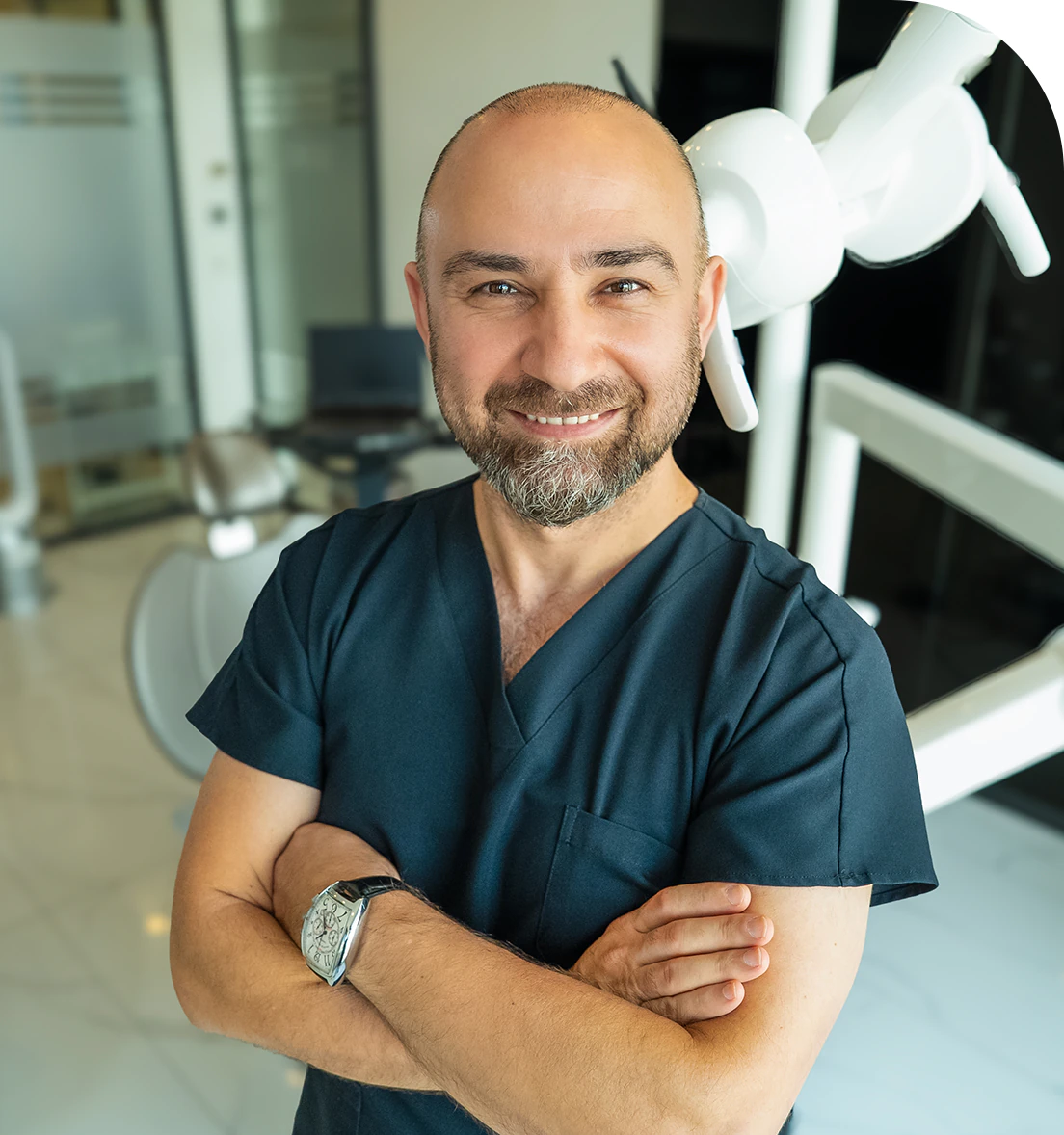
Dr. Dt. Ömer Atar provides care at his private clinic in Istanbul, combining his academic background and many years of clinical experience in dentistry. With a treatment approach that integrates aesthetic and functional solutions, he aims to achieve natural, balanced, and long-lasting results through personalized planning for each patient. Dr. Atar completed his education at the Marmara University Faculty of Dentistry, which he began in 1994, graduating in 2000. He continued his academic work in the Department of Prosthodontics at the same university. In 2007, he earned his PhD degree with his scientific thesis on implants and implant-supported prostheses in patients undergoing distraction osteogenesis. His academic expertise deepened in the fields of metal-free aesthetic systems, implant-supported prostheses, and cosmetic dentistry. Integrating modern technologies and digital dentistry into his practice, Dr. Ömer Atar achieves high success rates in treatments such as smile design, All-on-4/All-on-6 implant treatments, laminate veneers, zirconium crowns, teeth whitening, and gingival aesthetics (gummy smile). As a member of EDAD (Turkish Academy of Aesthetic Dentistry), he embraces a holistic approach focused on modern, functional, and natural outcomes in aesthetic dentistry.


