
 Türkçe
 Français
 Deutsch

Full mouth dental implants—often delivered as All-on-4, All-on-6, or full-arch implant systems—have become one of the most rapidly growing global treatment choices for patients seeking durable, fixed replacement of missing teeth. Costs for full mouth implants vary widely depending on the number of implants required, the materials used, the clinic’s technology, and the surgeon’s experience. Prices differ significantly from country to country, with Turkey standing out for offering comprehensive treatment packages at far more affordable rates compared to Western Europe and North America.
In Turkey, full mouth dental implant package deals typically range from €12,000–€20,000, although premium clinics, complex cases, or zirconia bridge upgrades may fall above this range. These prices usually include consultations, CBCT imaging, anesthesia, temporary teeth, final prosthetics, and follow-up appointments, but patients should always verify exact inclusions in advance to ensure safety and transparency.
What does full mouth restoration mean?
“Full mouth restoration” or “full mouth rehabilitation” is a comprehensive treatment approach that aims to solve all existing problems in the mouth as a whole, rather than addressing them one by one. These problems may include cavities, gum diseases, missing teeth, wear on existing teeth, bite disorders, and aesthetic concerns.
The aim is not merely to “extract the bad tooth and make a new one.” The goal is to restore the entire chewing system — that is, the teeth, gums, jawbone, and jaw joints — to a healthy, functional, and aesthetic balance.
Let’s think of it this way: a cavity in a single tooth can be solved with a small repair (filling). However, if there are multiple missing teeth in the mouth, widespread gum recession, advanced wear on the remaining teeth, and bite problems, fixing only one piece of the puzzle is not enough. It requires reassembling the entire puzzle correctly and solidly. This is what full mouth treatment is, and its cost reflects this comprehensive reconstruction.
How does the diagnostic process determine the total cost?
First of all, a detailed “roadmap” must be drawn up to understand the current situation. The cost of the treatment plan is shaped according to the needs identified at this initial diagnostic stage. Without an accurate diagnosis, it is not possible to talk about anything more than an estimated budget.
This diagnostic process is vital for the success of the treatment and generally includes the following methods:
- Panoramic X-ray
- 3D dental tomography (CBCT)
- Intraoral digital scanning
- Diagnostic models
- Professional photo and video recordings
For example, while a standard panoramic X-ray gives a general idea about the bones, 3D dental tomography (CBCT) provides a much more detailed analysis. Thanks to tomography, the thickness and density of the jawbone and the anatomical boundaries of the area where the implant will be placed (such as nerve canals or sinus cavities) can be seen millimetrically. Although the use of these detailed imaging methods affects the planning cost, it is the most important step that directly determines the safety and success rate of the treatment.
How do implants affect the cost in the treatment of missing teeth?
Dental implants are today’s most modern, long-lasting, and functional method for replacing missing teeth. Implants are titanium screws placed in the jawbone that take on the function of a natural tooth root.
The impact of implants on the cost of full mouth treatment depends on several main variables.
- Number of Implants: This is the simplest mathematical factor affecting the budget. For four missing teeth, four implants may be required; in cases of total edentulism, it is also possible to restore the entire jaw with 4 or 6 implants (All-on-4 / All-on-6). The number of implants needed directly determines the total surgical cost.
- Implant Brand and Quality: “Implant” is not a single standard product. In the market, there are “premium” brands with decades of scientific research (R&D) background, long-term clinical studies proving high success rates, and special surface technologies. These brands aim for faster and stronger integration with the bone (osseointegration). At the same time, there are more economical, less scientifically supported, or newer brands. The brand of the implant used, its surface properties, and long-term success are among the most important factors determining the cost.
- Suprastructure of the Implant (Abutment and Crown): An implant is not just the screw in the bone. On top of this screw comes an intermediate part called the “abutment,” and at the very top comes the “crown” (the visible tooth part). The material (zirconia, titanium, etc.) and quality of this suprastructure are also included in the cost.
Why does the budget change in cases of bone deficiency?
This is one of the most critical and often overlooked “infrastructure” factors affecting the cost in full mouth treatment. For an implant to be successful, it must be completely surrounded by healthy jawbone of sufficient volume (that is, sufficient height and thickness).
However, if teeth were extracted a long time ago, the bone in that area resorbs over time (undergoes atrophy). Similarly, severe gum disease or infection also leads to bone loss.
If the bone is insufficient, additional surgical methods are required to increase the bone volume in that area before or during the placement of the implant. These situations increase the cost because they are advanced surgical procedures performed in addition to standard implant surgery.
The most frequently applied bone augmentation methods are:
- Bone graft (Bone powder application)
- Sinus lifting (Elevation of the sinus floor)
- Block bone transfer (Taking bone from another area)
- Guided tissue regeneration (Use of membrane)
For example, “Sinus Lifting” is a procedure in the posterior regions of the upper jaw that surgically elevates the sagged sinus cavity and places bone powder in that area. These additional procedures significantly increase the total treatment budget, as they require extra materials (graft, membrane), extra surgical time, and a high level of expertise.
What is the impact of crowns and bridges on damaged teeth on the price?
In full mouth restoration, the aim is not only to fill in missing teeth but also to protect existing but damaged teeth. A crown (cap) is like a “helmet” that completely covers a severely damaged tooth (for example, one that has undergone root canal treatment or has a large filling) and protects it from breaking. A bridge is a fixed prosthesis that fills one or more missing teeth by taking support from neighboring teeth (by covering them).
The main factor that changes the cost of these restorations is the type of material used.
In a full mouth treatment that includes crowning all teeth in the mouth (for example, 28 teeth), the choice of material will multiply the total budget. The main materials used are:
- Porcelain fused to metal
- Zirconia (Monolithic or porcelain-veneered)
- All-ceramic (E-max or Empress)
Porcelain fused to metal has a gray metal alloy in its substructure and is covered with porcelain on the outside. It is very durable and has been used for many years. However, due to the metal inside, its light transmission is not like a natural tooth; it offers a more matte (opaque) appearance and may create a dark reflection at the gum line over time.
Zirconia, on the other hand, is a white, extremely durable ceramic substructure. Its light transmission is much better than metal, it provides excellent harmony with the gums, and is ideal for those with metal allergies. It is preferred when both aesthetics and durability are required (including posterior teeth).
All-ceramic materials (such as E-max) are used to meet the highest aesthetic expectations. They do not contain a metal or zirconia substructure. Their light reflection and absorption properties are identical to natural tooth enamel. Therefore, they are preferred especially in the anterior teeth and in smile design. However, their production processes and laboratory workmanship are more delicate.
How do methods to save existing teeth (fillings and root canal treatment) determine the cost?
In full mouth restoration, the “infrastructure” of the teeth on which an expensive crown or bridge will be made must be perfect. When restoring a house with a collapsed roof, you cannot just repair the roof and ignore the cracks in the foundation.
Before starting treatment, it is essential to clean all cavities in the existing teeth.
- Fillings: If the cavity is superficial, the lost tissue of the tooth is completed with a simple aesthetic filling.
- Root Canal Treatment (Endodontics): If the cavity has progressed to the tooth’s nerve (pulp), or if there is a risk of exposing the nerve during the reduction process required for crowning, that tooth must first undergo root canal treatment. Otherwise, a severe abscess may develop under that beautiful crown months later.
- Post-Core (Pivot): If the upper part of the tooth (crown) is largely broken, a filling alone is not sufficient. A rod called a “post” (fiber or metal) is placed into the root that has undergone root canal treatment to strengthen the tooth’s infrastructure.
In the planning stage, how many teeth require fillings, how many require root canal treatment, and how many require post-core is an important item that determines the total budget.
What is the role of gum treatment (periodontology) in the overall price?
The gum is the “soil” around the teeth and implants. If this soil is not healthy — that is, if there is active gum disease (periodontitis) — even if you place the world’s best implant or zirconia crown, that structure is destined to loosen and fall out.
Before starting a major treatment such as full mouth restoration, it is absolutely necessary to optimize gum health. The cost of treatment varies according to the level of existing gum disease.
The gum treatment methods that may be required are:
- Scaling (Basic tartar cleaning)
- Subgingival curettage (Root surface planing or deep cleaning)
- Laser gum treatment
- Flap surgery (Surgical intervention for advanced cases)
A simple tartar cleaning is a basic start. However, if the disease has progressed and there are deep pockets and calculus under the gums on the root surfaces, surgical methods such as “curettage” or, in more advanced cases, “flap surgery” may be necessary. These procedures are separate specialized methods that directly affect the duration and cost of the treatment.
Why does “smile design” planning increase the cost?
“Smile design” is not just covering the teeth; it is in itself a method of engineering, planning, and art. Smile design is a digital planning process in which dozens of factors such as a person’s facial features, lip structure, how much gum is visible during smiling (pink aesthetics), and the size, shape, and color of the teeth are evaluated together.
In this method, unlike a standard crown procedure, the following steps are applied:
- Professional photo and video analysis
- Digital design (DSD – Digital Smile Design)
- Mock-up (Temporary try-in)
- Pink aesthetics (Gum level adjustment)
Using special software, how the teeth will look when finished is designed on the computer screen. This design can be applied to the mouth with a temporary material called a “mock-up” (without touching the teeth yet). In this way, the person can see at the very beginning what kind of smile they will have when the treatment is finished. If too much gum shows when smiling (gummy smile), the gum levels (pink aesthetics) are rearranged with a laser. This detailed digital planning, try-in sessions, and artistic work increase the cost compared to a standard treatment because they require more time and expertise.
Why is the cost of laminate veneers different?
Laminate veneer (laminate porcelain) is a highly aesthetic method used especially in smile design. These are very thin porcelain shells, the thickness of a fingernail (about 0.3–0.7 mm). They are bonded to only the front surface of the tooth with minimal preparation or sometimes without any preparation (no-prep) using special techniques.
The cost of laminate application is different from that of a traditional zirconia crown.
- Precise Laboratory Process: Producing such a thin porcelain and giving it the depth, translucency, and color transitions of a natural tooth requires exceptional laboratory craftsmanship and expertise (master technician work).
- Precise Bonding: The process of bonding laminates to the tooth is much more sensitive, moisture-dependent, and technically demanding than crowns. It requires perfect isolation and takes longer.
For these reasons, although laminates are among the most conservative (minimal preparation) and most aesthetic methods, their sensitivity and production difficulties place them in a different cost category.
How do “All-on-Four” or “All-on-Six” determine the price in full-arch restoration?
In cases of total edentulism (no teeth in the mouth), it is not necessary to place 12–14 implants to replace 12–14 missing teeth. The “All-on-4” or “All-on-6” concepts are special methods developed for this situation.
In this technique, 4 or 6 implants placed at strategic angles are used to restore an entire jaw (lower or upper). A fixed temporary prosthesis containing a full dental arch is screwed onto these implants the same day or within a few days. After the healing process is completed, this prosthesis is replaced with a permanent one (hybrid, zirconia, etc.).
This method completely changes the cost calculation. The cost is no longer calculated as (number of implants + number of crowns) but as (4 or 6 implants + a specially designed full-arch fixed prosthesis). The material used to make the prosthesis (titanium bar with acrylic, zirconia, etc.) becomes the main factor determining the total budget.
How do the digital technologies and equipment used affect the budget?
The technology used in dentistry directly affects the quality, speed, comfort, and cost of the treatment. Clinics that have invested in high technology offer more predictable and precise results.
The technological methods reflected in treatment costs are:
- Surgical guides
- CAD/CAM systems (In-clinic digital production)
- Laser devices (Gum shaping, surgery)
- Intraoral scanners (Digital impressions without gag reflex)
- Digital anesthesia (Painless injection)
For example, by combining 3D tomography and intraoral scanning data, personalized “surgical guide plates” that show where, at what angle, and at what depth the implant will be placed in the jawbone can be produced with 3D printers. Thanks to this guide, the implant surgery can be performed much faster and more safely without a “flap” (cutting and opening the gum). This precise planning and production technology is part of the total cost of the treatment.
Why do the dentist’s expertise and the dental technician’s experience change the price?
Full mouth restoration is generally not a process carried out by a single dentist alone. A successful outcome requires the harmony of an “orchestra” in which different specialties work together.
This team generally includes the following specialists:
- Oral and maxillofacial surgeon (Performs implants and bone operations)
- Prosthodontist (Plans and performs the entire suprastructure)
- Periodontist (Treats gum diseases)
- Endodontist (Performs root canal treatments)
The complexity of a case determines how much these specialists will be involved. There will naturally be a cost difference between the service provided by a team that has dedicated years to this field and gained experience in complex cases and a team with less experience.
There is also the “kitchen” side of the work: the Dental Technician. How natural, aesthetic, and functional the crowns, laminates, or prostheses will be depends largely on the skill of the technician in the dental laboratory. Especially in anterior tooth restorations that require high aesthetics, there is an artistic craftsmanship that requires a “master technician.” This manual labor and artistry are very important factors reflected in the cost.
So, how does a clear treatment plan and budget emerge?
As can be seen, there is no fixed answer to the question of “full mouth dental treatment price.” The budget depends on dozens of variables, from how many implants are needed, to whether bone powder is required for these implants, to whether the crowns to be made will be zirconia or all-ceramic, to how many root canal treatments are needed for the teeth to be saved, and to the level of technology and expertise with which this entire process is managed.
The only way to determine a clear cost is to perform a detailed intraoral examination, digital scanning, and 3D tomography analysis. Only after this analysis can a personalized “treatment plan” be created.
This plan generally includes the following steps:
- Emergency treatments first (Caries, root canal, gums)
- Then surgery (Implant, bone graft)
- Healing process (Temporary prostheses)
- Finally prosthetics and aesthetics (Crown, laminate)
The total budget is the sum of all these steps and methods included in this personalized treatment plan. This is not a procedure done overnight; it is a comprehensive and long-term investment in oral health, function, and aesthetics.
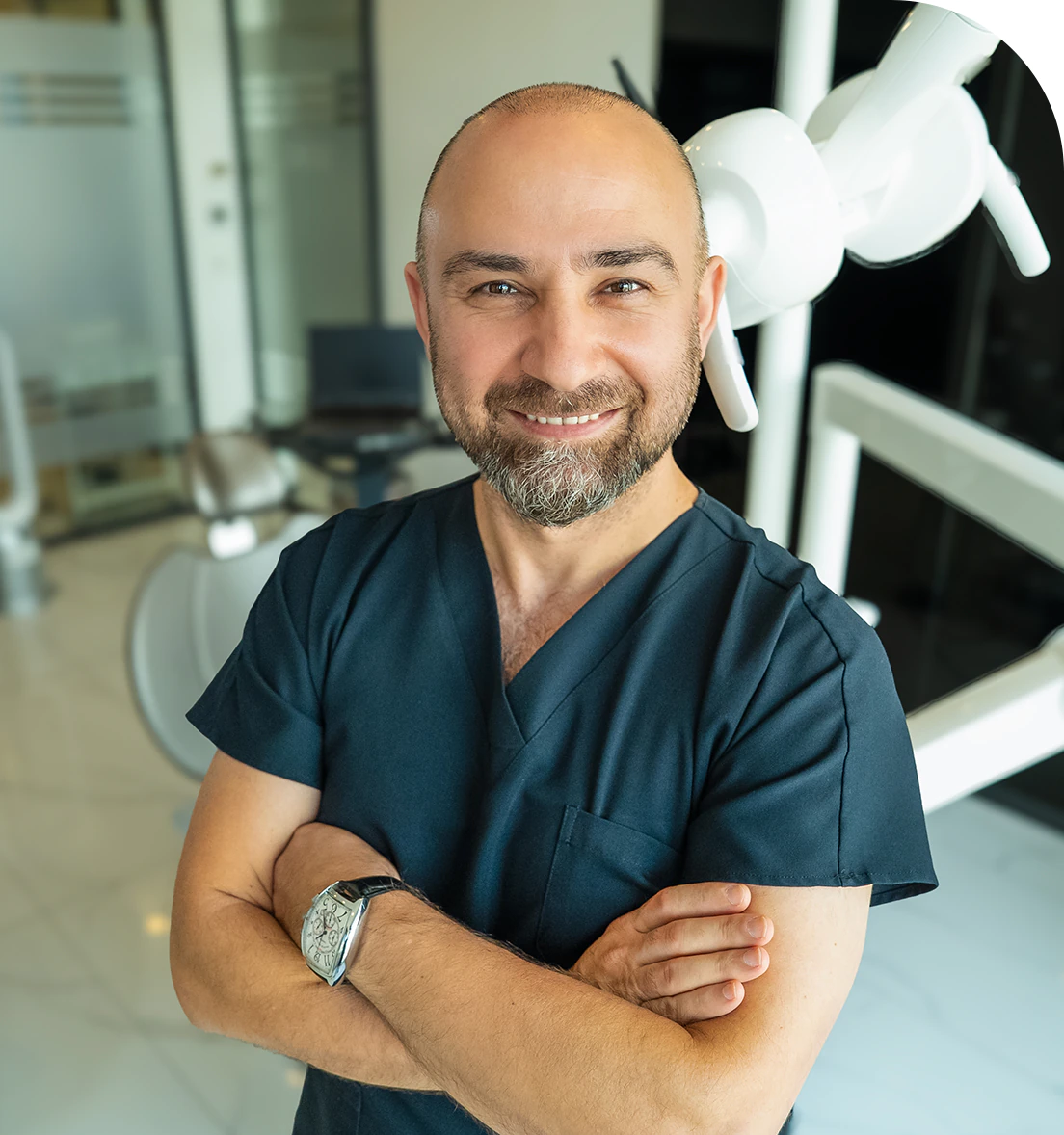
Dr. Dt. Ömer Atar provides care at his private clinic in Istanbul, combining his academic background and many years of clinical experience in dentistry. With a treatment approach that integrates aesthetic and functional solutions, he aims to achieve natural, balanced, and long-lasting results through personalized planning for each patient. Dr. Atar completed his education at the Marmara University Faculty of Dentistry, which he began in 1994, graduating in 2000. He continued his academic work in the Department of Prosthodontics at the same university. In 2007, he earned his PhD degree with his scientific thesis on implants and implant-supported prostheses in patients undergoing distraction osteogenesis. His academic expertise deepened in the fields of metal-free aesthetic systems, implant-supported prostheses, and cosmetic dentistry. Integrating modern technologies and digital dentistry into his practice, Dr. Ömer Atar achieves high success rates in treatments such as smile design, All-on-4/All-on-6 implant treatments, laminate veneers, zirconium crowns, teeth whitening, and gingival aesthetics (gummy smile). As a member of EDAD (Turkish Academy of Aesthetic Dentistry), he embraces a holistic approach focused on modern, functional, and natural outcomes in aesthetic dentistry.


