
 Türkçe
 Français
 Deutsch

Dental implants are a widely sought-after solution for restoring missing teeth, offering natural aesthetics, durability, and long-term oral health benefits. As demand continues to rise globally, prices vary significantly depending on the country, clinic reputation, technology used, and the experience of the implant surgeon.
In the UK, the typical cost for a single dental implant generally ranges between £4,000–£6,000, reflecting factors such as geographic location, implant brand, and complexity of the case. Additional expenses—including consultations, anesthesia or sedation, 3D imaging, bone grafting when required, and follow-up appointments—may increase the total price. Patients should always prioritize safety, accreditation, and clinical expertise when comparing options.
How Much Are Dental Implants in the UK?
The average cost of a single dental implant in the UK is typically £4,000–£6,000, depending on the clinic, surgeon’s qualifications, and whether additional procedures such as sinus lifts or bone grafts are required. Prices tend to be higher in major metropolitan areas, especially when treated by highly experienced implantologists or in facilities offering premium implant systems. Complex or full-arch cases (such as All-on-4/6) can cost substantially more. Fees generally include the implant placement, abutment, and crown, but it is important to confirm whether consultations, imaging, sedation, and aftercare are included in the quoted price. Dental implants are usually not covered by NHS funding unless there is an exceptional medical indication. Typical average costs in major cities include:
- London: £4,500–£6,500
- Manchester: £4,000–£6,000
- Birmingham: £3,800–£5,800
Why do dental implant costs vary so much from person to person?
It is not correct to think of dental implant treatment as a standard product purchased from a store. This treatment is a “personalized” medical procedure specifically planned according to each individual’s oral structure, bone condition, and needs. Just as every patient’s fingerprint is different, so are the structure and density of the jawbone, the condition of the gums, and the aesthetic expectations.
While one patient’s bone structure may be ideal for implant placement, another may have bone resorption (loss) in the area where a tooth was extracted years ago. In this second case, the bone volume must first be increased to a sufficient level before the implant can be placed. Similarly, one patient may be missing only a single tooth, while another may be completely edentulous.
For this reason, there is no clear answer to the question “How much does an implant cost?” The treatment cost can only be determined after a detailed examination, X-rays, and tomography scans once the patient’s needs are identified. Planning is vital for the success of the treatment, and the cost is shaped according to this personalized plan.
How do the brand and quality of the implant affect the price?
There are many different implant brands on the market, and there are significant differences in both quality and cost among these brands. An implant is a biomedical product placed inside the body that is expected to integrate with the bone (osseointegration). The quality of this product directly affects the long-term success of the treatment.
Well-established and internationally recognized implant brands allocate large budgets to extensive scientific research and R&D (Research and Development) activities behind their products. These companies continuously invest to improve the surface properties (for faster and stronger bone integration), design, and durability of the implants. The purity level of the titanium used, the way the surface is treated (roughening, special coatings), and the precision of the connection between the implant and the prosthetic component (abutment) determine the implant’s quality.
Brands whose success has been scientifically proven and supported by long-term follow-up studies naturally come at a higher cost. Lower-cost or unknown-origin implants may lack such comprehensive R&D support and clinical studies. This may lead to problems in bone integration (implant failure) or long-term technical complications (fracture, loosening). Therefore, choosing an implant brand is not merely a “brand preference” but an investment in the success and longevity of the treatment.
What are the main components that determine the implant price?
When calculating the total cost of an implant treatment, there are several key elements that are often overlooked but included in the overall price. The cost of treatment is not limited to the screw placed into the bone. The main cost components are:
- Implant screw (Titanium root part)
- Healing cap
- Abutment (the connecting part between implant and prosthesis)
- Implant-supported prosthesis (the visible tooth part)
- Surgical application fee
- Dental laboratory fees
- Necessary auxiliary consumables
How do the experience and expertise of the dentist reflect on the total cost?
Implant treatment is fundamentally a surgical procedure. The knowledge, education, and experience of the dentist performing this procedure are among the most important factors affecting both the success and the cost of the treatment. Implant surgery requires a deep understanding of jaw anatomy (the location of nerves, blood vessels, and sinus cavities).
A maxillofacial surgeon or periodontist (a specialist in gum diseases and surgery) who has received specialized training in implant surgery will approach the procedure differently than a less experienced practitioner. An experienced surgeon has the foresight to place the implant at the most ideal angle, depth, and position within the bone. This precise positioning is critical for ensuring the implant integrates smoothly with the bone and that the prosthesis placed on top achieves perfect aesthetic and functional results.
Expertise and experience become even more crucial in complex cases (bone deficiency, proximity to sinus areas). An experienced dentist can identify potential risks in advance, minimize complications, and handle any issues correctly if they arise. The specialist’s expertise, continuous training, and accumulated knowledge over the years are naturally reflected in the cost of the treatment. This is essentially the price paid for the safety and success rate of the procedure.
Do advanced technologies used in implant treatment increase the cost?
Yes, advanced technologies used in modern dentistry are among the important factors affecting the cost of implant treatment. These technologies make the procedure safer, faster, and more successful.
In the past, implant planning was mostly done using 2D panoramic X-rays. However, these images only show the height and width of the bone but do not provide precise information about its thickness (depth). Today, 3D Dental Tomography (CBCT) has become the standard. CBCT provides the dentist with a three-dimensional model of the jawbone. This allows precise visualization of bone density, nerve channels, and sinus cavities with millimetric accuracy.
These 3D data are transferred to specialized computer software, and implants are virtually placed in the ideal positions. Based on this plan, special plates called Surgical Guides are produced with 3D printers. During surgery, this guide is fitted onto the patient’s jaw, and the implant is placed into the bone through the guide’s sleeves at the pre-planned perfect angle and depth.
This approach (guided surgery) shortens the operation time, may eliminate the need for sutures (flapless surgery), minimizes the margin of error, and accelerates recovery. Naturally, the investment in CBCT devices, specialized planning software, and 3D printers increases the total treatment cost compared to a non-technological approach. However, the safety and comfort provided justify this difference.
Modern devices used in the planning and application of treatment increase the success rate but come with an investment cost. Examples of these technologies include:
- 3D Dental Tomography (CBCT)
- Intraoral digital scanners
- Computer-aided design (CAD/CAM)
- Surgical guide production
- 3D printers
Why is the condition of your jawbone so important for the total implant cost?
The success of an implant depends directly on the quality and volume of the jawbone, which can be considered its “foundation.” For an implant to withstand chewing forces, it must be surrounded on all sides by sufficient amounts of healthy bone tissue of adequate thickness and density.
However, when a tooth is extracted or lost long ago, the jawbone in that area loses its function and gradually begins to resorb (atrophy). Bone loss occurs both horizontally (width) and vertically (height). In addition, long-term gum diseases (periodontitis) can also cause bone loss.
If detailed examination and tomography show that there is insufficient bone in the area where the implant will be placed, the implant cannot be inserted. First, the bone volume in that area must be restored to an ideal level. This requires additional surgical procedures, and the cost of these procedures—both material and labor—increases the total treatment cost. The more ideal the bone condition, the simpler and more predictable the treatment becomes. The less sufficient the bone, the more complex and costly the treatment.
Which additional surgical procedures can increase the cost of an implant?
In cases where the jawbone does not have the ideal volume, certain additional procedures may be necessary before or simultaneously with the placement of the implant screw. These procedures are not included in the standard implant surgery cost and increase the total price. The most common of these are:
- Sinus lifting (Sinus floor elevation)
- Bone grafting (Bone powder application)
- Block graft (For major bone losses)
- Soft tissue graft (Gum thickening)
Why are “sinus lifting” or “bone grafting” (graft) procedures considered additional cost items?
In cases where the jawbone is insufficient, additional surgical procedures are required as part of the implant treatment. These procedures aim to “create new bone” in the area where the implant will be placed and are separate cost items from standard implant surgery.
- Bone Graft (Bone Powder Application):
It is used especially when the width of the bone (crest thickness) is insufficient. In this procedure, special materials called “bone grafts” (bone powders) are placed in the deficient area and covered with a protective membrane. These graft materials act as a “scaffold” for the body’s own bone cells to migrate into the area, allowing the formation of new bone tissue. The bone grafts used can be of different origins (human, animal, or synthetic), and each of these materials has its own cost. Additionally, the procedure requires extra surgical skill and an additional session.
- Sinus Lifting (Sinus Elevation Procedure):
This procedure is applied in the posterior regions of the upper jaw (molar area) where bone deficiency is common. Just above the roots of our upper molars are anatomical air cavities called the “maxillary sinuses.” When teeth are extracted, these sinuses tend to drop downward, reducing the vertical bone height needed for implant placement.
During a sinus lifting surgery, the membrane forming the floor of the sinus (sinus membrane) is gently lifted upward. The newly created space is then filled with bone graft material. This creates the necessary vertical bone height for the implant to be placed. This is an extremely delicate, advanced surgical technique that requires specialized instruments and expertise. The complexity of the procedure and the amount of graft material used make this a significant factor increasing the total treatment cost.
How is the price of the prosthetic tooth placed on the implant determined?
Implant treatment consists of two main stages: the surgical stage (placement of the implant into the bone) and the prosthetic stage (the attachment of the tooth onto the implant). A large portion of the total cost comes from this prosthetic stage. The main factor affecting the price is the material from which the “tooth” (crown or bridge) placed on the implant is made.
The main materials used in implant-supported prosthetics are:
Metal-Ceramic (PFM – Porcelain Fused to Metal):
This is a traditional method. The base of the prosthesis is made from a metal alloy (usually chrome-cobalt or nickel-chrome) and is coated with porcelain. It is durable and functionally successful. However, it has some aesthetic disadvantages; because the metal base does not transmit light, achieving natural tooth translucency is difficult, and over time, a gray line may appear near the gum line due to metal reflection. It is generally a more economical option.
Zirconia-Supported Porcelain or Monolithic Zirconia:
Zirconia is a white, highly durable, and biocompatible (tissue-friendly) ceramic material that replaces metal. Since it contains no metal, its light transmission is very close to that of a natural tooth, offering excellent aesthetic results. Its compatibility with gums is also excellent, and it never causes a gray reflection. Monolithic zirconia refers to crowns milled entirely from a single zirconia block (using CAD/CAM technology), often preferred in posterior regions where chewing forces are high. Both the material cost of zirconia and the digital technologies required to process it (CAD/CAM systems, sintering furnaces) are higher.
Full Ceramic (E-Max, etc.):
This is preferred especially for front teeth where aesthetics are the top priority. It provides the highest level of light transmission and natural appearance.
In addition, the type of intermediate component called the “abutment,” which connects the implant and the prosthesis, also affects the cost. Instead of standard (prefabricated) abutments, a “custom abutment” designed with CAD/CAM technology to match the patient’s gum contour can be used. This improves aesthetics and long-term gum health but slightly increases the cost.
The material of the crown—the visible “tooth” part placed on the implant—directly determines both aesthetics and cost. The main options are:
- Metal-supported porcelain (PFM)
- Zirconia-supported porcelain
- Monolithic zirconia (Full zirconia)
- Full ceramic (such as E-max)
How does the number of implants you need affect the total price?
One of the most basic mathematical factors in determining the total cost is how many implant screws are needed to replace the missing teeth.
- Single Tooth Missing:
This is the simplest scenario. For a single missing tooth (if the adjacent teeth are healthy), one implant and one crown (tooth cap) are needed. The cost is calculated based on 1 implant + 1 abutment + 1 crown.
- Multiple Missing Teeth (Implant-Supported Bridge):
When three or four adjacent teeth are missing, it is not necessary (and sometimes not advisable) to place one implant for each missing tooth. For example, for three missing teeth, two implants (one at each end) can be placed, and a three-unit bridge prosthesis can be attached to them. This scenario offers a more economical solution than placing three separate implants and three separate crowns. The plan depends on the location of the missing teeth and the condition of the jawbone.
- Full Edentulism (All-on-Four / All-on-Six):
In cases where all teeth in one jaw are lost, it is not possible to place an implant for every tooth (12–14 teeth). Instead, special treatment concepts called “All-on-Four” or “All-on-Six” are applied.
- All-on-Four Method: In this technique, only four implants are strategically placed in the strongest areas of the jaw. On the same day or within a few days, a fixed temporary prosthesis (containing all the teeth) is screwed onto these four implants. The patient can leave the clinic with fixed teeth the same day.
- All-on-Six Method: A similar concept, but instead of four, six implants are used to distribute chewing forces more evenly and provide greater support.
These full-arch restorations may seem more expensive than a single implant, but they are actually the most efficient and cost-optimized method for restoring an entire jaw with fixed teeth. These treatments require a high level of surgical and prosthetic planning and expertise.
Does the location of the clinic affect the cost?
Yes, the geographical location where the treatment is performed has an undeniable impact on the total cost. The general operating expenses of a clinic are inevitably reflected in the prices of the services it offers.
A clinic located in a major metropolitan area (such as Istanbul, Ankara, or Izmir) will have significantly higher rent, staff salaries, taxes, and operational expenses compared to a clinic in a smaller city or town.
Additionally, competition between clinics, the general cost of living in the area, and the pricing policies of local dental laboratories vary by location. For instance, dental laboratories in major cities often invest more in the latest digital technologies (CAD/CAM, 3D printing), which also affects prosthesis costs. Therefore, even with the same materials and expertise, differences in implant treatment prices between cities—or even between neighborhoods within the same city—are normal.
Can a low-cost implant treatment end up being more expensive in the long run?
Implant treatment should be seen not as an “expense” but as a long-term “investment” in quality of life. Considering only the initial cost when deciding on treatment can lead to much bigger problems and expenses in the future.
A low-cost implant treatment usually involves certain compromises: using a lower-quality implant brand with insufficient scientific support, avoiding advanced technologies (such as 3D tomography or surgical guides), choosing cheaper materials during the prosthetic stage (which may have lower aesthetics and biocompatibility), or having the procedure performed by a less experienced dentist.
These factors increase the risk of treatment failure. What does a failed implant treatment mean?
- Failure of osseointegration (implant not fusing with the bone).
- Development of infection (peri-implantitis) and bone loss around the implant.
- Poor positioning resulting in unsatisfactory aesthetics or function of the prosthesis.
- Fracture of the implant or the prosthesis on top.
In such cases, the failed implant must be surgically removed. This procedure usually damages the surrounding bone. To restore the lost bone (if possible), much more extensive bone grafting operations are required. After these long and complex healing processes, a new implant can be placed.
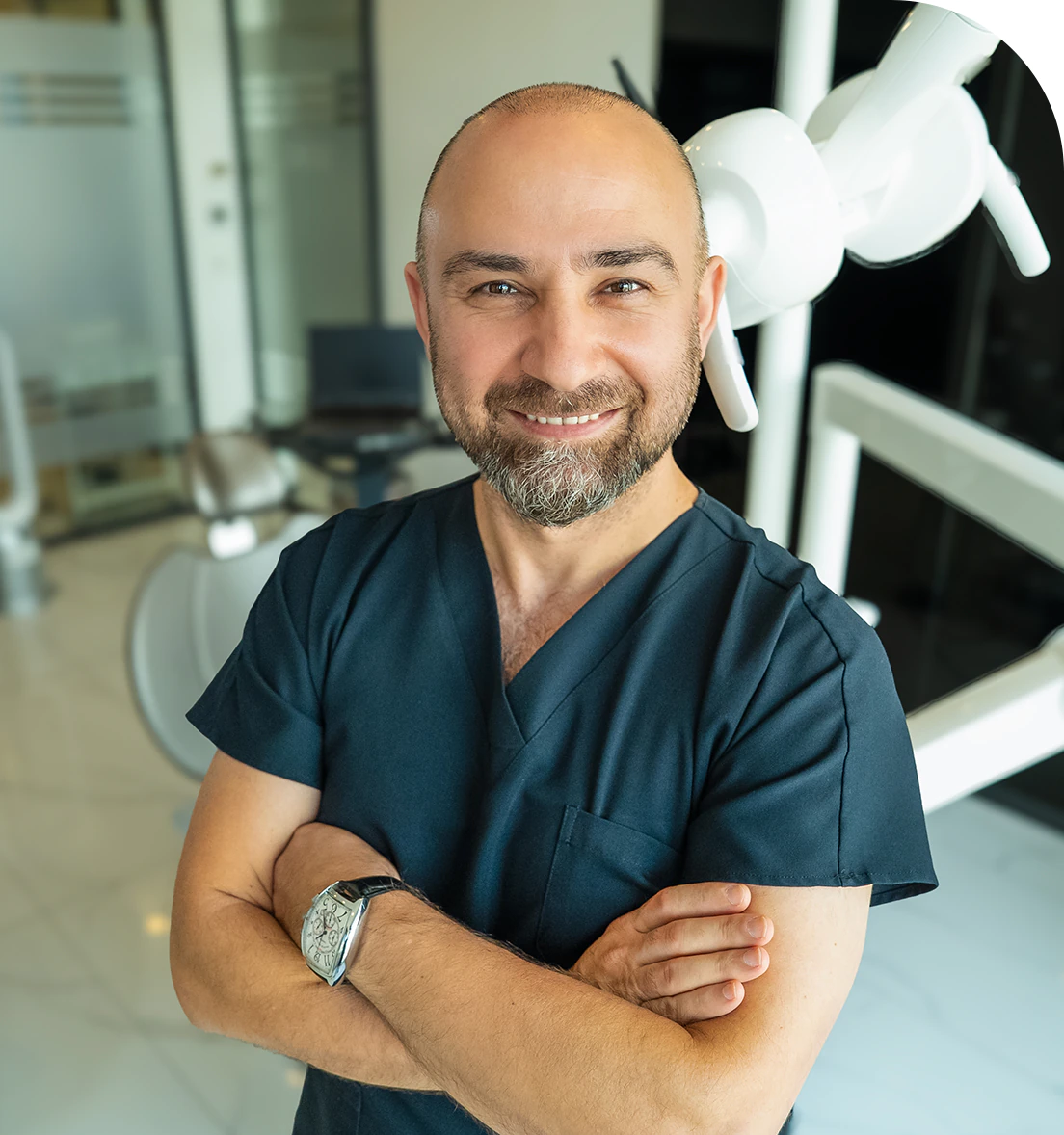
Dr. Dt. Ömer Atar provides care at his private clinic in Istanbul, combining his academic background and many years of clinical experience in dentistry. With a treatment approach that integrates aesthetic and functional solutions, he aims to achieve natural, balanced, and long-lasting results through personalized planning for each patient. Dr. Atar completed his education at the Marmara University Faculty of Dentistry, which he began in 1994, graduating in 2000. He continued his academic work in the Department of Prosthodontics at the same university. In 2007, he earned his PhD degree with his scientific thesis on implants and implant-supported prostheses in patients undergoing distraction osteogenesis. His academic expertise deepened in the fields of metal-free aesthetic systems, implant-supported prostheses, and cosmetic dentistry. Integrating modern technologies and digital dentistry into his practice, Dr. Ömer Atar achieves high success rates in treatments such as smile design, All-on-4/All-on-6 implant treatments, laminate veneers, zirconium crowns, teeth whitening, and gingival aesthetics (gummy smile). As a member of EDAD (Turkish Academy of Aesthetic Dentistry), he embraces a holistic approach focused on modern, functional, and natural outcomes in aesthetic dentistry.


