
 Türkçe
 Français
 Deutsch

Dental implant procedures in Türkiye are both highly safe and offered at significantly more affordable prices compared to Europe as a strategic result of low operational costs and strict healthcare regulations. The advantage of the exchange rate and the low general operating expenses of clinics allow costs to be minimized without compromising material quality. The strict inspections of the Ministry of Health and the challenging training processes of physicians ensure medical safety and enable world-class implant brands to be applied at accessible budgets. This balance allows patients to receive globally high-quality healthcare under the most efficient economic conditions.
Why Are Implant Treatments in Türkiye So Affordable?
The issue that patients wonder about the most —and sometimes approach with suspicion— is why the prices are so much lower compared to Europe and the United States. The reasons behind this are not related to a compromise in quality, but entirely to the country’s economic structure and operating costs. The main reason why dental services are affordable in Türkiye is the difference between “purchasing power parity” and “operational expenses.”
The price a dental clinic reflects to the patient does not only include the doctor’s labor or the materials used. It also includes the clinic’s rent, staff salaries, electricity, water, taxes, and administrative expenses. The monthly rent and personnel costs of a clinic in the UK or the USA are many times higher than a similar clinic in Türkiye. Since the overall cost of living and labor wages are lower in Türkiye when calculated in foreign currency, clinics’ “fixed expenses” decrease. This allows clinics to offer much more competitive prices to patients without sacrificing profit margins, simply by lowering operational costs.
In addition, the dental sector in Türkiye has a massive volume. High patient circulation allows clinics to negotiate much more strongly with material suppliers. When a clinic performs hundreds of implants per month, the unit price it receives from implant companies is far more advantageous than that of a European clinic performing only ten implants per month. This “bulk purchasing power” directly reflects as a discount to the patient. In other words, the patient pays far less for the same quality product thanks to the clinic’s negotiation power and low operating expenses.
The main economic factors that reduce costs are:
- Exchange rate advantage
- Low rental expenses
- Competitive personnel salaries
- Low laboratory costs
- Bulk material purchasing
- Tax incentives
- Low energy costs
- Marketing efficiency
Do Low Prices Reduce the Quality of Implant Materials?
In medical procedures, the phrase “you get what you pay for” understandably worries patients. However, in Türkiye’s implantology, the situation is exactly the opposite. The price advantage does not come from reducing the quality of the material. Reputable and accredited clinics in Türkiye use the world’s most prestigious implant brands, which are widely studied and proven to be reliable.
An implant is an artificial tooth root made of titanium or zirconium that biologically integrates with the bone. The quality of this material, its surface technology, and sterilization are critical for long-term success. Turkish dentists generally prefer well-established Swiss, German, and American brands with proven global reliability to minimize risk. The implant screw placed in the patient’s mouth is produced in the same factory, has the same serial number structure, and comes in the same sterile packaging as the one used in a luxury New York clinic.
The critical point here is the strict medical device regulations applied in Türkiye. Every implant used has an “identity card.” After the treatment, patients receive a passport or certificate containing the brand, model, diameter, length, and serial number of the implant placed in their mouth. This transparency ensures that the patient knows exactly which component was used, no matter where they are in the world. Therefore, the cost reduction comes not from unapproved or low-quality materials but entirely from operational efficiency.
Commonly preferred global implant origins are:
- Switzerland
- Germany
- United States of America
- South Korea
- Sweden
- Italy
- France
Are the Education and Expertise Levels of Turkish Dentists Reliable?
The success of an implant depends as much on the skill and anatomical knowledge of the surgeon placing it as on the quality of the implant itself. Dental education in Türkiye is one of the most demanding and competitive systems in the world. Simply being admitted to these programs requires major academic achievement.
The process begins with the national university entrance exam, taken by millions of high-school graduates. To enter a faculty of dentistry, a student must rank within the top 1–2% in science and mathematics. Once admitted, students undergo a 5-year intensive program. The first two years focus on basic medical sciences and theoretical courses, while the following three years consist of intensive clinical practice. Before graduation, every student is required to treat hundreds of patients.
However, for advanced surgical procedures such as implantology, the determining factor is specialty training. In Türkiye, dental specialization requires passing the extremely competitive “DUS” (Dental Specialization Exam). Only a small number of graduates qualify for specialties such as Oral and Maxillofacial Surgery. A specialist physician spends 3–4 years in hospitals dealing solely with surgical cases, taking night shifts, and participating in thousands of operations. This provides far deeper and more comprehensive expertise than many “weekend-course” certificate programs seen in Europe. Another reason Turkish dentists are globally recognized for their manual skill is the high “case volume.” Thanks to population density and health tourism, a Turkish oral surgeon may experience in a few years the number of cases their Western counterparts encounter in an entire career.
The stages of dental education in Türkiye are:
- Challenging university entrance exam
- 5-year undergraduate education
- Clinical internships
- DUS examination
- Specialization training
- Thesis work
- Continuous education seminars
What Do Data Say About the Success Rates of Implant Treatments?
In medicine, trust is built not on words but on data. The success of implant treatments in Türkiye is supported not only by patient satisfaction but also by scientific research and long-term follow-ups. Studies show that success rates of implants applied in Turkish clinics match global standards and even exceed them in some cases.
In scientific literature, the successful integration of an implant with bone (osseointegration) and its long-term stability is called the “survival rate.” When Türkiye’s data are examined, implant success rates are seen to be around 97–98%. Even in follow-ups longer than five years, these rates remain around 98%, proving that the work is designed not just for short-term results but for lifelong use.
When failure cases are examined, the issue is usually found to be biological factors rather than physician error or material quality. Universal risk factors such as smoking, uncontrolled diabetes, and poor oral hygiene affect implant success both in Türkiye and worldwide. However, in terms of surgical technique, sterilization, and procedural management, success rates in Türkiye fully parallel those of developed Western countries. These high statistics provide patients with strong reassurance.
Patient-related factors affecting implant success include:
- Oral hygiene
- Smoking
- Bone quality
- Systemic diseases
- Bruxism
- Healing process
- Dietary habits
Which Technologies and Equipment Are Used in Clinics?
Modern dentistry has evolved into a field where manual skill merges with digital technologies. Clinics in Türkiye are extremely innovative and aggressive when it comes to technological investments. Most clinics are equipped with devices newer and more advanced than the average European clinic due to strong competition driving them to offer “the best.”
While implant planning was once done only with two-dimensional X-rays, today the standard in Türkiye is 3D Cone Beam Computed Tomography (CBCT). These devices allow the dentist to view the patient’s jawbone, nerve canals, and sinus cavities in three dimensions with millimetric accuracy, eliminating surprises and significantly increasing surgical success.
CAD/CAM technologies digitize everything from impression-taking to prosthesis production. Instead of traditional impression materials that caused discomfort, intraoral scanners are now used. These scanners create a digital model of the teeth within seconds, and the data is instantly transmitted to the laboratory. With 3D printers and milling machines, prostheses are produced with micron-level precision, shortening surgical time and maximizing patient comfort.
Commonly used advanced technologies include:
- 3D tomography
- Intraoral scanners
- CAD/CAM systems
- Laser devices
- Surgical guides
- Digital smile design
- 3D printers
What Are the Sterilization Standards for Safe Treatment?
One of the most important aspects of health tourism is infection control and sterilization. In Türkiye, this is not left to the initiative of clinics but is guaranteed through a multi-layered inspection system. The sense of hygiene you feel when entering a clinic is not a coincidence but the result of strict protocols.
Healthcare institutions in Türkiye work hard to meet the standards of JCI (Joint Commission International), one of the most prestigious global accreditation organizations. ISO quality certificates also prove that clinics standardize not only their medical procedures but also their management and hygiene processes. However, the main supervisory authority is the Ministry of Health. The Ministry conducts regular and unannounced inspections of sterilization rooms, device calibrations, and waste management processes.
Implant procedures fall under “sterile surgical procedures,” requiring full sterilization of the operating room, instruments, and physician’s attire. Autoclave cycles are recorded, sterilization indicators are attached to every pack, and single-use materials are opened in front of the patient. These strict measures reduce cross-infection risk to zero and ensure a smooth healing process after surgery.
The basic steps of the sterilization process include:
- Disinfection
- Packaging
- Autoclaving
- Biological indicators
- Sterile storage
- Single-use covers
- HEPA-filtered ventilation
- Waste separation
Why Is Türkiye Preferred for Complex Implant Cases?
While replacing a single missing tooth is a relatively standard procedure, cases involving full-arch tooth loss or severe bone resorption require advanced surgical expertise. This is where Türkiye’s “case experience” stands out. Techniques such as “All-on-4” and “All-on-6,” where an entire arch is supported by implants placed at specific angles, are routinely performed in Türkiye.
These techniques require not only surgical skill but also significant engineering knowledge. Determining implant angles, load distribution, and designing an aesthetic smile all require a coordinated team. In Türkiye, Oral Surgeons and Prosthodontists often work together, ensuring both functional chewing comfort and excellent aesthetic outcomes.
Procedures such as sinus lifting or bone grafting, frequently needed in patients with long-term tooth loss, are among the most common operations performed by Turkish surgeons. Many international patients come to Türkiye after being told “Your bone is insufficient, implant is not possible” in their home countries and successfully receive treatment. This success stems from Turkish surgeons’ problem-solving approach and mastery of advanced surgical techniques.
Advanced surgical techniques include:
- All-on-4 technique
- All-on-6 technique
- Sinus lifting
- Bone augmentation
- Zygomatic implants
- Guided tissue regeneration
- Soft tissue surgery
How Do Transparency and Legal Regulations Work During the Treatment Process?
Trust is not only related to medical success but also to transparency. One of the biggest concerns of patients considering treatment abroad is unexpected additional costs. Regulations introduced by the Ministry of Health aim to eliminate these concerns for certified medical tourism clinics.
According to legal requirements, treatment plans and price quotations provided to international patients must be clear, detailed, and inclusive. Before the patient arrives in Türkiye, a preliminary evaluation based on their X-rays is performed, and a treatment plan is provided. This plan lists all procedures, materials to be used, and the total cost. The concept of “additional charges afterward” is strictly unacceptable in institutional clinics.
Clinics with the “International Health Tourism Authorization Certificate” issued by the Ministry of Health are inspected not only medically but also administratively and financially. Holding this certificate means the clinic commits to maintaining a certain service standard, employing staff who speak foreign languages, and ensuring transparent pricing. Patients can verify a clinic’s authorization through official government channels. This state-backed assurance enables patients to trust not only their doctor but also the entire system.
Mechanisms that protect patient rights include:
- Authorization certificate requirement
- Detailed consent forms
- Transparent pricing
- Ministry inspections
- Official invoicing
- Patient rights units
- Personal data protection
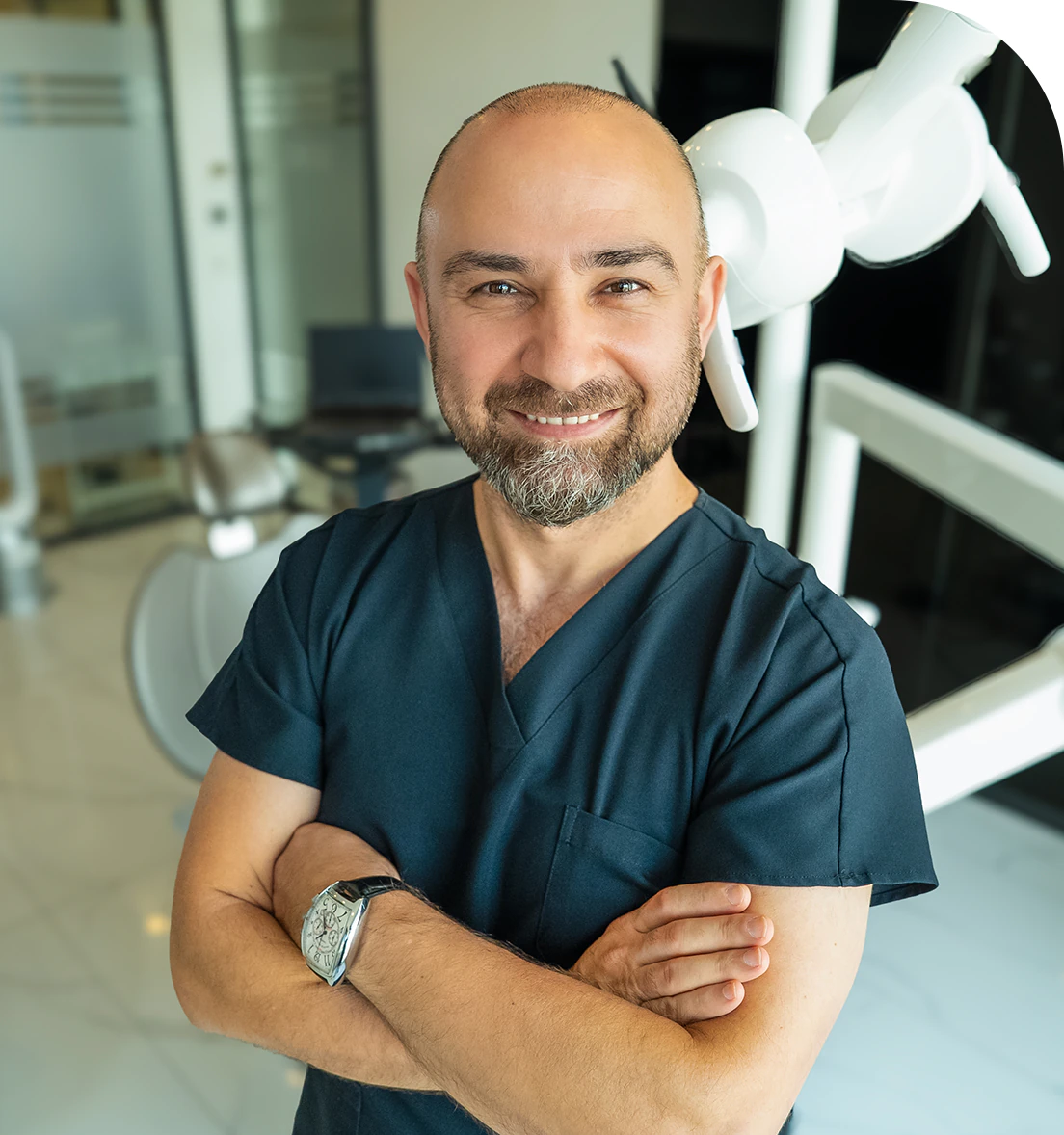
Dr. Dt. Ömer Atar provides care at his private clinic in Istanbul, combining his academic background and many years of clinical experience in dentistry. With a treatment approach that integrates aesthetic and functional solutions, he aims to achieve natural, balanced, and long-lasting results through personalized planning for each patient. Dr. Atar completed his education at the Marmara University Faculty of Dentistry, which he began in 1994, graduating in 2000. He continued his academic work in the Department of Prosthodontics at the same university. In 2007, he earned his PhD degree with his scientific thesis on implants and implant-supported prostheses in patients undergoing distraction osteogenesis. His academic expertise deepened in the fields of metal-free aesthetic systems, implant-supported prostheses, and cosmetic dentistry. Integrating modern technologies and digital dentistry into his practice, Dr. Ömer Atar achieves high success rates in treatments such as smile design, All-on-4/All-on-6 implant treatments, laminate veneers, zirconium crowns, teeth whitening, and gingival aesthetics (gummy smile). As a member of EDAD (Turkish Academy of Aesthetic Dentistry), he embraces a holistic approach focused on modern, functional, and natural outcomes in aesthetic dentistry.


