
 Türkçe
 Français
 Deutsch
 Nederlands
 Svenska

The differences between implants and prostheses are decisive in determining which method should be preferred in the treatment of tooth loss. Implants are fixed structures placed on a titanium screw inserted into the jawbone, whereas prostheses are removable or fixed artificial teeth that replace missing teeth.
In terms of durability, implants offer a longer-lasting and more stable solution compared to prostheses. According to user experiences, implants provide a sensation similar to natural teeth and restore chewing function to a high degree.
When the difference is examined in terms of use and comfort, the fact that implants are fixed in the mouth provides users with freedom of movement and comfort. Individuals using prostheses may occasionally experience issues such as displacement or incompatibility within the mouth.
In terms of aesthetic appearance, implants provide a more natural result thanks to their structure that is compatible with the gums. Prostheses also offer a high level of aesthetics; however, especially with full dentures, achieving the appearance of natural teeth can be more challenging.
Why Is the Decision-Making Process After Tooth Loss Important?
Missing teeth are not only an aesthetic issue. Reduced chewing function, difficulty during speech, and over time, the shifting of adjacent teeth may also occur. For this reason, it is important that the method to be applied after tooth loss is suitable for the individual’s oral structure, expectations, and general health condition. Implant and prosthesis options are among the most frequently evaluated solutions at this point.
What Is an Implant, and What Kind of Approach Does It Offer?
A dental implant is an artificial root, usually made of titanium, that is placed into the jawbone to replace a missing tooth root. A tooth-like superstructure is then added on top of this root. The main purpose of an implant is to provide a use that is close to the feeling of a natural tooth.
Patients often describe implants as “fixed and like my own tooth.” The fact that they do not move during chewing and do not rely on neighboring teeth for support are among the elements that make this method attractive. However, since the implant process involves a surgical procedure, it requires certain evaluations.
What Is a Dental Prosthesis, and What Types Are Available?
Dental prostheses are artificial teeth that replace missing teeth and are placed in the mouth. They are available in different types, including fixed and removable options. Bridge prostheses generally take support from the teeth adjacent to the missing tooth, while removable prostheses have a structure that can be taken out and put back in.
For patients using prostheses, the adaptation process is an important issue. In the initial period, a different sensation may be experienced during speaking or chewing. Over time, the oral tissues and muscles may adapt to this structure, but this process can vary from person to person.
Key Differences Between Application Processes
One of the most noticeable differences between implants and prostheses is the duration of the application process. Implant treatment generally consists of several stages. After the implant is placed into the jawbone, a certain period is required for it to fuse with the bone. This process may take weeks or months.
Prosthesis applications, on the other hand, can often be completed in a shorter time. Especially removable prostheses can be used more quickly after impression taking and trial stages. For this reason, the time factor can be influential in patients’ decision-making processes.
Usage Comfort and Effects on Daily Life
In daily life, the differences between implants and prostheses can be felt more clearly. Since implants are fixed, they do not move while eating or speaking. This situation provides significant comfort in terms of self-confidence for some patients.
With prostheses, especially removable ones, a sensation of movement may be experienced. This does not occur in every patient, but some individuals may feel the need to use denture adhesives. Patience and regular check-ups play an important role during the adaptation process.
Effects on the Jawbone and Gums
Since implants are placed directly into the jawbone, they contribute to the stimulation of the bone. This can help slow down bone loss. This issue is particularly noteworthy for patients who experience bone resorption after tooth loss.
In prostheses, since the jawbone is not directly stimulated, changes in the bone structure may be observed over time. These changes can affect the fit of the prosthesis and may create a need for readjustment in later periods.
Maintenance and Long-Term Use
The maintenance of implants is carried out in a manner similar to natural teeth. Regular brushing, the use of dental floss, and routine dental check-ups are important. With proper care, implants can be used for many years, but this duration depends on personal habits and oral health.
The maintenance of prostheses is different. Removable prostheses must be taken out and cleaned daily. In addition, prostheses may wear over time or lose their fit. In such cases, it is recommended that they be checked by a dentist.
Is the Same Option Suitable for Everyone?
When choosing between implants and prostheses, rather than asking “which is better,” the more important question is “which option is more suitable for this person.” Factors such as jawbone structure, general health condition, oral hygiene habits, and expectations influence this decision.
While some individuals may not be suitable candidates for implants, for others, prostheses may be a more practical solution. Therefore, individual evaluation and obtaining expert opinion are important.
The Role of Expert Evaluation
In the decision between implants and prostheses, the examination performed by the dentist plays a decisive role. Through X-rays and intraoral evaluations, a personalized roadmap is created regarding which method may be more suitable. It should not be forgotten that clinical decisions cannot be generalized and that each patient’s needs may differ.
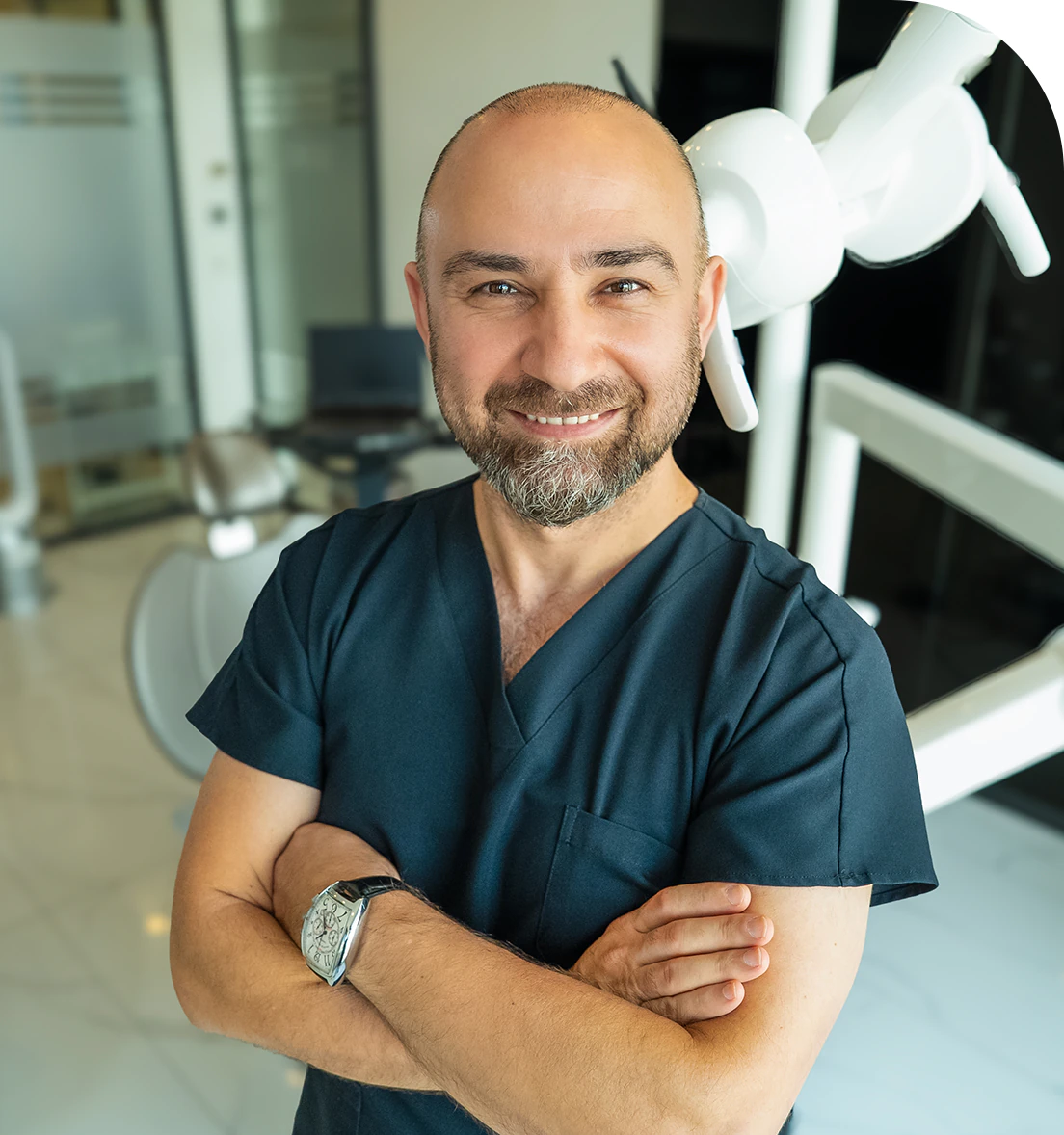
Dr. Dt. Ömer Atar provides care at his private clinic in Istanbul, combining his academic background and many years of clinical experience in dentistry. With a treatment approach that integrates aesthetic and functional solutions, he aims to achieve natural, balanced, and long-lasting results through personalized planning for each patient. Dr. Atar completed his education at the Marmara University Faculty of Dentistry, which he began in 1994, graduating in 2000. He continued his academic work in the Department of Prosthodontics at the same university. In 2007, he earned his PhD degree with his scientific thesis on implants and implant-supported prostheses in patients undergoing distraction osteogenesis. His academic expertise deepened in the fields of metal-free aesthetic systems, implant-supported prostheses, and cosmetic dentistry. Integrating modern technologies and digital dentistry into his practice, Dr. Ömer Atar achieves high success rates in treatments such as smile design, All-on-4/All-on-6 implant treatments, laminate veneers, zirconium crowns, teeth whitening, and gingival aesthetics (gummy smile). As a member of EDAD (Turkish Academy of Aesthetic Dentistry), he embraces a holistic approach focused on modern, functional, and natural outcomes in aesthetic dentistry.


